Showing posts with label #david. Show all posts

Monday, 24 August 2026

THE RISE TO THE THRONE


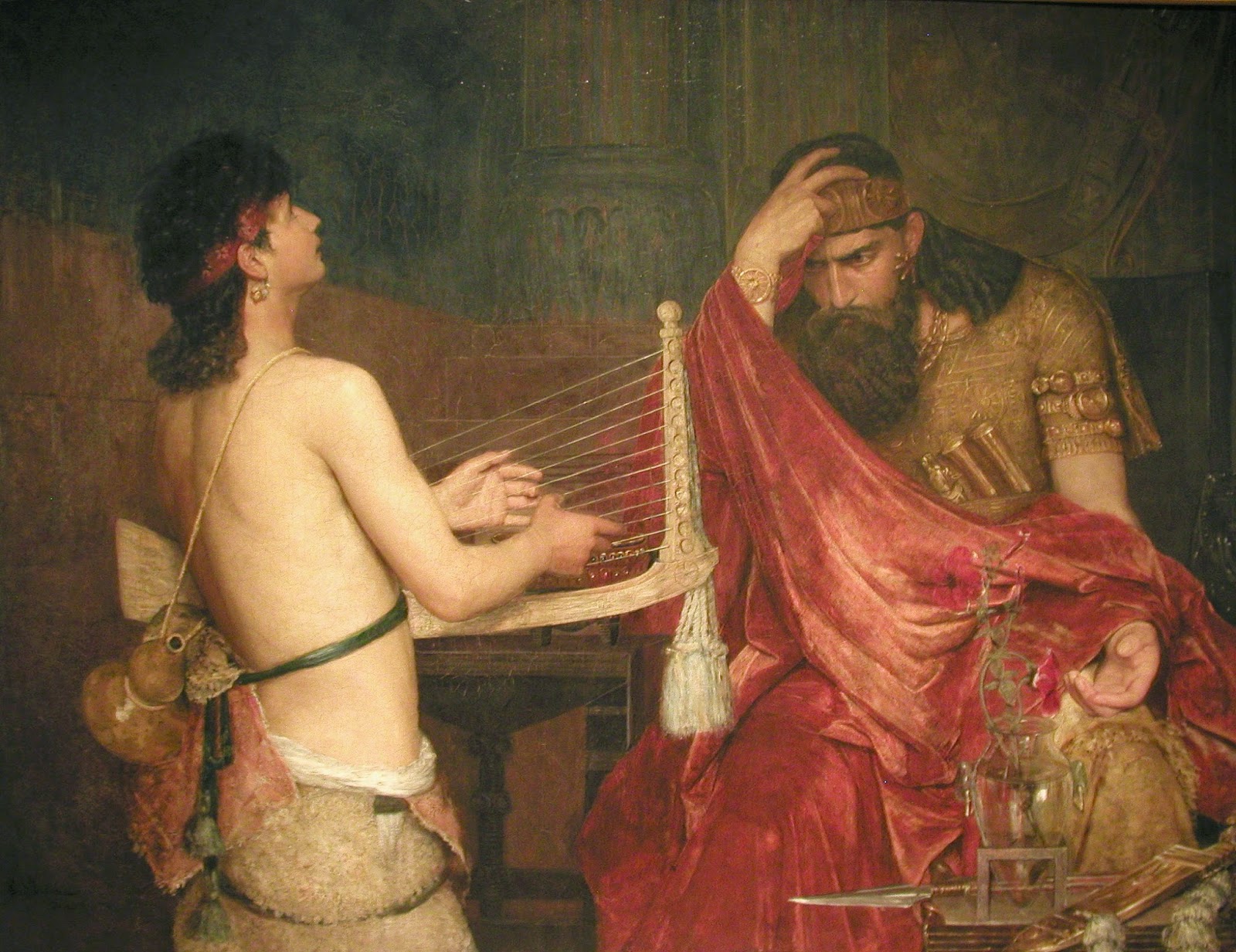
I have written about King David extensively over the years but it seems I am not finished yet. I watched an AI generated film about him yesterday and it was done so well that I don’t know who I cried about more, the David who rose to the throne or the David who fell from it.

The fact remains that David’s accomplishments are astounding. His name comes from the ancient Hebrew root word dod which translates to a beloved person, love, a friend….pronounced Dah-veed in modern Hebrew. As a youth, he was said to be a man after the Lord’s “own heart” and as a man, he spoke by the Spirit and had many revelations (1 Samuel 13:14).

In his rising to the throne he conquered his enemies by his supplication to God for help and protection ‘not fearing what man can do to him’ (see Psalm 55:11). He was fearless in his dedication to his people by his awe inspiring way he believed in the cause in Israel  when he, a mere shepherd boy, slew Goliath, considering him of no regard, a mere ‘uncircumcised Philistine, who dared to defy the armies of the living God’ to whom he stated without fear: “I come to thee in the name of the Lord of hosts, the God of the armies of Israel whom thou hast defied…...and I will smite thee and take thine head from thee….that all the earth may know that there is a God in Israel” (1 Samuel 17:26,45,46). All the earth, indeed…..

The zeal with which he lived his early years is absolutely mind blowing. What tears at my heart the most are the psalms he wrote as a reflection of his incomparable love for the God of Israel.  His faith gave him a prophetic voice to testify of Christ who would one day sit on his throne. Apostle Peter testified of this fact in Acts 2:22-36. Psalms worthy of notice to this end are:

·         Psalm 16 (thou wilt not leave my soul in hell; neither wilt thou suffer thine Holy One to see corruption);

·         Psalm 22, which closely matches details of the Crucifixion, including “My God, my God, why hast thou forsaken me? (v 1);  “they pierced my hands and my feet” (v 16); “They part my garments….and cast lots” (v 18);

·         Psalm 110, which Jesus and the apostles use as messianic, including “The Lord said unto my Lord, sit thou at my right hand” (v 1); the prophecy of Christ as “a priest for ever after the order of Melchizedek” (v 4);

·         Psalm 41, often connected with betrayal: “mine own familiar friend…hath lifted up his heel against me” (v 9), which Jesus quoted at the Last Supper (John 13:18);

·         Psalm 69, linked to the suffering of Christ: “in my thirst they gave me vinegar to drink” (v 21);

·         Psalm 118, used repeatedly in the New Testament about Christ: “The stone which the builders refused is become the head stone of the corner” (v 22) and “blessed be he that cometh in the name of the Lord” (v 26).

David did three things for temporal Israel that typify what Christ will do for spiritual Israel:


Firstly, following Saul's death, Israel's kingdom was divided in two for seven years. The tribe of Judah accepted David as their king and the rest of the tribes of Israel were ruled by Ishbosheth, one of the sons of Saul, whom Abner, Saul's commanding general set up as the new king (2 Sam 2:8-9).


Despite being anointed as Israel's king, by Samuel, the prophet, David refrained from taking action against Ishbosheth in honour of the covenant he made with Jonathan not to retaliate against Saul's family when he came to power. Following Ishbosheth's murder David showed great wisdom and judgment by executing the two men responsible (see (2 Samuel 3). This brought him into favour with the tribes under Ishbosheth and ultimately united all twelve tribes into one nation under the ultimate leadership of God.


Secondly, David succeeded in winning the whole extent of the promised land for the covenant people. For the first time the chosen people of the Lord controlled the whole land promised to Abraham's posterity nearly a thousand years earlier.


Thirdly, David established Zion or Jerusalem as the spiritual and political center of Israel. Under David's reign Israel reached its golden age. Never before had Israel achieved such heights of power nor did they ever again. (Old Testament Student Manual, Book 1 p 291)


David was anointed to sit on the throne of Israel and to establish the royal family line that would produce the King of Kings who would one day sit ‘on the throne of his father David’ (Luke 1:32-33).  My question is this: was David chosen to be an example of the good King who was to come or was he chosen to show that no king can be as good as the King that was to come????? The answer is obvious, no king can be as good as the King that is yet to come because that King would never and will NEVER fall. I often think our present day governments will with their weakness and corruption accentuate the blessing that the King of Kings will be when He comes to govern the world. 


“Even so, come Lord Jesus” (Revelation 22:20).


- CATHRYNE ALLEN 


Monday, 22 June 2026

WISDOM OF THE UNWISE PART 2


(Art: King Solomon by Simeon Solomon (1874)


Solomon's is the ultimate story of corruption. His wealth was staggering. The scriptures suggest that Solomon received annually 666 talents of gold (1 Kings 10:14; 2 Chronicles 9:13). At today's prices that is $3,051,800,000 USD (over $3.05 billion). And herein begins Solomon's downfall. The riches turned him into a man of excess. The description of his wealth and extravagances is astonishing (1 Kings 10:14-23).


Solomon's reign enforced great economic changes in the kingdom and his massive building projects created serious problems: “He taxed the people heavily and used forced labour to complete his projects. The people began to complain and a deep resentment, especially in the northern tribes, began to fester......For the first time in Israel's history, there began to be a distinct difference between 'rich' and 'poor'. The king and his household were rich; the common people were poor. In between were the salaried civil servants and the merchants and artisans, many of whom had organised craft guilds by that time. Such class separations had not been known in the Israel where a shepherd boy like David could be anointed king - only 50 years earlier" (Great People of the Bible, pp 192-93, Old Testament Student Manual Vol 2., p 8).


Solomon’s riches were just the beginning. Where is the end for a man who has everything? Is everything ever enough? Such riches would turn you into believing you are limitless and invincible. In the end you would believe there is nothing that should be denied you and Solomon proved this to be true  For all his wisdom, Solomon became incredibly unwise for 'one was not wise, regardless of his vast learning, if his actions did not comply with his righteous beliefs' (Old Testament Student Manual, Vol. 2, p. 13).


Following the dedication of Solomon's temple, the Lord appeared to Solomon for the second time and acknowledging the dedicatory prayer, accepted the temple which Solomon dedicated to Him. At the same time, however, he issued a grave and serious warning to the king of Israel. He warned Solomon that if he and his children do not keep his commandments and if they go and serve other gods and worship them, that He will cut off Israel out of the land which He had given them, that He will destroy the temple which was built, and 'Israel shall be a proverb and a byword among all people' (1 Kings 9:1-9). 


Imagine the Lord himself appearing to you and warning you about a calamity that will befall you if you stray, and you go and do exactly that. The beginning of the end came for Solomon when he made a marriage alliance with Pharoah and took his daughter for his wife.  This marriage alliance was the greatest act of Solomon's foolishness. It was the beginning of him marrying many idolatrous women out of the covenant and his many political alliances which signalled that he had more faith in them than in God who was willing to fight and win Israel's battles. You might say he was beginning to lose the plot.


Marrying foreign women who led him and all Israel into idolatry aborted Solomon’s ability to endure to the end and changed the course of Israel's history. This is the damage that one king can do to a whole nation. By introducing idolatry to the children of Israel, the history of Israel became a losing battle fought by prophets against the forces of disloyalty to God.


The greatest mistake Solomon made was that he went to his grave unrepentant, unlike his father David. He who loved the Lord, and even saw Him twice (1 Kings 3:5; 9:2), forsook the integrity of his heart and came to worship false gods who had no power to give him any of the blessings he received from the God of Israel.  He who had the greatest wisdom ended up being the most foolish.


So it is sometimes with us. We overlook what the Lord has done for us and what He is capable of giving us if we stay the course so we become foolish and dabble in sin. And this is the outcome of sin:


“…..sin makes you stupid, stupid because when we sin we become 'deaf, dumb and blind to the ways of the Lord. Stupid because habitual sin drives the Spirit away, leaving us outside the protective influence of the Holy Ghost. Stupid because it makes us incapable of drawing upon the powers of heaven. Being stupid costs a lot. Sin costs a lot too. It can cost time, money, peace of mind, progress, self-respect, your integrity and virtue, your family, the trust of those you love, and even your Church membership. Sin is just plain stupid. And the cost is off the charts. So repent now. Repent daily. If you want to be sanctified, repentance is not optional'. (Sheri L. Dew, You Were Born to Lead, You Were Born for Glory, BYU Speeches, Dec. 2003)

- CATHRYNE ALLEN 

Thursday, 18 June 2026

A JUST GOD


On Judgment Day, the balance between justice and mercy will be so perfect that we will not be able to question it. This is the greatest lesson I learnt from David of the Old Testament.

I can think of no one who would have wept more when David forfeited his exaltation than the Saviour himself. To lose someone with so much promise and faithfulness would have been agonizing to Him. As a youth, he was said to be a man after the Lord’s “own heart” (1 Sam 13:14) and as a man, he spoke by the Spirit and had many revelations (see Guide to the Scriptures: David)

If there was anyone the Saviour could have been excessively merciful to, it would have been David but where would that have left Uriah, a man of principle and loyalty, and his innocent blood that was spilt? The man who had no say….whose wife was taken from him, who suffered an unjust death???  One truth remains….mercy cannot rob justice (Alma 42:25).

I saw the perfect nature of the God that we worship and trust through this story.  He knows all: our hearts, our capabilities, our intents, our weaknesses, our pains, our desires, our sufferings…. everything that could induce mercy….but yet He obeys all the laws that He himself is governed by. Because He is the giver of law and the sustainer of law, it is impossible for Him to violate law, including the law of justice (see Discourses of Brigham Young p1, Mormon Doctrine p 432-3, Mediation and Atonement p 168).

So  a king who was destined for exaltation fell from God’s grace and became an example of the perfect balance of justice and mercy. The justice was the loss of exaltation but the mercy was the gift of resurrection to all the human family including those who commit murder and inherit a much lesser kingdom of glory which, nevertheless, surpasses all understanding (D&C 132:38,39; D&C 76:89). David’s repentance and godly sorrow led to his gratefulness that the Saviour will not leave his soul in hell (Psalms 16:10; Acts 2:27; Acts 2:25-28; 13:22-37; Isaiah 55:3). This hope of resurrection of the unjust is known as ‘the sure mercies of David’ (see Bruce R. McConkie, The Promised Messiah, p 272).

The Psalms of David, who ‘foresaw the Lord always before his face’, are heart wrenching evidence of his unfailing love and praise of Jehovah (Acts 2:25). Even though he committed a grievous sin, he never turned away from the God of Israel. May we follow suit when sin finds us and turn to Him who can forgive and yet rescue our souls from everlasting misery and may we harbour in our heart David’s testimony forever: “The Lord is my rock, and my fortress, and my deliverer, my God, my strength, in whom I will trust, my buckler, and the horn (strength, power) of my salvation….” (Psalms 18:2).

He is the one and only giver of mercy, forgiveness and salvation and there is none else….not in heaven above, or earth beneath…..nothing, nobody, nowhere…..(Deuteronomy 4:35,39;5:8 ;Isaiah 43:10-11; 45:5,6,14,18,22; 46:9; D&C 76:1; 2 Nephi 25:20; 31:21; Moses 6:52)


Will You come and carry me

When all my strength is gone?

Will Your mercy spill from You

When I can walk no more?


Will Your mercy lift me higher

To glimpse my eternal home?

Will I see my soul there

Before Your gilded throne?


When the sum of my life is done

Will You bring me home to keep?

I’ll want to kneel and honour You

Before Your Mercy Seat.


- CATHRYNE ALLEN 


Tuesday, 16 June 2026

A FALL FROM GRACE


The year I studied David’s story for the first time, I was as devastated with his fall from grace as much as I was enthralled by the Israelite boy who slew a lion and a bear (1 Samuel 17:34-36) and ‘the uncircumcised Philistine who dared to defy the armies of the living God’  because  ‘there was a cause in Israel’ (1 Samuel 17:26,29). His Israelite blood coursing through his veins with valour and warrior spirit won my heart. I considered him one of the inspirational voices of the Old Testament as I followed his rise from the heroic Israelite boy to the king of the golden age of Israel.

David’s achievements impressed me but his psalms blew me away. His words appealed to the poet in me. I was enchanted by the depth of his soulful worship of Jehovah and the national sovereignty of Israel that was so closely knit with his heart. However, I learnt much from David and his humanity. He showed very well that no matter how high you climb, the ground beneath your feet is never 100% steady. In this life of uncertainty, if we are not alert enough, we will likely one day fall. The worst of it is when the fall costs you your exaltation.

Despite all his great accomplishments David made one very big error of judgment. He became very comfortable as a monarch of a successful kingdom. This comfort zone became detrimental to his ability to endure to the end. As his kingdom ran like a well-oiled machine, his approach to his kingly duties became somewhat lax. "At the time when kings go forth to battle" (2 Sam 11:1) David chose to send Joab and all Israel to fight Ammonites while he remained in Jerusalem, strolling upon the roof of his house to cool off in the heat of the night.


This was David's first and big mistake that began his gradual demise into depths of sin from which he could not extricate himself. Sin seldom happens in one giant leap. As Elder Boyd K. Packer says: "I don't think anyone steps off a precipice into the depths of immorality and apostasy. They slide down the slippery sides of the chasm...." (Improvement Era. May 1970, p. 7)  


It would seem that David didn't think he needed his armour of God on such a hot night while he was lounging and relaxing away from battle but the adversary doesn't take sabbaticals and he took advantage of David's lack of protection. David spotted a temptation bigger than the Goliath he slew so valiantly some years prior. Not turning away once he happened to see a woman washing herself his gaze lingered enough to discover she was beautiful. Not content with leaving it there, he inquired about her. This should have stopped him in his tracks for the reply he got was that her name was Bathsheba (which means "daughter of the covenant") and that she was married to a man called Uriah (which means "Jehovah is my light").


The adultery that happened next was tragic but what happened after it was devastating. David dared to believe that he could conceal his sin, not just from Israel but from God. As he devised one plan after another to cover his sin, he developed a treacherous character that led him to the loss of his salvation. When he failed to entice Uriah to spend time with his wife so that the conceived child could be passed off as his, David allowed the spirit of murder to enter his heart. He devised a plan that would ensure Uriah's death at the front lines of battle and took Bathsheeba to be his wife.


At what point do you think David could have stopped himself from advancing towards the edge of the precipice? None of this need have happened if David was at the right place at the right time, namely, out on the battlefield instead of the roof of his house.


A warrior with a battle he so tragically lost….a loss that no doubt pierced the heart of Jehovah…..


What win I if I gain the thing I seek?

A dream, a breath, a froth of fleeting joy?

Who buys a minute's myrth to wail a week

Or sells eternity to get a toy?

For one sweet grape, who would the vine destroy?

Or what fond beggar but to touch the crown,

Would with the scepter straight be stricken down.


- William Shakespeare


- CATHRYNE ALLEN 

(Art: David's First Victory by William Strutt (1825-1915)

Monday, 30 June 2014

THE MERCIFUL MESSIAH


The Lord is my shepherd; I shall not want.
He maketh me to lie down in green pastures; he leadeth me beside the still waters.
He restoreth my soul: he leadeth me in the paths of righteousness for his name's sake.
Yea, though I walk through the valley of the shadow of death, I will fear no evil: for thou art with me; thy rod and thy staff they comfort me.
Thou preparest a table before me in the presence of mine enemies: thou anointest my head with oil; my cup runneth over.
Surely goodness and mercy shall follow me all the days of my life: and I will dwell in the house of the Lord forever.
(Psalm 23)


The book of Psalms is the longest book of the Bible and is filled with testimony and doctrine. It is also a collection of 150 songs of  Israelite hymns praising the God of Israel. Seventy three of these psalms are attributed to David with the central theme of mercy. His psalms are a guide for any penitent sinner who repents with sincerity of heart and seeks forgiveness. David's psalms are a clear indications that David knew the nature of the God of Israel and His infinite mercy. He appeals to this mercy which he knows is central to the Saviour's character because of his loving kindness. David repeatedly uses these two attributes hand in hand helping us see the Saviour in a much softer light than as the vengeful God of the Old Testament. In the hymnal sense, his appeals to the Saviour's merciful nature, become a voice of praise, such as: "Remember, O Lord, thy tender mercies and thy loving kindness..." (Psalm 25:6) and "Hear me, O Lord; for thy loving kindness is good: turn unto me according to the multitude of thy tender mercies" (Psalm 69:16). If we did not know that the Lord was a possessor of loving kindess, we could never believe that He was merciful and could as such, grant us forgiveness of our sins.

David knew that the only place for his forgiveness was in the Messiah of the world, who had through his righteousness achieved perfection. He knew that his reward for his imperfect mortality, like ours, should be less than perfect, if it is based solely on our earthly performance. David therefore shows us through his bold request, "Deliver me in thy righteousness....." (Psalm 71:2) a doctrinally appropriate and essential way to importune the Saviour of all mankind if we are to inherit "more than we deserve" (Philip Allred, Lesson 25, "Let Every Thing That Hath Breath Praise the Lord, Meridian Magazine).  This is exactly how Elder Dallin H. Oaks defines mercy: "To achieve my eternal goals, I need more than I deserve...If justice is exactly (the punishment) one deserves, then mercy is more benefit than one deserves....The Atonement is the means by which justice is served and mercy is extended" (Sins, Crimes and Atonement, address given to CES, 7 Feb. 1992, Philip Allred, Lesson 25, Meridian Magazine).


Like David, we should all desire the righteousness of the only sinless person who died that we might be saved, weighing in on our side of the scales of justice. He should be the person we would want standing by our side at the judgment bar when we account for our sins. It is only in this way that we will be able to receive all our inheritance as children of God for our merits alone will not guarantee this reward. It is imperative therefore that we are convinced of His loving kindness and His infallible and infinite mercy. Without it we will blindly wander through this mortality without hope for this life is but a drop in a bucket before we face the vastness of eternity. To deserve this miraculous mercy, it is required of us to give the Lord the only thing we can truly give, "a broken spirit: a broke and a contrite heart" (Psalm 51:17). In return the Lord will "blot out our transgressions" and "wash us thoroughly from our iniquity, and cleanse us from our sin" (Psalm 51:1-2).

The scriptures are replete with examples and declarations of Saviour's mercy that he extends to us through his loving kindness. To know Him is to know that He is The Merciful Messiah. He who has numbered all his sheep and has layed down his life for them, extends mercy when mercy is sought, "...for all this his anger is not turned away, but his hand is stretched out still" (Isaiah 10:4). To know the God of Israel is to know that He will one day gather us and because of our willingness to have Him be our God, 'lead us unto living fountains of waters: and He shall wipe away all tears from our eyes' (Rev 7:17). Is this not a God who deserves our utmost devotion? Is this not a God who inspires in us a longing to 'sing redeeming love' in praise of Him who has delivered us from the bands of death? (Alma 5:9, Alma 26:13, D&C 138:12).  What happens when we sing the words of praise to God whom we love, is as real as what happens when we are on bended knee, "For my soul delighteth in the song of the heart; yea, the song of the righteous is a prayer unto me, and it shall be answered with a blessing upon their heads" (D&C 25:12).  The scriptures repeatedly admonish true disciples of Christ to sing praises to Him and other members of the Godhead for one day we will join that heavenly choir to sing eternal praises to Him who has bought us with a price (1 Cor 6:20), 'a man of sorrows and acquainted with grief' (Isa 53:3), yet a God who is 'merciful and gracious, longsuffering, and abundant in goodness and truth' (Exodus 34:6). Mormon attests to this truth when he says: "And he hath brought to pass the redemption of the world, whereby he that is found guiltless before him at the judgment day hath it given unto him to dwell in the presence of God in his kingdom, to sing ceaseless praises with the choirs above, unto the Father, and unto the Son, and unto the Holy Ghost, which are one God, in a state of happiness which hath no end" (Mormon 7:7).


The Saviour desires to 'encircle us in the arms of His love' (D&C 6:20). It is because of His love that He is merciful. Even though He is a God of majesty who 'has all power, all wisdom, and all understanding' (Alma 26:35), 'Alpha and Omega, Christ the Lord....the beginning and the end, the Redeemer of the world' (D&C 19:1), yet 'He is a merciful Being' (Alma 26:35) worthy of praise for his loving kindness and infinite sacrifice for the sins of the world. May we worship Him with the voice of praise and in Him find the King of Kings and the Lord of Lords that we might be one day worthy to be in his presence for ever and ever.


Praise ye the Lord. 
Praise God in his sanctuary; praise him in the firmament of his power. 
Praise him for his mighty acts; praise him according to his excellent greatness. 
Praise him with the timbrel and dance; praise him with stringed instruments and organs. 
Praise him upon the loud cymbals; praise him upon the high sounding cymbals. Let every thing that hath breath praise the Lord. 
Praise ye the LORD. 
(Psalms 150:1-6)

Wednesday, 25 June 2014

A FALL FROM GRACE, A FALL FROM GLORY


"Do we emphasize the David who killed Goliath, or the David who killed Uriah? Should we view him as the servant who refused to lift his hand against the Lord's anointed, or as the Lord's anointed who lifted his hand against a faithful and loyal servant? Was his life a tragedy or a triumph?" (Old Testament Student Manual, The Church of Jesus Christ of Latter-day Saints, p 287)

David's accomplishments were not only great but they were great accomplishments. David did three things for temporal Israel that typify what Christ will do for spiritual Israel.  Following Saul's death, Israel's kingdom was divided in two for seven years. The tribe of Judah accepted David as their king and the rest of the tribes of Israel were ruled by Ishbosheth, one of the sons of Saul, whom Abner, Saul's commanding general set up as the new king (2 Sam 2:8-9). Despite being anointed as Israel's king, by Samuel, the prophet, David refrained from taking action against Ishbosheth in honour of the covenant he made with Jonathan not to retaliate against Saul's family when he came to power. Following Ishbosheth's murder (2 Samuel 3) David showed great wisdom and judgment by executing the two men responsible. This brought him into favour with the tribes under Ishbosheth and ultimately united all twelve tribes into one nation under the ultimate leadership of God. Secondly, David succeeded in winning the whole extent of the promised land for the covenant people. For the first time the chosen people of the Lord controlled the whole land promised to Abraham's posterity nearly a thousand years earlier. Thirdly, David established Zion or Jerusalem as the spiritual and political center of Israel. Under David's reign Israel reached its golden age. Never before had Israel achieved such heights of power nor did they ever again. (Old Testament Student Manual, p 291)

Despite all his great accomplishments David made one very big error of judgment. He became very comfortable as a monarch of a successful kingdom. This comfort zone became detrimental to his ability to endure to the end. As his kingdom ran like a well oiled machine, his approach to his kingly duties became somewhat lax. "At the time when kings go forth to battle" (2 Sam 11:1) David chose to send Joab and all Israel to fight Ammonites while he remained in Jerusalem, strolling upon the roof of his house to cool off in the heat of the night. This was David's first and big mistake that began his gradual demise into depths of sin from which he could not extricate himself. Sin seldom happens in one giant leap. As Elder Boyd K. Packer says: "I don't think anyone steps off a precipice into the depths of immorality and apostasy. They slide down the slippery sides of the chasm...." (Improvement Era. May 1970, p. 7)  It would seem that David didn't think he needed his armour of God on such a hot night while he was lounging and relaxing away from battle but the adversary doesn't take sabbaticals and he took advantage of David's lack of protection. David spotted a temptation bigger than the Goliath he slew so valiantly some years prior. Not turning away once he happened to see a woman washing herself his gaze lingered enough to discover she was beautiful. Not content with leaving it there, he inquired about her. This should have stopped him in his tracks for the reply he got was that her name was Bathsheba (which means "daughter of the covenant") and that she was married to a man called Uriah (which means "Jehovah is my light"). These two names alone should have lifted him to a higher plain but 'his casualness in righteous things had dulled his spiritual senses' (Bruce Satterfield, Lesson 24,  "Create In Me A Clean Heart", Meridian Magazine). The adultery that happened next was tragic but what happened after it was devastating. David dared to believe that he could conceal his sin, not just from Israel but from God. As he devised one plan after another to cover his sin he developed a treacherous character that led him to the loss of his salvation. When he failed to entice Uriah to spend time with his wife so that the conceived child could be passed off as his, David allowed the spirit of murder to enter his heart. He devised a plan that would insure Uriah's death at the front lines of battle and took Bathsheeba to be his wife. At what point do you think David could have stopped himself from advancing towards the edge of the precipice? None of this need have happened if David was at the right place at the right time, namely, out on the battle field instead of the roof of his house.


David had many wives and concubines which were given to him of the Lord by the hand of Nathan, the prophet (D&C 132:39). It was Nathan who was sent to prick David's conscience regarding the one wife that was not given to him of God and which 'displeased the Lord' (2 Sam 11:27). Nathan recounted a parable to David in these words:  "There were two men in one city; the one rich, and the other poor. The rich man had exceeding many flocks and herds: But the poor man had nothing, save one little ewe lamb, which he had bought and nourished up: and it grew up together with him, and with his children; it did eat of his own meat, and drank of his own cup, and lay in his bosom, and was unto him as a daughter. And there came a traveller unto the rich man, and he spared to take of his own flock and of his own herd, to dress for the wayfaring man that was come unto him; but took the poor man's lamb, and dressed it for the man that was come to him" (2 Sam 12:2-4). Perhaps the most sombre words spoken to anyone in the scriptures were Nathan's words to David as he responded to David's outrage about the rich man who took the poor man's lamb and prepared it as a meal to a weary traveller whilst sparing so many lambs that he owned. At David's insistence that the man should be put to death for such a selfish act, Nathan's response to him cut deep as he said: "Thou art the man" (2 Sam 12:7). Nathan then continued to recount all that the God of Israel had done for David, pointing out his gross sin of murder and prophesying all the calamities that would befall him. He would not be put to death as the law required but he was given a worse punishment than that. The child born to David and Bathsheeba died and David lived to see many of his wives and sons turn against him and much of his household turn to infighting and blood.

Unlike Saul, David acknowledged where he had gone wrong and suffered godly sorrow that brought him to repentance. His sins, however, were grievous and even though he will eventually receive forgiveness in the sense that all sins are forgiven except the sin against the Holy Ghost, the forgiveness he will receive will not assure him axaltation. In the LDS Bible Dictionary we read: "Like Sault he was guilty of grave crimes, but unlike Saul, he was capable of true contrition and was therefore able to find forgiveness, except in the murder of Uriah. As a consequence David is still unforgiven but he received a promise that the Lord would not leave his soul in hell. He will be resurrected at the end of Millennium", meaning he will receive the telestial glory. Is this not a tragedy of gigantic proportion? A great man who accomplished so much, who had unwavering faith in God, who stood to remain a king throughout all eternity, will be resurrected to the lowest kingdom of glory. Joseph Smith said that David could get forgiveness only through hell but that his soul would not be left there. The question begs to be asked, who wishes to spend a term in hell with the devil before being cleansed from sin? If you are sitting on the edge of the precipice pushing the boundaries every which way, as far as you can, move. The cost of your falling will far outweigh the thrill and excitement of the edge.


David was promised by God that his throne shall be established through Christ forever, that he would become the progenitor of the Messiah and Saviour of the world (2 Sam 7:16). Jesus thus came into mortality as a descendant of David, through his mother, and as an heir to his throne both physically and spiritually. Elder James E. Talmage explains it like this: "At the time of the Saviour's birth, Israel was ruled by alien monarchs. The rights of the royal Davidic family were unrecognized; and the ruler of the Jews was an appointee of Rome. Had Judah been a free an independent nation, ruled by her rightful sovereign, Joseph the carpenter would have been her crowned king; and his lawful successor to the throne would have been Jesus of Nazareth, the King of the Jews". (Jesus The Christ, p. 87)

So David, a man of greatness who left such a huge mark on the world and who became an ancestor to the most important figure in human history turned out to be a study in tragedy. As we study this tragedy we cannot fail to recognise that the fall from grace is extremely easy. Sometimes we think we can handle a little temptation, that we are bigger than the pull of sin, or that we are strong enough to stand in the side lines and just watch but if you give in to the desire to watch, you will eventually have the desire to do.  And sometimes we don't like to be regimented by the Church and we allow our 'right for freedom' to loosen that armour of God and it starts to slip and eventually it becomes a nuisance to us and we remove it altogether endangering our ability to endure to the end for no matter how great you started off, what matters more is how great you end up.


It is never too late to turn around and go the other way. The road of repentance might be rough and steep as opposed to the smooth road that requires nothing of us and that leads to nowhere. You might get a few blisters and a few cuts but if you press on, by the time you come full circle you will be a possessor of a humble heart worthy of the redemptive power which can make you clean. The Saviour waits ready to forgive and to encircle you in the arms of his love.

What win I if I gain the thing I seek?
A dream, a breath, a froth of fleeting joy?
Who buys a minute's myrth to wail a week
Or sells eternity to get a toy?
For one sweet grape, who would the vine destroy?
Or what fond beggar but to touch the crown,
Would with the scepter straight be stricken down.

- William Shakespeare

Thursday, 19 June 2014

THE MADNESS OF SAUL


This is a very sad story of a fallen king who allowed jelousy to corrupt his heart and who invited the forces of evil to torment his soul. Having already lost God's favour through disobedience, Saul, the first king of Israel, continued on the down hill slide to self-destruction. Saul, who was born great and was above all Israel in stature and goodness ended up a bitter man not worthy of his kingdom and feared by all, even his family.

David having found favour with the king of Israel by slaying Goliath, was taken away from his family and installed into the king's household. So impeccable was his behaviour that he was beloved by all Judah and Israel (1 Sam 18:16). And so obedient was he to any task that he was given by the king that Saul placed him in charge of his army (1 Sam 18:5). It naturally followed that David had great success in his battles with the Philistines and Saul was soon overshadowed by his popularity (1 Sam 18:6,7). Saul perceived this popularity as a threat to himself and his kingdom. In his mind, praise for another somehow diminished him in the eyes of the people. Saul, who had everything, who was the king of Israel, chosen by God, under whose command armies moved, who had all power and influence in the land, wanted more. From the moment Saul heard the women chanting "Saul hath slain his thousands, and David his ten thousands" (1 Sam 18:7), he hated David and became exceedingly jelous of him (1 Sam 18:8,9).


Saul's good qualities and his ability to rule with wisdom were totally subverted as he allowed jelousy to consume him. What would seem a rather harmless emotion became a deadly murderous obsession. He makes it his life mission to kill David even risking the life of his son Jonathan (1 Sam 20:33) and willing to annihilate a whole city (1 Sam 23:10) to accomplish his purpose. How did Saul come to sink so low? Armies could not have toppled him if he had remained righteous. Only one person had the power to destroy him and that person was himself. Jelousy, a seemingly harmless emotion proved to be not so harmless after all. The scriptures record that Saul came to be overcome by an evil spirit continually (1 Sam 18:10, 19:9). Through the life of Saul we can see the author of all jelousy and envy, he who sought to elevate himself above all else, not wanting anyone to have what he had. The father of all lies would have us believe that somebody else's greatness diminishes our own and that blessings others receive means blessings taken away from us. He convinces us so well that self-seeking is the path to abundance and therefore happiness. Elder Holland cites one observer who summed this up well:

"In a world that constantly compares people, ranking them as more or less intelligent, more or less attractive, more or less successful, it is not easy to really believe in a (divine) love that does not do the same. When I hear someone praised, it is hard not to think of myself as less praiseworthy; when I read about the goodness and kindness of other people, it is hard not to wonder whether I myself am as good and kind as they; and when I see trophies, rewards, and prizes being handed out to special people, I  cannot avoid asking myself why that didn't happen to me." (Meridian Magazine, "The Lord Be Between Thee and Me Forever", p 2)

What leads us to these assumptions and feelings of want? Elder Holland elaborates:

"As others seem to grow larger in our sight, we think we must therefore be smaller. So unfortunately, we occasionally act that way. How does this happen, especially when we wish so much that it would not? I think one reason is that every day we see allurements of one kind or another that tell us what we have is not enough. Someone or something is forever telling us we need to be more handsome or more wealthy, more applauded or more admired than we see ourselves as being. We are told we haven't collected enough possessions or gone to enough fun places. We are bombarded with the message that on the world's scale of things we have been weighed in the balance and found wanting. Some days it is as if we have been locked in a cubicle of a great and spacious building where the only thing on the TV is a never-ending soap opera entitled Vain Imaginations." (Elder Jeffrey R Holland, Meridian Magazine, "The Lord Be Between Thee and Me Forever", p. 2)


Opposite to Satan's plan to make us greedy and self-absorbed is the Saviour's plan to nurture in us the ability to become Zion people. A Zion person seeks the welfare of others and not just his own. A Zion person is one that is bound in love to his fellow beings. A very good example of this comes from the same story as Saul. It is the friendship and bond of love between his son Jonathan and David, the future king of Israel. Where his father sought to slay David, Jonathan sought to preserve his life. Jonathan was the next in line to the throne and his father warned him that as long as David lived, his kingdom will not be his (1 Sam 20:31). Jonathan however, was more interested in being faithful than in being a king. He shows that faithfulness through his friendship with David by saying: "....the Lord be between thee and me forever" (1 Sam 20:23). Whereas Saul, in cahoots with an evil spirit, seeks to take away David's life, Jonathan fueled by his faithfulness to God, seeks to preserve it. Jonathan and David share a common bond of faithfulness which binds them in friendship and love forever. Because of this bond of love, they seek each other's welfare rather than their own. The only author of such love can be God. David too shows his faithfulness to God by resisting an opportunity that delivers Saul into his hands and refuses to take his life reasoning that Saul is anointed of the Lord and that there is no evil nor transgression in his hand and would therefore not commit such wickedness (1 Sam 24:6,11,12). Had David murdered Saul in the cave in which he found him asleep he would have obtained the kingdom through the evil design of murder and not be given it by the hand of the Lord. If that had been the case, that would have been the beginning of David's demise. He could have rid himself of Saul and his dogmatic murderous pursuit forever but he would also have succumbed to the same hatred and evil that came to possess the heart of Saul and would therefore become lost.  David was more interested in respecting and loving the Lord than in self-seeking and because of it he became the next king of Israel.


What blessings that come from serving others will we miss out on if we engage ourselves in self-seeking and elevating ourselves above our fellowman? Whether it is being better, having better or doing better than someone else, it is all the same. It all leads to pride which robs us of the godly nature which we need to be of benefit to our fellowman. Self-seeking has no future. It is of this world only for in celestial kingdom there will be no one that is more or has more than someone else. It will be a perfect existence with equality of heart and mind and possession. The only children of God who will be able to abide this existence will be those who love others as themselves. This is what we are here to learn most of all, to love. Without this love we cannot pass through the gates of eternity and have eternal life with God. The author of this love beckons us to follow Him and to 'pray unto the Father with all the energy of heart, that we may be filled with this love, which he hath bestowed upon all who are the true followers of his Son..." (Moroni 7:48).

Tuesday, 10 June 2014

SAUL, THE REBELLIOUS


"For rebellion is as the sin of witchcraft, and stubbornness is as iniquity and idolatry. Because thou hast rejected the word of the Lord, he hath also rejected thee from being king". (1 Samuel 15:23)

Even though rejected by His people as their king (1 Sam 8:7), the Saviour, whose mercy knows no bounds, ever honouring man's free-agency, ensured that the king that was appointed over Israel was the best that could be found (1 Sam 9:15,16), so He chose Saul, 'a choice young man' for 'there was not among the children of Israel a goodlier person than he' (1 Sam 9:2). By all accounts Saul, a Benjamite, was the perfect candidate for the first king of Israel. When he was chosen, Saul was: obedient (1 Sam 9:3), diligent and reliable (1 Sam 9:4), full of faith (1 Sam 9:10), humble (1 Sam 9:21, 10:16, 10:22) and forgiving (1 Sam 10:27, 11:13). It took Saul just two years to lose who he was and become a proud, vindictive man with exaggerated opinion of his power and importance. Through his disobedience he repeatedly showed lack of faith in God and disregard for following God's instructions with exactness. From this disobedience grew pride and from pride came reliance on his own wisdom and power to solve problems. You might say the power 'went to his head'.

Saul is the perfect example of someone who makes serious blunders when they rely on their own wisdom and importance rather than relying on God in matters that really matter. Saul's blunders were not just blunders but outright disobedience that cost him the throne and the kingdom the Lord had given him to rule. There were two acts of disobedience that were proportionate to the cost Saul paid for his disobedience. The first involved Israel's long standing warfare with the Philistines. The Lord chose Saul for the express purpose of saving Israel 'out of the hand of the Philistines' (1Sam 9:16). When he had reigned over Israel for two years, Philistines had 'gathered themselves together to fight with Israel' (1Sam 13:5) yet again. Their army was so formidable that Saul's men scattered in fright into caves and thickets and in rocks and in high places and in pits (1Sam 13:6). Saul watched as his army diminished from 3,000 to 600 men. He waited seven days for Samuel to come as he indicated he would, to offer a burnt offering ensuring success in battle. As Samuel showed no signs of appearing Saul decided that as he was king he would take matters into his own hands by offering the burnt offering himself. Not only was this a grievous sin as he did not hold the priesthood authority to do so, but he clearly showed no trust in God that He would assure Israel's victory no matter what. So Saul decided to trust in himself instead. As Samuel appeared and  asked him what he had done, Saul offered a feeble excuse that many of us offer when caught in the act of disobedience. He said 'I forced myself' (1 Sam 13:12). In other words, my hand was forced, the Philistines twisted my arm. This sounds like a lot of us who blame others for the choices that we make.

His second major act of disobedience occurred when Samuel sent him on a mission to destroy the Amalekites. There was no ambiguity or complexity in the instructions given to Saul: "Now go and smite Amalek, and utterly destroy all that they have, and spare them not; but slay both man and woman, infant and suckling, ox and sheep, camel and ass" (1 Sam 15:3). One could understand if he had perhaps spared the children but "Saul and the people spared Agag (the king), and the best of the sheep and of the oxen, and of the fatlings, and the lambs, and all that was good and would not utterly destroy them: but everything that was vile and refuse, that they destroyed utterly" (1 Sam 15:9). What was his excuse for not obeying with exactness? Saul thought he knew better than the Lord and reasoned with Samuel, "We kept the best of the animals for sacrifice and the rest we have utterly destroyed" (1 Sam 15:17). In other words, we thought we would do one better than what the Lord commanded so "we almost kept the commandment". Samuel's reply was classic, "Behold, to obey is better than sacrifice" (1 Sam 15:22). The Lord would rather have the obedience than excuses which would in the end have to come to repentance. Saul's excuses did not end there, he went on to blame the people who 'took of the spoil' (1Sam 15:21) "because he feared the people and obeyed their voice" (1 Sam 15:24). This is not a leader who would master a kingdom and lead others to God for he feared the people more than he feared God. Much like our politicians who want to please the people so they would be kept in power. And much like us today who like Saul offer excuses all day long as to why we 'almost' kept the commandments: someone twisted my arm, I thought this would be better, I didn't want to offend my friends, I almost obeyed.


Saul stands in sharp contrast to his son Jonathan and his friend David. Both of the youths surpassed Saul in their faith in God of Israel and they acted according to that faith. Fearless, Jonathan attacked Philistines' garrison of 20 men with just his armour bearer and slaughtered them sending trembling amongst the people and caused the earth to quake (1 Sam 14:12-15). His reasoning? "....there is no restraint to the Lord to save by many or by few" (1 Sam 14:6). In other words, it doesn't matter who many the Lord has to work with, the power is His and He'll get it done. Even before he charged at the garrison, he knew the victory was assured and that if the Lord worked with them, the two of them could defeat the entire Philistine army for he said to his armour bearer: "Come up after me: for the Lord hath delivered them into the hand of Israel" (1 Sam 14:12).

David, a mere shepherd boy, already chosen by God and anointed by Samuel to be the next king, was amazed, like Jonathan, that the army of the living God could fear anything. When sent to the Israelite camp by his father to deliver victuals to his brothers who served in Saul's army, David witnessed Goliath proposing a single combat with Israel. David's courageous response to the fear that was gripping skilled soldiers around him was one of derision: "For who is this uncircumcised Philistine, that he should defy the armies of the living God?" (1 Sam 17:26). When his brother accused him of pride rather than recognizing his bravery, David responded valiantly: "Is there not a cause (in Israel)?" (1 Sam 17:29). Where did David get such courage? Firstly, he was very skilled with the sling. "In defense of his father Jesse's flocks he had taken down a bear and a lion. The sling was a deadly weapon in the ancient world: it was said that the secret weapon of Hannibal of Carthage was his 1,000 Spanish slingers who could spray an enemy with bullets from a hundred yards. Saul probably knew the power of the sling, or he would not have allowed David to put the entire kingdom in jeopardy in single combat with Goliath. David was prepared for this encounter". (Breck England, Old Testament Lesson 22, Meridian Magazine). So David was skilled to take down Goliath but his fundamental source of courage was his trust in the Lord. His retort to Goliath who was offended that a mere youth was sent to slay him affirmed that faith: "Thou comest to me with a sword, and with a spear, and with a shield: but I come to thee in the name of the Lord of hosts, the God of the armies of Israel, whom thou has defied" (1 Sam 17:45).


Back in the beginning before Saul became king, when he was a 'choice young man', as a tall, strapping youth, he was sent out one day by his father to find his lost donkeys (1 Sam 9:3). Saul searched with his servant but could not find them anywhere. When he was just about to return home, his servant told him that Samuel the prophet lived nearby and that they should seek him out for advice and help (1 Sam 9:6). So Saul went to Samuel and thereby fulfilled the Saviour's promise of the previous day that He would send Samuel the man who should be king (1 Sam 9:15,16). This story has great meaning. In ancient Near East "kings were often depicted as riding donkeys. In its stubborn refusal to do its master's will, the donkey symbolized the king's errant subjects - and therefore the necessity for a strong royal hand. The stubbornnes and disobedience of Israel were legendary. They had already in a sense rejected the kingship of the Lord by demanding a mortal king, so it is appropriate that the Lord sent a man like Saul to seek out the 'donkeys' - that is, to corral them and rule them. It is also appropriate that Saul should ask for the prophet's help to find them." (Breck England, Old Testament Lesson 22, Meridian Magazine).  If Saul had only lived true to the symbolism of this incident in his life he would not have lost his throne. Instead Samuel's warning to the people rang true as he failed in his stewardship. One thing he did do well though. He proved that there is only one true king worth following. This true King entered the holy city of Jerusalem riding on a donkey a week before the Crucifixion. A great crowd laid palm leaves before Him symbolizing submission to royalty. By this they acknowledged in Him the great King who would master Israel as a man masters the stubborn animal he rides. The symbolism of the Lord riding upon a donkey was not lost on the people of Jerusalem and it should not be lost on us for He truly is the King of Kings and Lord of Lords.


Like Saul, if we are not ever vigilant, we stand to lose the throne by our disobedience. The Lord has said: "To him that overcometh will I grant to sit with me in my throne, even as I also overcame, and am set down with my Father in his throne." (Rev. 3:21) We stand to gain the whole splendor of eternity by being obedient. If we have erred, all is not lost for there is hope. The Lord stands with his hand outstretched, in His never failing mercy, willing to take us back: "For all this His anger is not turned away but His hand is stretched out still" (Isaiah 10:4) We have been bought with a great price for our worth is great in the sight of God. If you have wandered, know that you are loved still. He awaits and beckons: "Be faithful and diligent in keeping the commandments of God, and I will encircle thee in the arms of my love". (D&C 6:20)