Showing posts with label #gratitude. Show all posts

Saturday, 2 May 2026

HEAVEN'S GATE


I wept today to feel Your touch

As You lifted me on wings of faith

And brought my soul to heaven’s gate.

My grateful heart burned within

When I felt, that for me,

You rose above Gethsemane.


- CATHRYNE ALLEN 

(Art: His Glorious Light by Greg Collins)


Wednesday, 11 March 2026

A FAMILY RE-UNITED


One of the most emotional stories of the Old Testament would have to be the reunion of Joseph of Egypt and his brothers. The story usually evokes the injustice perpetrated on Joseph and his ensuing benevolent forgiveness. Very seldom do we, however, recognize the remorse and recompense of his brothers in this scenario.

This heart rendering story begins with the brothers coming to Egypt and being recognized by Joseph who is unwilling to offer forgiveness so quickly. At Joseph’s accusation of spying, the brothers immediately recognized it was pay-back time for what they did to their brother. As the thread of reconciliation began to unravel, Joseph heard their guilt and wept unseen (Genesis 42:21-24).

In his clever plot to deepen his brothers’ guilt into remorse, Joseph imprisoned Simeon and requested the brothers bring back Benjamin. This request was too much for Jacob who lamented he was bereaved of his children (Genesis 42:36-38).

So affected was Reuben by his father’s grief that he offered him to ‘slay’ two of his sons if he doesn’t bring Simeon and Benjamin back to him (42:36,37). This is the point of the story that seared my heart. I could feel Reuben’s genuine love for his father and the remorse for what his sons had put him through. What is even more heart rendering is that Reuben, the oldest of the brothers, was the one who averted the brothers’ murderous plot by persuading them to lower Joseph into a pit so he could rescue him later (37;21,22). He was the least guilty yet he offered the lives of two of his sons in recompense.

The second least guilty was Judah who suggested the brothers sell Joseph to the Ishmaelites rather than kill him (37:26,27). He too stepped forward to pay the price. He promised his father that he will remain in Egypt as collateral for Benjamin and he will ‘bear the blame for ever’ (43:9)

When Joseph saw his brothers back in Egypt and Benjamin with them, the self-restraint could only be placated with his weeping (43:30)

The straw that broke the camel’s back came through Joseph’s attempt to keep Benjamin in Egypt through deception. Judah begged to be kept behind instead so that he didn’t have to see the sorrowful demise of his father (44:32-34).

Seeing the lengths his brothers would go to in payment for what they had done, Joseph knew the time for forgiveness had come. As he revealed himself to his brothers ‘he wept so loud, the Egyptians and the house of Pharaoh heard…..and he kissed all his brethren and wept upon them….’  (45:2,15)

The absolution came as Joseph openly gave credit to God claiming that it was He who sent him to Egypt to preserve his brothers ‘posterity in the earth and ‘to save their lives by great deliverance’’ (45:5-8).

Sometimes the path to repentance and absolution is like that....rough and unforeseen. 

Joseph paid a high price so he can physically save the House of Israel….a prototype of Christ who paid an even greater price to save the entire human family for eternity. When He comes again, the repentant shall weep at His feet in gratitude for the price He paid at Calvary’s hill while the wicked will weep for their rejection of their Saviour and their King.

Will the sinner for whom You suffered,

Who rejected and reviled Thee

Weep in the end for Thy pain and Thy sorrow?

Will his heart understand

When he kneels before Thee

The debt he owes for the existence

Of his tomorrow?


- CATHRYNE ALLEN 

(Art: Home by David Bowman)

Tuesday, 6 May 2025

EXALTED ON HIGH


This is a personal story. I have viewed this mortal existence with dread my entire life. I have endured many trials and experienced much pain from a young age so my overall assessment of life has not been a very favourable one. So much in fact that I have always looked forward to my departure. It is just now, in my sixties that I am learning the sacred purpose and privilege of my life.

Some months ago I had a very personal revelation, the nature of which I will not fully disclose but I will say something of it that might help anybody who is struggling to understand their life. It was revealed to me that Heavenly Father wanted to exalt ME and that this was the reason He sent me to this earth. Not that he sent His children to mortality because He wanted to exalt them, but ME, personally.

Even though it is true that He wanted to exalt ALL His children, this was a uniquely personal message. He wanted to exalt ME because He knew me, loved me, appreciated me and wanted me to have the riches of eternity. Even though I am not the only one He wished this for, the nature of this revelation was a personal message to me so I could start to appreciate my purpose here. It was a stamp on my life I had to have.

Of course, with such a revelation comes a greater understanding of one’s responsibility to rise to one’s potential. The second feeling I have lived with all my life is that I am not good enough and never will be. I have often felt weak and stripped of dignity as I have navigated what I call my ‘earthly indignities’.

I thought I understood the Atonement pretty well as I have gained a personal testimony of its’ effectiveness years ago but a small thing happened after I received the abovementioned revelation that helped me accept my earthly incapacities and has given me hope that I can rise to Heavenly Father’s expectations of me.

I randomly opened my scriptures one day when I was seeking some comfort regarding myself. The page that rested in my view had one short and impactful sentence highlighted. It simply said: “I will be merciful unto you” (D&C 64:4).

Since that day I have obtained a deep understanding of how the Saviour can raise me up in forgiveness of my lack of appreciation for my mortality and give me power to meet my potential in this life.

Imagine if you discovered what God’s expectation of you was and you were left to your own mortal strength to meet that. The feelings of failure would be so strong every day that you would beat yourself up constantly. But this doesn’t have to be so.

My deep gratitude, my overwhelming love and my adoration is double fold….for the Father who wants me back and delights in my being and for the Saviour who deemed me worthy of His suffering and His power to raise me up. Without Him my life would not be possible and my exaltation even less so. Without Him to get me to my final destination, all that I am would be wasted. Without Him, I would not be.

I worshipped You in heaven

As my Saviour and my King,

I knew Your holy suffering

Would pay for everything.


I rejoiced in heaven

When I heard Your sweet cry

In the warmth of the stable,

The beginning of Your journey

To the sacrificial table.


I awaited anxiously to see

All that you would do,

And I wept bitterly

When the cross claimed You.


But when You returned in triumph

With trumps echoing Your fame,

I was amazed at the price You paid

For the value of my name!


- CATHRYNE ALLEN 

(Art: Be Healed by Chris Brazelton)

Sunday, 2 March 2025

SECRET CLOSET


“One day when I really understood what Jesus Christ had done for me, I invited Him to come into the house of my heart and as soon as I invited Him, He came, without any hesitation and when He was there, He filled the house with joy and I wanted to run and tell all the neighbours about my guest and how wonderful it was to have Him there.

“And then one day He said: "There is a peculiar odour in this house and it is coming from that locked closet. And although you've let me go into every room in the house, that one door has always been locked and you've never let me in".

“Now that made me mad! I had let him into every room in my house. I ran and did his errands for Him, I let him use my money and now he wanted to look in my secret closet, so I said: "I hold the key and I will not let you in that closet. It's very small, only about 2 feet by 4 feet. The rest of my house is large enough and is perfectly presentable so it shouldn't make any difference".

“And He said: "I cannot stay in this house if you do not give me the key to the closet". And so He left. Oh, I was sad....And great despair and gloom and depression came over me. Because you see, once having had Him as a guest in my home, life was unbearable without Him. And so I went and tearfully pleaded with Him and begged Him: "Come back and I will give you the key to the closet and I will withhold nothing from you. I cannot stand to live without you".

“And so I gave Him the key and He opened my secret closet. And then quickly and efficiently He cleaned out those things that were dead and rotten that I wanted to feel were not there and wanted to ignore. He cleaned the whole closet out, fumigated it, painted it and He made it perfectly acceptable.

“Afterwards I said: "I am so ashamed that you know what was in my closet". And He said: "Why, I see only a house that is totally acceptable to me". And then I knew why I loved Him so and why of all my biggest brothers only this one could love me enough to clean out my closet. And then He said: "You know, I have cleaned out so many closets but it's a strange thing. I can never remember afterwards what was in them".

-        Author Unknown

I read an interesting post yesterday titled “You Can Ask for Forgiveness, But Nothing Will Ever Be the Same”. The closing remarks were this: “Asking for forgiveness is important, but we must accept that some wounds leave permanent marks. We can mend relationships, but we cannot erase history. The best we can do is learn from our mistakes, become better individuals and cherish the people in our lives with greater care and respect.”

Whereas this was a very meaningful and good advice in regards to our relationships, it made me reflect on the many mistakes I have made in my life that I have regretted but with gratitude that I will not bear the scars of them and will not be accountable for them anymore, that through repentance there is one man who can wipe my slate clean forever.

This gratitude brings me to the feet of my Saviour who has made an irrevocable promise that ‘though my sins be as scarlet, they shall be as white as snow’ (Isaiah 1:18). And an even greater promise, that He shall ‘remember them no more’ (D&C 58:42). If He remembered, I would live in shame forever that He knew what was in my secret closet.

How great is the Saviour of my soul who knows my heart and honours my godly sorrow!


- CATHRYNE ALLEN 

(Artist Unknown)


Thursday, 6 February 2025

GRATITUDE BEYOND MEASURE


I imagined this morning during my reverie, how I would feel seeing the Saviour at the completion of my earthly life. I saw myself bowing before Him in my mind and an immense magnitude of His Atonement flooded my soul. I wept with gratitude at the understanding that I did not really know the impact this life would have on me before I was born, even though I was so supportive of The Plan…..but now I understand.

I have been what you would call a ‘good girl’ my whole life. I have never committed a ‘big’ sin of any kind but I am very aware of my ‘lesser’ sins, of every unworthy thought, feeling and action that might have been offensive to God. In other words, the natural man I am experiencing here.

Whilst bowing before the Saviour in my mind, all the earthly scars of my experience flooded me and I really and truly understood the impact the Atonement will have on my life on Judgment Day….how it will cover all my un-godlike behaviours and wipe away all my embarrassments and godly sorrow I have because of them.

I understood so well the blessing of the sanctification process I will go through. And all because of the suffering of one man who will step before me on Judgment Day to answer for my sins. This is the power of mediation, the power of intercession, the power of advocacy of a God who volunteered to save my soul.

I bow now and will bow always before the magnitude of such power and love…..all glory be His now and forever and ever…..


With what heavy steps

You approached the garden’s gate!

You suffered, You atoned,

You hung lifeless on the cross,

As you met Your appointed fate.


I waited for my turn on earth

And watched with angels

Your rise from the darkened tomb

That could not contain

The magnitude of You.


I saw Your glory that shone so bright

Defeating death and making all anew

And I wept for the greatness of hope

That rose with You.


- CATHRYNE ALLEN 

(Art: Encircled In The Arms of His Love by Eva Koleva Timothy)

Thursday, 14 November 2024

THE SILVERSMITH


“There was once a group of women studying the book of Malachi in the Old Testament. As they were studying chapter three, they came across verse three, which says: “He will sit as a refiner and purifier of silver.”  This verse puzzled the women, and they wondered what this statement meant about the character and nature of God. One of the women offered to find out about the process of refining silver and get back to the group at their next Bible study.

That week this woman called up a silversmith and made an appointment to watch him at work. She didn’t mention anything about the reason for her interest beyond her curiosity about the process of refining silver. As she watched the silversmith, he held a piece of silver over the fire and let it heat up. He explained that in refining silver, one needed to hold the silver in the idle of the fire where the flames were hottest as to burn away all the impurities.

The woman thought about God holding us in such a hot spot – then she thought again about the verse, that he sits as a refiner and purifier of silver. She asked the silversmith if it was true that he had to sit there in front of the fire the whole time the silver was being refined. The man answered “Yes”, and explained that he not only had to sit there holding the silver, but he had to keep his eyes on the silver the entire time it was in the fire. If the silver was left even a moment too long in the flames, it would be damaged.

The woman was silent for a moment. Then she asked the silversmith, “How do you know when the silver is fully refined?”

He smiled at her and answered, “Oh, that’s easy. When I see my image in it.”

If today you are feeling the heat of this world’s fire, just remember that God the Father and His Son Jesus Christ are refining you. “You are predestined to be conformed to the image of Christ.”

-        Author Unknown

“…….have ye spiritually been born of God? Have ye received his image in your countenance? ”  

-        (Alma 5:14)

I have been through some refining fires in my life. I am presently going through one now. I am learning about endurance….an endurance I am determined to get through with dignity. I used to say to myself, “I HAVE to endure to the end” but I have realised on a deeper level that life is all about choice. It was so in pre-existence and it remains so. Now I say to myself, “This is but a moment. I CHOOSE to endure to the end.”

“I choose to” speaks commitment whereas ‘I have to’ speaks compulsion and compulsion breeds resentment. Reflecting on my life and all the decisions I have made showed me that in fact they were choices. My agency has been exercised.

I bow at the Saviour’s feet in gratitude for the refining fires of my life and I look forward to seeing His face when in the mirror I look one day.  All honour and glory be to the Saviour of my soul who has made my choices possible…..


May all who hear, praise Thy holy name

And seek Thy mercy and Thy grace;

And may those found worthy

Be endowed with Thy image

In the countenance of their face.


- CATHRYNE ALLEN 

(Art: Peace I Give Unto You by B. Laura Wilson)

Sunday, 25 August 2024

THE TRIAL OF PLENTY


Not many of us would consider prosperity to be a trial. We all want it and we all aspire to it in different degrees. We usually consider poverty, war, illness, death and lack to be trials of this life. Prosperity, however, can be a trial like no other. Consider how President Harold B. Lee compared the test of ‘luxury’ with other tests of life:

“We’re tested and we’re tried. Perhaps we don’t realise the severity of the tests we’re going through. In the early days of the Church, there were murders committed, there were mobbings. The Saints were driven out into the desert. They were starving, they were unclad and they were cold…..Today we’re basking in the lap of luxury, the like of which we’ve never seen before in the history of the world. It would seem that probably this is the most severe test of any we’ve ever had in the history of this Church” (Larry E. Dahl, “Fit for the Kingdom”, in Studies in Scripture, 5:369).

President Ezra Taft Benson warned what prosperity can do: “While every test of righteousness represents a struggle, this particular test seems like no test at all, no struggle, and so could be the most deceiving of all tests. Do you know what peace and prosperity can do to a people – it can put them to sleep” (Larry E. Dahl, “Fit for the Kingdom”, in Studies in Scripture, Volume Five: The Gospels, edited by Kent P. Jackson and Robert L. Millet [1986], 5:369).

The sleep that President Benson refers to is the forgetting of our God and His goodness, for when people ‘harden their hearts they forget the Lord their God, and do trample under their feet the Holy One – yea, and this because of their ease, and their exceedingly great prosperity’ (Helaman 12:2).

In D&C 59:21 we read: “And in nothing doth man offend God, or against none is his wrath kindled, save those who confess not his hand in all things, and obey not his commandments”. We take many of our ‘luxuries’ for granted. It is difficult to relate to a life before washing machines, supermarkets, electricity and life-saving medical attention.

Recognition and gratitude for prosperity that is within our fingertips can be the easiest thing to overlook but there is hope for remembering: “We need the Spirit daily to help us remember daily. Otherwise, memory lapses will occur when we are most vulnerable. It is not natural to the natural man to remember yesterday’s blessings gratefully, especially when today’s needs of the flesh press steadily upon him” (Neal A. Maxwell, Lord, Increase Our Faith [1994] 101-2).

In Helaman 12, Mormon pointed out, in five verses, the pride and foolishness of men who do not remember God unless He visits them with misfortune (v 3-7). He then expounded on His greatness and power in thirteen verses: from His voice that can make the mountains and hills tremble and quake, to drying up the waters of the deep, to raising up a mountain to fall on a city, to accursing people forever,  to cutting them off from His presence (v 9-21)…but then the mercy….always the mercy….for those who will repent….. (v 23).

Such is the goodness of our God and Saviour. For our sake He has created this earth and made it flourish. For our sake, He has prepared all things for the benefit and use of man (Moses 2:9). For our sake, He has hung on the cross to pay for all our sins, our inadequacies, our weaknesses, our ungratefulness, should we forget. May we remember today and always to bow in gratitude for such merciful blessings of the God we love.

His gift, the beauty of the earth,

To soften the blow of turbulence

So relentlessly near;

With every movement of the trees

And the rustle of its leaves,

He whispers:

“I am here”


- CATHRYNE ALLEN 

(Art: Creator by Greg Olsen)  


Wednesday, 25 October 2023

NAILED TO HIS CROSS


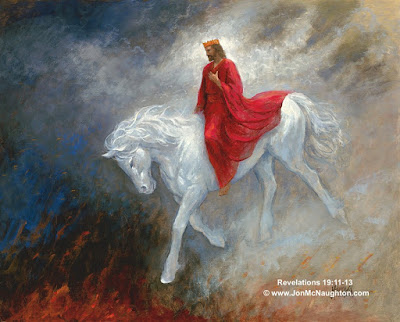
Imagine your name with your every sin written on a placard and nailed to the cross of a person who has done no wrong to pay the price of suffering on your behalf in the valley of humiliation and death. This is the imagery Paul used to personalize the Atonement to the understanding of the Colossian saints (Colossians 2:14-15). In his day it was customary for Romans to write the crimes committed by the condemned person on a placard and nailed to the cross at the time of his crucifixion for all to see (John 19:19-22).

I have had occasion to reflect on this when enduring seemed like too big a task with a stark realization that if I didn’t ‘press toward the mark’ as Paul admonished (Philippians 3:14), I would be paying unthinkable dishonour to the most benevolent sacrifice for my soul. Not only this, but a gratitude for that sacrifice which erased my every indignity by paying the demands of justice so that I might not suffer the pains of a damned soul. Is there a greater debt than this? Or a greater repayment we could and should ever make? All that we are and can come to be we owe to Him who honoured that placard on His cross at Calvary……


A life laid bare in selfless giving

For man’s purpose of salvation

Crimson drops were spilt like roses

On the hill of His creation.


- CATHRYNE ALLEN 

(Art: The Glory of Jesus Christ by Ralph of Gratis Graphics)
Monday, 19 July 2021

TO BE WORTHY OF HIM


The persecution of the Saints in July 1833 reached its peak when five hundred men rushed into Independence waving a red flag and brandishing guns, dirks, whips, and clubs. Their goal was to rid Jackson county of the ‘Mormons’. They vowed to whip and kill the men; destroy their children, and ravish their women. To save the saints, Edward Partridge, William Phelps, Isaac Morley, A. Sidney Gilbert, John Whitmer, and John Corrill offered themselves as a ransom to be scourged or put to death. Their offered sacrifice was not accepted as the mob proceeded to wreak havoc with their proclamation of “leave the county or die”. (Doctrine and Covenants Student Manual p 231)

We are all familiar intellectually with the persecution of the early Church but none of us know it experientially. I for one cannot fathom enduring the stress of such persecution and fearing for the lives of my children. My most stressful situation in life has been year 2020. I feel the oppressing effects of the latest lockdown as I drive my car in peace to the nearest supermarket to buy from the well-stocked bulging shelves. I really lack nothing but am still finding it difficult to cope with lack of the freedom I am accustomed to. My stress levels would be minimal to that of the early saints but nevertheless it is valid considering I am a product of my time. No difficult situation is insignificant. What is significant is this: in the midst of that severe persecution in 1833, the Lord gave an incredibly surprising revelation to the saints in which He said: “Fear not, rejoice evermore and in everything give thanks” (D&C 98:1). Not what you would expect, is it? I wonder how many saints balked at that instruction and I wonder if I would have been one of them. I imagine some of them would have wondered if the Lord really knew what was going on and what on earth they had to be grateful for.

Among other significant things the Lord mentioned relating to persecution, He took the meaning of it to another level when He said: “I will prove you in all things, whether you will abide in my covenant, even unto death…” (D&C 98:14). It has been my long held belief that we made certain covenants in pre-existence before we made them here. The most important covenant I believe we made was that we would accept and endure the difficulties of our times and remain valiant throughout. This meant physical persecution for early saints and a pandamic for us. Why? That we ‘may be found worthy…..of Him (98:14,15). Worthy of Him who offers us redemption, salvation, deliverance, glory, godhood…..May we place these un-surpassing gifts above all the treasures and trials of this world and believe in a brighter day.

Let me Lord
Sit by the furnace of affliction
To warm myself by Thy refiner’s fire;
Purge my sin and polish me as silver
That I might in the end receive my desire
To shine forth as a jewel in Thy crown
When thou wilt come
To gather Thine own
To receive us into Thy bosom
And carry us home

  • Cathryne Allen

Wednesday, 21 September 2016

THE THIEVES OF PEACE


There existed in ancient America a secret society which proved to be the cause of affliction to the Nephites and Lamanites alike. The founder of this society was a man called Gadianton but the principles that upheld his society were of a far more ancient date (3 Nephi 3:9, Moses 5:29-31). Indeed the mastermind behind the whole operation was far more clever, apt and evil than Gadianton could ever hope to be. He was and is a thief in the night who comes to 'steal, kill and destroy' (John 10:10) and uses mortal men as his puppets to wreak destruction upon individuals, societies and nations. We know this personage as Lucifer, Satan and the Devil. We see him in the obviously destructive paths such as drugs, sexual depravities and murderous dispositions among individuals and leaders of nations and terrorists. However, his methods of destruction are subtle more often than not for he also moves in respectable circles and hides behind deceptive and seemingly good elements that form the fabric of a society.


Just eight years prior to Christ's visit to the ancient America this band of Gadianton robbers, under the leadership of Giddianhi sought to annihilate the Nephite nation. Under the guise of politeness and goodwill, and using flattery, feigning concern and making false promises, he wrote to Lachoneus, the governor of the land and demanded the surrender of the Nephites and their lands. Lachoneus refused and proceeded to prepare his people for impending battle. Lachoneus was a man of God so even though he prepared his people physically, his wisest move was to prepare them spiritually (3 Nephi 3:15,16). The people obeyed and when Giddianhi descended upon them with his armies, their immediate reaction was to 'lift their cries to the Lord their God, that he would spare them and deliver them out of the hands of their enemies' (3 Nephi 4:8). When the battles were won and deliverance assured, Nephites' cries once again ascended to the heavens but this time in praise and gratitude knowing 'it was because of their repentance and their humility that they had been delivered from an everlasting destruction' (3 Nephi 4:33).

Why was this particular portion of Nephite history important enough to be included in the pages of The Book of Mormon? Because it provides us with the perfect formula for deliverance from the thieves of peace. This formula runs in this sequence: humility - repentance - supplication - deliverance - gratitude. Contrast this story of Nephites' victory with the story of ancient Israel. When the Lord issued commandments and instructions for their conduct at the start of their deliverance from Egypt, He assured them that He will be 'their God' (Exodus 29:45). And He wanted to be, desperately, but Israel was far from being humble and obedient and as a result they landed themselves in bondage over and over again. Their history is a monument to stupidity and obstinence. When they cried for a king to rule them despite all the battles the Lord won for them, Jehovah, the God of heaven and earth, who has all power to deliver both spiritually and physically, out of His infinite mercy acquiesced saying to the bewildered Samuel: "Hearken unto the voice of the people in all that they say unto thee: for they have not rejected thee, but they have rejected me, that I should not reign over them" (1 Samuel 8:7). One cannot even imagine with what heaviness of heart the Saviour would have uttered these words. Those who are His true disciples would understand this because they believe Nephi's declaration that "...He loveth those who would have Him be their God" (1 Nephi 17:40).


We, who live in the modern world, still live with the Gadianton robbers. They infiltrate our society in many ways and seek to destroy our peace. Their labours affect all aspects of human life. They are 'conspiring men in the last days' (D&C 89:4) who harbour evil designs in their hearts for the purpose of getting gain. They do Satan's bidding and seek to "steal, kill and destroy". Their works are secret and the fruits of their labours become the silent thieves of peace resulting in suffering of the populace at large, which suffering comes to us by way of stress, worry, anxiety, depression, financial burdens, grief, sorrow, poor health, bondage of addiction, fear, to name a few. Like Nephites of old, we should know that there is only one sure place where we can find salvation from such destructing forces. The deliverance assured, the formula the same: humility - repentance - supplication - deliverance - gratitude. The recognition of the Lord's power to deliver and our dependence on Him should be the precursor of putting our lives into order sufficiently enough to qualify for the powers of heaven to be released on our behalf. Sometimes we may wonder how we can repent of the very thing that is beyond our capability and that we are supplicating the Lord for. Repentance might not always mean discontinuance of the wrong things we are doing but the right things we are omitting to do, such as more regular and fervent prayer, seeking the spirit, having faith, regular scripture study, or more committed Church attendance. In other words, we must be found doing what we can to qualify for heavenly help. There has to be effort and exertion towards righteousness.

When your moment of retribution came in the garden of Gethsemane, the Saviour saw and felt your life; your pains, your tears, your struggles, your stresses. He knows the thieves of your peace and He has power over them but you must believe and acknowledge that belief on bended knee. In fervor of hope He calls: "Come unto me all ye that are heavy laden and I will give you rest" (Matt 11:28). We who answer that call know Him as -

The Great Deliverer
The Son of God
The Lord of Hosts
The Lord of Glory
The Son of Righteousness
The Stone of Israel
The Holy Messiah
The King of Glory
The Everlasting Father
The Prince of Peace
The Holy One
The Eternal God
The Saviour
The Mighty One
The Great I am


"for I am the Lord that healeth thee"

- Exodus 15: 26


Wednesday, 8 July 2015

IN WHOM THERE IS JOY


Surely he has borne our griefs, and carried our sorrows,
He was wounded for our transgressions,
He was bruised for our iniquities,
The chastisement of our peace was laid upon him.
With his stripes we are healed.
The Lord has laid on him the iniquities of us all,
He is brought as a lamb to slaughter.
(Isaiah 53)


Enduring the unspeakable suffering of Gethsemane, exhausted and bathed in blood and sweat from the agony, betrayed by one and forsaken by the rest who loved Him (Matt 26:56), Jesus was arrested as a thief in the night and forced to walk to Caiaphas' Palace, to the Antonia Fortress, to Herod's palace, and back to Antonia Fortress. In the process he had been without food for twelve hours, slapped, beaten with fists, palms and rods and mocked and scourged. Treated like the basest of criminals and betrayed for the price of a slave yet innocent of all the charges they could bring against Him, He subjected Himself to the cruelest and most unjust of all trials and deaths, for the greater good of all who in the realms above had chosen Him to pay the ransom for their souls and to bring them to life eternal.  

Accused unjustly for blasphemy during an illegal nightly court held by the Sanhedrin, Jesus was taken to Pilate, the Roman procurator who had the power to sanction death, the power which the Sanhedrin, the highest Jewish court of justice and the supreme legislative council at Jerusalem, did not possess. The Sanhedrin condemned Jesus to death for blasphemy but knowing that blasphemy would bear no weight with the Roman law, they accused Him of treason against the Roman State saying He claimed He was the King of the Jews, unwilling to pay tribute to Caesar. Not being able to find any fault in Jesus (Luke 23:4) and attempting to pass the judgment of death onto Herod and the Jewish people with no success, Pilate violated his own best instincts and indulged his hypocrisy by condemning Jesus to death. Pilate feared the Jewish people because of many minor acts of violence, extortion and cruelty which the Jews held against him. 'He realised that his tenure was insecure, and he dreaded exposure. Such wrongs had he wrought that when he would have done good, he was deterred through cowardly fear of the accusing past' (Talmage, Jesus the Christ, pp 648-649). Making it clear to this man of hypocrisy that it is not really within his power to save or take away His life, the Saviour just about exonerated him from His imminent death by telling him: "To this end was I born, and for this cause came I into the world" (John 18:37). 


"Reproach [had] broken [his] heart; and [he was] full of heaviness: and [he] looked for some to take pity, but there was none; and for comforters, but [he] found none."
(Psalm 69:20)

"Stripped, He was raised on the cross with a mocking sign over His head: 'JESUS OF NAZARETH THE KING OF THE JEWS'. As He hung in anguish, the rulers and people gaped and cursed and condemned Him, taunting: 'He saved others; let him save himself' (Luke 23:35). Through the anguish, He had only loving words. To His mother, Mary, who must have felt the pangs of near-death in her own body, it was concern that she be cared for. To the thief who would repent, He gave hope. At noon the heavens grew black for three hours, as if the universe itself were weeping for the agony of the Creator. In that time all the infinite agonies and merciless pains of Gethsemane returned, and His Father's spirit itself withdrew that the victory might be His. At the ninth hour, 3:00 pm, 'Jesus cried with a loud voice, saying....My God, my God, why has thou forsaken me? (Matt 27:46). In that eerie mid-afternoon darkness, someone ran and filled a sponge with vinegar. Having received the vinegar, Jesus said: 'Father, it is finished, thy will is done' (JST Matt 27:54). As He died, the veil of the temple was rent, and the earth quaked and rocks were rent as if to say with a nearby centurion, 'Truly this man was the son of God' (Mark 15:39). (Scot and Maurine Proctor, Lesson 26, To This End Was I Born, Meridian Magazine)

We may ask ourselves why the suffering in the Garden of Gethsemane alone did not suffice as the Atonement for the sins of mankind? Why all this emphasis on the shedding of blood? Why is the Atonement incomplete without it? Why do we need to dwell with such emphasis, and so repetitively, on Christ's death and the manner in which it was executed? The reason is startling and compelling: "Where salvation is concerned, we are dealing with life and death; we are born into mortality so that we may have the privilege of dying and coming forth in immortality. In our search for salvation, we are dealing with mortal life and the natural death; we are dealing with immortality and eternal life; we are seeking to learn how mortality becomes immortality, and how men, having bowed to the natural death, can yet come forth and gain eternal life. To crystallize in our minds and to dramatize before our eyes what is involved in all this, the Lord has chosen blood as the symbol of both life and death" (McConkie, The Promised Messiah, p. 259).  It was never the flesh of the sacrificial animals that was required for mortal men to understand the infinite sacrifice that would bring life eternal, but the blood. Because life is in the blood (Lev 17:14), blood is the element and symbol of life, thus the necessity for the blood atonement, for as the shedding of man's blood brings death, the shedding of Christ's blood brings life. Thus the blood atonement becomes the symbol of eternal life.


It was through the agony of Gethsemane and the blood Atonement of Calvary that the Saviour could offer freedom and eternal life to those who languished in spirit prison following His crucifixion. With what joyful hope they must have received word that they could be freed from the prison of death, of hell and of endless torment now that the sacrifice was complete. That they would, through repentence and acceptance of His gospel be 'free from the sorrow of sin, free from the chains of hell, free from that spiritual death which is to be dead as pertaining to the things of righteousness - all this is part of the glorious doctrine of salvation for the dead, and it includes the fact that our Lord ministered personally to the spirits in prison' (McConkie, The Promised Messiah, p 240).  It was of these captives that Zechariah prophesied when he spoke of 'prisoners of hope', that the Lord their God would save them 'by the blood of thy covenant', meaning the gospel covenant, which would only have effect through the shedding of the blood of Christ (Zech. 9:11,12). With what gratitude those in spirit prison must have bowed before Him knowing the atoning blood had been spilt, the mercy extended, the justice satisfied. 

And what of us who had not yet been born, who were valiant in our testimonies of Jesus? Could we have been been with the departed spirits of the just who had rejoiced to hear of the accomplished sacrifice and had gathered to welcome the triumphant Saviour back into their midst? If we shouted for joy at the time of creation (Job 38:6,7), we must have shouted for joy at the time of redemption: "And there were gathered together in one place an innumerable company of the spirits of the just, who had been faithful in the testimony of Jesus while they lived in mortality; And who had offered sacrifice in the similitude of the great sacrifice of the Son of God, and had suffered tribulation in their Redeemer's name. All these had departed the mortal life, firm in the hope of a glorious resurrection, through the grace of God the Father and his Only Begotten Son, Jesus Christ. I beheld that they were filled with the joy and gladness, and were rejoicing together because the day of their deliverance was at hand (D&C 138:12-15). How joyous we must have been knowing that godhood which we so valiantly fought for was now within our reach. For if the chosen Saviour had overcome the world, the power would be ours to do likewise. And so 'trailing clouds of glory' we each took our turn, with eagerness and joy, coming to a fallen world to work out our salvation through the grace of Him who has paved the way, Immanuel, The Lord of Hosts, The Lord of Glory, Eternal King, Wonderful, Counselor, The Mighty God, The Everlasting Father, The Prince of Peace.


"Let the earth break forth into singing. Let the dead speak forth anthems of eternal praise to the King Immanuel........Let the mountains shout for joy, and all ye valleys cry aloud; and all ye seas and dry lands tell the wonders of your Eternal King! And ye rivers, and brooks, and rills, flow down with gladness.. Let the woods and all the threes of the field praise the Lord; and ye solid rocks weep for joy! And let the sun, moon, and the morning stars sing together, and let all the sons of God shout for joy! And let the eternal creations declare his name forever and ever!" 
(D&C 128:22)


Thursday, 10 April 2014

LOOKING UP


From the very creation of the world to this last dispensation, God has provided his children with many effective ways to admonish them to 'look to God and live'. We might look to the children of Israel and the miracles they witnessed and think that it should have been easy for them to do so with such tangible proofs and evidences that He was in their midst.  Our signs to direct us towards Him seem subtle in comparison.  After all there is no manna in our backyard and there is no smell of animal sacrifices in our temples to provide such visually searing remembrance of shedding of His blood for the souls of men.  So how can we effectively remember to stop looking down under the crushing weight of this world that oppresses us with demands of daily necessities and hardship?  When we are looking down, we cannot look up, it is impossible to do both,  but look up we must if we want to rise above this oppression.  The Israelites of old make an interesting study in this regard.

The Israelites' entire journey to the promised land was an exercise in 'looking up' to see the Saviour of the world, their personal and collective saviour who would not only lead them to their promised land but also to life eternal.  Everything the Saviour did for them was symbolic of Him to keep them in remembrance of His power to save and deliver.  Even the rod with which Moses challenged Pharoah's authority, which parted the Red Sea and provided drinking water to the needy Israelites became the symbol of Christ's ability to heal the believing, as it held up the serpent symbolic of Him who has all power.  According to the mythic epics of the ancient Near East, this rod was cut from the tree of life itself and passed down through the patriarchs to Abraham and ending up with Moses.  In the Book of Mormon we learn from Nephi that the tree of life represents the Saviour (1 Nephi 11) . Even though the Saviour sought to establish himself as the God of Israel to ultimately lead the Israelites to exaltation, he used the needs of this temporal life to point them in that direction.

I think why the Israelites found it difficult to cope with the challenges of their journey is because they expected the deliverance to give them immediate ease from any burdens and difficulties. They expected the milk and honey straight away.  Surely that's what deliverance means?  What happened instead was that they went from slavery to the harsh challenges of the wilderness.  Each of those challenges though were needful for them to get to know the God of Israel. The water that issued from the rock of Horeb became a symbol of Living Water as the rock yielded under the Christ within the rod in the hands of Moses. How else could Israelites learn that they were in the hands of the Living Water? And as manna descended upon the dew straight from heaven and filled the hungry hosts of Israel, how could they not know that they were fed by the Bread of Life?  How tough would it have been in the wilderness that afflicted them with so many personal discomforts and fears, yet the wilderness was exactly what was needful to serve as the training ground to make the Israelites God's people.


I love this painting by the LDS artist, Rose Datoc Dall.  It is titled "Hope of Israel".  A babe, yet a god. I love to see the Saviour depicted as a child because it reminds me that He experienced mortality like the rest of us, that He had to become acquainted with humanity to save the humanity.  He truly was the hope of Israel for no other power could have delivered them from their misery and He remains the hope of Israel today. Now more than ever, the house of Israel needs to be invested in that hope. Our needs today are really not that different from ancient times, they are just packaged differently.  Our only hope is the Saviour of the world who had 'descended below all things' that he might comprehend all things, 'that he might be in all and through all things, the light of truth' and who 'ascended up on high' (D&C 88:6).  Where once he dwelt in the tabernacle of the congreation, He now sits upon His throne.  A god of majesty and power filled with grace, mercy and truth.  A god worth knowing and looking up to for we cannot afford not to.


"For the cloud of the Lord was upon the tabernacle by day, and fire was on it by night, in the sight of all the house of Israel, throughout all their journeys" (Exodus 40:38).  Imagine having physical evidence that God is in your midst.  Ancient Israel was constantly subjected to signs and wonders, yet they found it difficult to trust that the Lord would supply the necessities of life for them.  No wonder they rejected the higher law, the commitment was not there, but murmuring was.  For this reason the Lord in his mercy gave them the lower law to live by.  We however, are required to live by the higher law and are required to have an exorbitant amount of faith to follow Him in all things, and to trust that He will care for us as he cared for ancient Israel. No cloud of the Lord resting on our temples by day and fire by night for us.  So how do we remember to look up and believe the Saviour can do for us what he says He can do?  By living in constant 'state of grace'.  Grace being  God's power to fill the gap between what we can give and what is required of us.  In all things, both temporal and spiritual.  When you are looking up in constant supplication to the God of Israel depending on Him to provide what is lacking that you cannot supply, you are in the state of grace. This applies to temporal needs as well as spiritual striving to become better.

There is a component of the state of grace that the ancient Israel was somewhat short on and that is gratitude.  When you are constantly murmuring, you cannot cultivate the attitude of gratitude and Israelites were proficient at murmuring, constantly afraid that they would die from their afflictions.  Why would God take them out of Egypt to allow them to die in the wilderness? There was no logic to their fears.  When you are murmuring you are denying God's power to come to your aid, his goodness and his watchful eye. Murmuring destroys your faith and breeds distrust and doubt.  By it you are denying what God has already done for you and given you and what you have learnt about your total dependence on Him.  When you pray for something and then go about complaining that you don't have it, you have stepped out of the state of grace.  God cannot give you what you need if you are creating the feeling of lack for your reality will always match the vibrational energy that you are creating.  This vibration can be likened to a magnetic field that you create by believing that you will receive.  If the magnetic field is not there, the blessing can be repelled.  If however, you ask for something and reflect consistently on all that you have already received from the fountain of all blessings, you are acknowledging God's power and your gratitude will create the vibrational energy that will draw that blessing to you.  This is the power of faith because faith is energy. Whatever you invest yourself in will create the energy to match that investment.  If you invest yourself in sorrow, you will create more sorrow, if you invest yourself in joy, you will have more joy.  If you are looking up, believing that you will receive, you will (1 Nephi 7:12).  The Saviour himself said this many times in the scriptures:

"Behold, I say unto you that whosoever believeth in Christ, doubting nothing, whatsoever he shall ask the Father in the name of Christ it shall be granted him; and this promise is unto all, even unto the ends of the earth." (Mormon 9:21)


To know God is to trust in His might and power and in His promises.  How much more blessed are you than the Israelites of old if you believe without the signs, if the bended knee is all you need to find the God of Israel.  How beloved you are of God if you honour Him with your faith and faithfulness.  Abraham's belief in God's promises to him were accounted to him for righteousness (Galatians 3:6). You are of the seed of Abraham, a true Israelite in the household of God. You have the power to believe.  No matter how heavy your load, lift your head and look up.  Look up and believe.