Showing posts with label #prophecy. Show all posts

Thursday, 30 November 2023

THE BOOK OF REVELATION


I want to tell you about a book of love. This book is reluctantly read and studied and largely unappreciated yet this book is one of the most important amongst holy writ. This book is The Book of Revelation and this is why it is a book of love……

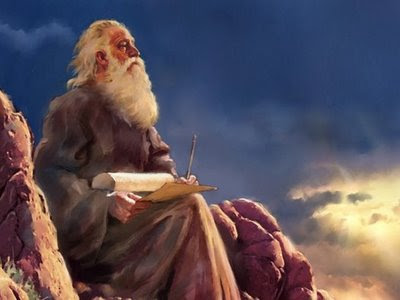
 Some two thousand years ago, during the bleakest period of Church history, there was on the island of Patmos an exile, a prophet and an apostle of the Lord Jesus Christ, the last apostle alive;  Peter having been crucified, Paul beheaded, Bartholemew skinned alive, Thomas and Matthew run through with spears. By the time of Patmos, the history of the Church included ‘the lining of Nero's colonnade with crucified Christians’ (Student Manual, The Life and Teachings of Jesus and His Apostles, p 449). The Apostle that survived it all and would never taste of death was called by Jesus ‘the son of thunder’ (Mark 3:17). In his own writings he referred to himself as the disciple whom Jesus loved and as the ‘other disciple’ (John 13:23; 21:20; 20:2-8). We know him as John The Beloved…..he who lives as ‘a flaming fire and a ministering angel’ and sorrows for the sins of the world….(D&C 7:5,6)

More than six centuries before John was even born, the Lord revealed to Nephi many of the things we now have in the Book of Revelation but forbade him to write them down because they were reserved for John (1 Nephi 14:19-28). And so to that rocky island prison, on a particular Sunday came the glorified, exalted Christ to the apostle whom He also called 'The Beloved' (Revelation 1:13-18; D&C 7:1; 3 Nephi 28:4-6). 

In the revelation John was given on that occasion, all the sinful and evil history of this world was revealed to him but completed with the glorious hope of Christ's return who would reign in peace, harmony and love for a thousand years. What comfort that must have been to John who, like the 3 Nephites, would sorrow for the sins of the world during his sojourn in this dismal telestial world (3 Nephi 28:9). This is a story of love...love for one cherished disciple and love for all those who accept and follow Christ and have a hope of eternal life through the virtue of his atoning blood.

When the Saviour appeared to John, it was as if He was saying to him: "You will be here a long time and you need to know everything that will happen while you are here but be comforted John, my Beloved, because I am coming back and when I come I will 'wipe away all tears....and there shall be no more death, neither sorrow, nor crying, neither shall there be any more pain...." (Revelation 21:4). Is this not love?

I long to see the paths he wanders

To and fro the length of the earth;

I wish to wipe his brow

At the end of the day

To uphold the magnitude of his holy work.

Let me hold him close

And soothe his heavy heart

As the time for final gathering nears,

And let me gather in my cupped hands

The hallowed drops of The Beloved’s tears.


- CATHRYNE ALLEN 

(Art: The Second Coming by Danny Hahlbohm)

Thursday, 22 July 2021

GREAT ARE THE WORDS OF ISAIAH


How much You must love
Those who serve Thee to the end
Who speak the words of truth
And proclaim Thy holy name;
These are Thy prophets
Your everlasting friends
The strong, the noble
The devoted who hear and obey;
These are Thine angels who herald
Thy gospel and Thy name;
To the ends of the earth they speak
And their words forever remain

Who can ever discount the tenacity of Jeremiah who could not refrain from testifying despite his sufferings; the loneliness of John the Beloved who penned the greatest revelation whilst exiled on Patmos; the sorrowing for their people of Alma and Mormon; the sacrifices of the living prophets who serve in the Church full time and carry the responsibility of the world wide membership? These are the greats....and I admire them all but nothing renders my heart with tenderness and the Spirit like the world of Isaiah. Imagine being a writer. Now imagine being so good at it that the Saviour himself says 'great are your words' and that everyone should study them.
Not only was Isaiah a statesman, an amazing orator and an even greater poetic writer, he was a prophet of God who received inspiration and revelation for the things he wroter and testified of. Whether in his interaction with the kings of Judah he was the advisor to, or his prophecies, the spirit of revelation comes through. This morning I studied chapter 42 and was overcome with the understanding that came to me about the character of the Saviour; his power and humility intertwined in such a glorious personality that has until now been beyond my comprehension. It reduced me to tears. I could not only understand Him this morning but I could SEE Him through my heart. I testify of His glory and His greatness. And I thank Isaiah for being one of the greats.....
  • Cathryne Allen

Sunday, 5 January 2020

THE LEGACY OF MORMON


I am in awe of Mormon. Worthy of my admiration is his spiritual tenacity to survive the most evil period of Nephite history morally unscathed and for that he deserves every praise. My ultimate admiration, however, concerns his achievements as a historian and a writer. I know of no other historian who has had the capacity to intimately connect with his readers like Mormon has. The Jewish historian, Josephus, comes close but nowhere near Mormon's standard because Mormon, unlike all the others, was a man of God with a vision. When I read the Book of Mormon I do not hear his voice even though he occasionally interrupts his narrative to reveal himself. What I hear when I read his record is the voice of God. This speaks volumes regarding his true intent which was not to bring himself to prominence but to bring men unto Christ. Mormon was a visionary man and he wrote with this one purpose. Having witnessed the destruction of his people fueled his desire to in some way save the future generations 'that they may once again be a delightsome people' (Words of Mormon 1:8).

As a writer, my biggest motivation comes from my readers. A writer needs to be read. Mormon never had this satisfaction. Imagine writing a book for people who would live almost 2,000 years after you and beyond. What would you say? What motivation would you have for doing it? So why did Mormon do it? Besides his desire to save the remnant of the House of Israel (Mormon 7:1-5), the obvious reason is that the records were handed down to him with a commission when he was just 10 years old that he keep them going (Mormon 1:1-4). The second reason is that he was commanded what to write (3 Nephi 26:12). But here is the crux of the matter, I believe Mormon who was a visionary man, knew his readers. He knew us and he knew us at close range.

Why do we have the Book of Mormon today? Because Mormon's son Moroni caught and continued his father's vision. And herewith is another amazing visionary man with an equal commitment to the salvation of others and preservation of the house of Israel. Moroni had a clear vision of our day and he described it in impeccable detail. I cannot help but believe that he saw my home land when I read: "Yea, it shall come in a day when there shall be heard of fires, and tempests, and vapors of smoke in foreign lands" (Momon 8:29). Right now Australia is burning. The smoke has reached New Zealand. 6,300,000 hectares of its land is scorched and burnt to the ground.  Did Dorothea MacKellar's heart ache when she penned her famous poem "I love A Sunburnt Country" as much as Moroni's when he saw it burn?

The Book of Mormon is your book. It is a book you can recognise yourself in. It will prick your conscience when you need it; give you answers when you feel lost; give you understanding when you have none and equip you with knowledge to enable you to fight your every foe. You were before Mormon's eyes when he wrote it and before Moroni's when he preserved it. They knew you. They prayed for you. And they wished against all hope that you would read it. Can you not feel this through these words: "Behold, I speak unto you as if ye were present, and yet ye are not. But behold, Jesus Christ hath shown you unto me, and I know your doing." (Mormon 8:15)


Wednesday, 25 November 2015

THE BOOK OF HOPE


Some two thousand years ago, during the bleakest period of Church history, there was on the island of Patmos an exile, a prophet and an apostle of the Lord Jesus Christ, the last apostle alive, all others having been killed before him. And to that rocky island prison, on a particular Sunday came the glorified, exalted Christ to the apostle whom He called 'The Beloved'. "Heralded by the trumpet-blast of the godly voice and standing in the midst of seven golden candlesticks symbolic of the seven branches of the church in Asia was the Saviour. Some fifty or sixty years before He had hung in agony on the cross and had been laid in the dark recesses of a borrowed tomb. Now he stood in blinding, blazing glory before John: "I am he that liveth, and was dead", he declared, "and, behold, I am alive for evermore" (Revelation 1:18)" (The Life and Teachings of Jesus and His Apostles, p 449)

So overcome was John that he fell to the earth as though dead but the Saviour touched Him and told him not to be afraid but to write down the revelation which he was about to receive for the seven branches of the Church who were facing life-threatening persecutions. "They knew the wrath of a government intent on enforcing the policy of emperor worship. They knew the clutch of fear at the approaching sound of Roman legionaires. By the time of Patmos, according to the traditions that have come down to us, Peter had been crucified, Paul beheaded, Bartholemew skinned alive, Thomas and Matthew run through with spears. John was the only surviving apostle (an apostle who would survive it all and never taste of death); all the others had died violently because of their faith. By the time of Patmos, the history of the Church included the lining of Nero's colonnade with crucified Christians and the savagery of the mobs screaming for blood in the Coliseum and the Circus Maximus." (The Life and Teachings of Jesus and His Apostles, p 449).


The revelation which John the Beloved received is known to us as The Book of Revelation. There are many scholastic views of the book which offer explanations as to its' meaning. Some argue that the book needs to be considered with a non-prophetic view, that all that is contained therein pertains to the past, meaning John's day, referring to the clash between the Church and the Roman Empire. Others however, claim that the Book needs to be considered with a solely prophetic view and that the symbols within it are to be seen as future predictions of all the great events of history. Viewed either way, people throughout Christendom have found the Book of Revelation hard to understand. Joseph Smith has said, however, that "the Book of Revelation is one of the plainest books God ever caused to be written" (Teachings, p. 290). One can wonder how that can be so considering the extensive use of symbolism used by John when describing his vision. The clue to its plainness lies in the very heading of this book. Because The Book of Revelation was received by revelation, it can also be best understood through revelation. Thankfully, as Latter-day Saints, we not only have personal revelation to rely on for understanding of this book but also revelation given to latter-day prophets: "Thanks be to the interpretive material found in sections 29, 77, 88 and others of the revelations in the Doctrine and Covenants; plus the revisions given in the Inspired Version of the Bible; plus the sermons of the Prophet; plus some clarifying explanations in the Book of Mormon and other latter-day scripture; plus our over-all knowledge of the plan of salvation - thanks be to all of these things.....the fact is that we have a marvelously comprehensive and correct understanding of this otherwise hidden book" (Bruce R. McConkie, Doctrinal New Testament Commentary, 3:431).

The greatest purpose and meaning of The Book of Revelation is that it is a book of hope. It's main purpose is not history but prophecy. This is evident in the fact that the Book covers the history of the earth's 6 thousand years only briefly whereas it expounds on the period of the Millenium in lengthy detail. What does this have to do with hope? The Book of Revelation gives us hope in that Millenium reign when evil, "in all of its power and wickedness, shall be put down once and for all" (The Life and Teachings of Jesus Christ and His Apostles, p. 444). This knowledge would have given great hope to the saints who were witnessing the decline of the Church and the beginning of the Great Apostasy but it is of even greater value to us because it assures us that the forces of great evil which are gaining momentum in our day will one day be destroyed and come to an end. The Book of Revelation highlights the conquest of evil and that God is still over all and will triumph in the end, which triumph will cause all His creations to worship Him with glory and praise. The Book of Revelation presents the greatest contrast between the Saviour's first coming to earth and the second. Whereas the first time he was despised and rejected of men, when all this is over and the earth is rolled together as a scroll, even the earth will sing His praise and honour His name (Rev 4:9-11, 5:14, 11:17, 16:5).


The hope of true followers of Jesus Christ, and the hope referred to in John's revelation should be to gain eternal salvation in the kingdom of God. Moroni tells us that if we have no hope we must be in despair (Moroni 10:22). An absence of hope for something better than this telestial life would surely suppress any incentive to repent, deplete the power of endurance, entice fear and diminish belief needed to overcome the natural man. The Book of Revelation gives us hope that all these things are possible. In it John sees Satan as a red dragon driving a woman with a child (The Church) into wilderness (apostasy) (Rev 12). As the woman rises again out of the wilderness John records 'the dragon was wroth with the woman, and went to make war with the remnant of her seed, which keep the commandments of God, and have the testimony of Jesus' (Rev 12:17). This is a frightful depiction of our day which would leave us, the members of the Church, to the buffetings of Satan if we had no hope that we can fight the fierceness of the battle that we are engaged in: "Yet, of all people, we as Latter-day Saints should be the most optimistic and the least pessimistic. For while we know that 'peace shall be taken from the earth, and the devil shall have power over his own dominion', we are also assured that 'the Lord shall have power over his saints, and shall reign in their midst' (D&C 1:35-36) (Ezra Taft Benson in CR, Oct. 1974, p. 90).

No one can read the concluding chapters of Revelation without feeling the hope that John felt as he looked forward to our day. It is somewhat appropriate that the Saviour would give him this glorious vision considering he was to live to witness incredible calamities, wars, pestilence, wickedness and the Great Apostasy. It might also be appropriate for us to assume that this vision was given to the beloved apostle, who would never taste of death, out of love so that the hope of the triumphant ending would enable John to endure everything preceding the Millenium when 'the dragon, that old serpent, which is the Devil, and Satan' will be bound for a thousand years enabling a period of peace for those who will dwell with Christ in paradisiacal glory' (Rev 20:2). One would have to wonder what kind of chain it would have to be to bind the Prince of Darkness and what kind of bottomless pit could contain him? To believe that such a thing could ever happen means for us to believe that we are more powerful than him because we have kept our first estate. Because Satan is a spirit only, all his power is derived through spiritual means from those who live on this earth clothed in earthly tabernacles, meaning us. His power is added upon from spiritual energy that we create. We make him powerful by creating spiritual energy of darkness through sin or powerless by creating spiritual light through righteousness. Since the Saviour is the Light of the World, Satan is the opposite, the Prince of Darkness. The chain he will be bound with and the bottomless pit he will be cast into as referred to in the Book of Revelation are terms symbolic of righteous living of those who will qualify to live during the Millenium (see Eldred G. Smith in CR, Apr. 1970, p 142 and 1 Nephi  22:26). In other words, because of people's righteousness, there will be no spiritual darkness and therefore Satan's power will dissipate.


Righteous living proceeds from a committed heart of true followers of Jesus Christ. It does not come from complacency that some of us in the Church are familiar with: "The abundant life is a spiritual life. Too many sit at the banquet table of the gospel of Jesus Christ and merely nibble at the feast placed before them. They go through the motions - attending their meetings, perhaps glancing at the scriptures, repeating familiar prayers - but their hearts are far away. If they are honest, they would admit to being more interested in the latest neighborhood rumors, stock market trends, and their favourite TV show than they are in the supernal wonders and sweet ministerings of the Holy Spirit. Do you wish to partake of this living water and experience that divine well springing up within you to everlasting life? Then be not afraid. Believe with all  your hearts. Develop an unshakable faith in the Son of God. Let your hearts reach out in earnest prayer. Fill your minds with knowledge of Him. Forsake your weaknesses. Walk in holiness and harmony with the commandments. Drink deeply of the living waters of the gospel of Jesus Christ" ( Joseph B. Wirthlin, The Abundant Life, Ensign, May 2006).

Being merely Church members is not enough, we must build the spiritual core within us which will enable us to stand when the mighty winds of apostasy descend upon us. Then no imperfect leadership in the Church can offend us, no transpired event in Church history will sway us, no Church teaching we do not understand will cause us to give up. If we are built on the spirit of prophecy and an unshakable testimony of  Christ, we will withstand any pressure to cave and any temptation to sin and seek justification for same through some imperfection that we insist we have found in the Church for such imperfections only serve as great stumbling blocks that obscure our vision from perfectly seeing the Saviour of all mankind. With an absence of fear, being filled with hope and armed with righteousness and faith we can defeat and bind the enemy who seeks our destruction and pave the way for Him who will 'wipe away all tears from [our] eyes' (Rev 21:4) and with whom we can live during the Millenial reign of peace and happiness. It is therefore, our duty here and now to 'drink deeply of the living waters of the gospel of Jesus Christ' that we might have reason to hope for a better world, a world where 'there shall be no more death, neither sorrow, nor crying, neither shall there be any more pain: for the former things are passed away' (Rev 21:4).


".....for we have a labor to perform whilst in this tabernacle of clay,
that we may conquer the enemy of all righteousness....."
(Moroni 9:6)


Wednesday, 17 September 2014

UNDERSTANDING ISAIAH


 Imagine being a prophet, a writer and a poet. Now imagine that your revelations and literary works are so great that Jesus Christ himself issues a command that they should be studied and understood. Jesus quoted Isaiah more frequently than any other prophet. He issued the following edict to all who would be his true disciples: ".....a commandment I give unto you that ye search these things diligently; for great are the words of Isaiah" (3 Nephi 23:1). The operative word in this commandment is to 'search'. To search something means having the intent to find and discover. This takes reading Isaiah to another level. Most people do not like reading Isaiah because quite simply, they do not understand what it is they are reading. Even Nephi of old recognized this predicament. Even though he and his family came from the same geographical area and lived in the same general time period as did Isaiah, Nephi acknowledged that Isaiah was hard for many of his people to understand (2 Nephi 25:1). Nephi loved the teachings of Isaiah and quoted him a lot because he wanted his people to know what he knew regarding his prophecies. For this reason he provided a formula for comprehending Isaiah's writings which is found in 2 Nephi 25:1,4,7. Here Nephi instructs us that we need to:


  • Understand 'the manner of prophesying among the Jews'. This manner of prophecy can best be learnt through scriptures and their commentaries: "The Book of Mormon, the Doctrine and Covenants, and the New Testament - provide quotations and commentaries from 42 of the 66 chapters in the current text of Isaiah. There are also allusions and paragraphs from eight of the other 24 chapters. Thus Isaiah is broadly commented upon by these three sources. No more reliable or enlightening sources are available, and Latter-Day Saints would do well to search these scriptural commentaries along with the book of Isaiah itself to obtain a deeper and fuller understanding of the great words of Isaiah."(Monte S. Nyman, Great Are The Words of Isaiah, GospeLink 2001). Regarding the Book of Mormon, Bruce R. McConkie said: "The Book of Mormon is the world's  greatest commentary on the book of Isaiah. And may I be so bold as to affirm that no one, absolutely no one, in this age and dispensation has or does or can understand the writings of Isaiah until he first learns and believes what God has revealed by the mouths of his Nephite witnesses as these truths are found in that volume of holy writ of which he himself swore this oath: "....as your Lord and your God liveth it is true." (D&C 17:6, Ensign Oct. 1973, p. 81)


  • Be 'filled with the spirit of prophecy'. In Alma 17:2-3, we are told that the sons of Mosiah had the spirit of prophecy because they had 'searched the scriptures diligently' and 'had given themselves to much prayer and fasting'. This gives us a perfect formula along with teachings of modern day prophets who have expounded the scriptures and have given new scriptures to the world gives. In particular, "the Prophet Joseph Smith was divinely called to declare God's word to this generation and his writings and teachings should be considered scripture (D&C 5:10). The book Teachings of the Prophet Joseph Smith, a compilation of many of the doctrinal teachings of Joseph Smith, contains at least 35 quotations, paraphrases and commentaries on the text of Isaiah." (Monte S. Nyman, Great Are the Words of Isaiah, GospeLink 2001);


  • Live in the days when the prophecies of Isaiah are fulfilled. This is probably the most important one but yet the most overlooked. It is of great importance that we recognise fulfillment of prophecies to gain proper appreciation and testimony of them. Nephi declared that "in the days that the prophecies of Isaiah shall be fulfilled men shall know of a surety, at the times when they shall come to pass" (2 Nephi 25:7). One evidence of this is the fulfillment of a prophecy in chapter 29 of Isaiah concerning a sealed book being taken to a learned man. As Latter-day Saints we know that this fulfillment came through Joseph Smith. Non-LDS scholars, however, are still pondering the meaning of this chapter. Personally, it astounds me to read of events of our day that have been written about so long ago and this particular one about the Book of Mormon is a classic.

One cannot read and study Isaiah without feeling his passionate plea to the House of Israel to come unto their God. We cannot help but see the admonition to repent and turn to Him who longs to forgive us and to encircle us in the arms of His love. How can we not know Him when we read: "He is despised and rejected of men; a man of sorrows, and acquainted with grief: and we hid as it were our faces from him; he was despised and we esteemed him not. Surely he hath borne our griefs, and carried our sorrows; yet we did esteem him stricken, smitten of God, and afflicted. But he was wounded for our transgressions, he was bruised for our iniquities; the chastisement of our peace was upon him; and with his stripes we are healed" (Isaiah 53:3-5). And how can we not trust Him when we hear Him say: "For the mountains shall depart, and the hills be removed; but my kindness shall not depart from thee, neither shall the covenant of my peace be removed, saith the Lord that hath mercy on thee" (Isaiah 54:10). When scriptures such as these help us find the Saviour of the world, we will come to proclaim with Him, "Great are the words of Isaiah".


Friday, 12 September 2014

THE LIVING WORD


"While I was on a trip to Brazil with two colleagues from Brigham Young University-Idaho, we had the opportunity to spend several days in the Amazon Jungle on the Rio Negro. The river is enormous beyond imagination, and the vegetation in the jungle is thick. One could easily lose his way if he were to venture into it without a guide. Our guide, Moreno, was a native of Italy. He knew the jungle and the river well. Now in his late 30's, he had realized his childhood dream of living in the Amazon Jungle.

Our small group boarded a canoe docked at our floating hotel and departed for the starting point of our hike. We were fascinated by what we saw and impressed by Moreno's deep knowledge and his ability to lead us through the thick and imposing jungle. As we walked he would explain the various plants, animals, insects, and vegetation that surrounded us. He taught us about plants and insects that could be harmful if we were not careful. He also pointed out various plants that Amazon Indians had used for medicinal or other useful purposes. Deeper into the jungle we went. We truly had no idea where we were going. We merely followed Moreno and trusted that he would get us safely back to our canoe and eventually our hotel.

At one point, Moreno stopped the group, and we all gathered around him. "This jungle is hot and humid", he said. "We are at least a mile from the river, and a person cannot live here without water. You would die quickly. There is water right here, right now, where we are. Can any of you see it?" We could not. All we saw were trees, vines and shrubs. The mosquitoes seemed to be everywhere. None of us had any idea where there might be water nearby. With a smile on his face, Moreno said, "Let me show you." He grabbed his machete and walked to a vine, lightly covered with green velvet moss. After two quick swings, he was holding a piece of the vine in his hand. We still didn't understand. "Water is right here", he said, "right in my hand". Just then he lifted the vine vertically and clear, cool water came dripping out! We were all amazed. As we looked around, we could now see similar vines everywhere. Some were large, others small but once we were taught by one who knew, we saw that in this jungle there was an abundance of water. We each took turns drinking from the vine. As we hiked back to our canoe we continued to see that water was everywhere now we knew where to look.

I have since thought about this experience in relationship to the true vine, living water, and following one who knows. In John 15:1, Jesus teaches us that He is the true vine and His Father is the husbandman. In 1 Nephi 15:15, we read Nephi's prophetic teachings to his unbelieving brethren regarding the remnant of Lehi's seed: "Yea, at that day, will they not receive the strength and nourishment from the true vine?"  In John 4:14, the Saviour teaches a woman of Samaria that He is the one who gives living water: "But whosoever drinketh of the water that I shall give him shall never thirst; but the water that I shall give him shall be in him a well of water springing up into everlasting life". As we read about what Nephi saw in vision in 1 Nephi 11:25, we also learn of the 'fountain of living waters.....which waters are a representation of the love of God'.

Just as Moreno guided our group through the jungles of the Amazon, modern-day prophets can lead us through the jungles of life. If we trust them, they will point us to the true vine and living water."
(Bruce C. Kusch, "Living Water in the Rain Forest", Ensign Feb 2006)


"Surely the Lord God will do nothing, but he revealeth his secret unto his servants the prophets"
Amos 3:7

When Amos was called to preach repentance to the House of Israel around 750 B.C., the Israelites were so far gone in iniquity that they were no longer considered a 'peculiar people'. In fact the Northern Kingdom of Israel and Judah were included in the list of evil nations upon which Amos pronounced curses and calamities which which the Lord would punish them. Israel, who was once favoured was condemned all the more because of the privileges they had enjoyed by virtue of being a covenant people. They had been given the law of God and, therefore, more was expected of them. Instead of living up to that expectation, they squandered their right to be the favoured people by going in the opposite direction. So gross were their sins of idolatry and oppression of the poor that the Lord rejected the whole nation's present and future sacrifices and offerings. So addicted were the Israelites to idolatry that they carried everywhere they went miniature replicas of heathen gods Moloch and Chiun that the Israelite women had adopted (Amos 5:26). And so evil had the women of Samaria become (Amos 4:1-3) that they 'urged their husbands to bring them food bought with money squeezed from the poor' (Old Testament Student Manual, 1 Kings-Malachi, p. 92).  The oppression of the poor was rife amongst the whole nation which showed no mercy or justice to the point where the people 'longed to see the poor in such a state of misery that they threw dust on their heads (a sign of mourning)' (Old Testament Student Manual, p. 91).

We can learn several lessons from the ministry of Amos:

  • The Lord always gives us a lot of opportunities and ample time to repent. In the course of Amos' ministry, Israelites were afflicted with famine, drought, earthquake, floods, heat waves, dust and sand storms, wildfire, excessive rain, mildew and crop blight, insect infestations (grasshoppers, palmerworm etc.), siege, battle losses, and even captivity of various cities or areas for periods of time. When recounting these afflictions, Amos repeatedly points out: 'yet have ye not returned unto me, saith the Lord'. Then he issues a most chilling edict: 'prepare to meet thy God, O Israel' (Amos 4:6-12).
  • The Lord never does anything regarding his children without telling them so first through his prophets. In Amos' words: "Surely the Lord God will do nothing, but he revealeth his secret unto his servants the prophets" (Amos 3:7). What is a prophet and what are the secrets he reveals? In a broad sense, a prophet is someone who bears special witness of Jesus Christ, meaning we all could be prophets. Anciently, there were periods where several prophets were called at the same time. It is supposed that Amos was a contemporary of Isaiah and Hosea and that they administered to the House of Israel concurrently. The Office of a Prophet, however, is held by one man at a time who is also the President of the Church. In that capacity, he is also a seer and a revelator. In simplistic terms, a prophet is a teacher of known truth; a seer is a perceiver of hidden truth and a revelator is a bearer of new truth. Many of the 'secrets' Amos talks about deal with the future,, often the latter days - our days. God would have no secrets between us. He wants us to know most and eventually all of what He knows. For this purpose He calls prophets to impart knowledge to us. Once God reveals his mind to humanity, there are no secrets, only revelations.
  • God is fair and extremely patient and long-suffering but He is also just. His repeated many warnings during Amos ministry did nothing to bring the people to repentance. In all fairness then, they were warned. All God's judgments that Amos pronounced upon Israel and their enemies were fulfilled within 30 years of his ministry. In 721 B.C. Assyria swept out of the north, captured the Northern Kingdom of Israel and took the ten tribes into captivity.  Amos' prophecies for our day are also being fulfilled.  With war and pestilence and famine, with poverty and desolation in the world today, it behooves us to pay attention to the prophets, seers and revelators  to lead us to 'through the jungles of life to the vine and living water' that ancient Israel so blatantly rejected. 


Because Israel rejected the word of God, Amos predicted a famine of His word, which served as a dual prophecy: "The hardness of their hearts reached such a state that from 400 B.C. until the ministry of John the Baptist, which began in 30 A.D., as far as we know there were no prophets in Israel. But Amos' prophecy was also fulfilled at a later time. After Christ re-established His Church on earth, it too eventually fell into apostasy. Again revelation ceased, and there was a great famine of the word of God, this famine lasting for well over a thousand years." (Old Testament Student Manual, 1 Kings-Malachi, p. 94). That's a long time to go without a prophet who is the embodiment of 'the living word' which flows through revelation from God to His children. This period of time embedded in people the belief that revelation was dead and that the scriptures are the only directive we have to rely on. God, however, in his mercy and never-ending kindness does not wish for the destruction of his children. His plan is secure and all his purposes will be fulfilled.   


"After centuries of spiritual darkness....we solemnly announce to all the world that the spiritual famine is ended. the spiritual drought is spent, the word of the Lord in its purity and totalness is available to all men. One needs not wander from sea to sea nor from north to the east, seeking the true gospel as Amos predicted, for the everlasting truth is available" (Spencer W. Kimball, Conference Report, April 1964, pp 93-93).


"A young lad..... Joseph Smith, of incomparable faith, broke the spell, shattered the 'heavens of iron' and re-established communication. Heaven kissed the earth, light dissipated the darkness, and God again spoke to man, revealing anew 'his secret unto his servants the prophets' (Amos 3:7). A new prophet was in the land and through him God set up his kingdom, never to be destroyed nor left to another people - a kingdom that will stand forever. The foreverness of this kingdom and the revelations which it brought into existence are absolute realities. Never again will the sun go down; never again will all men prove totally unworthy of communication with their Maker. Never again will God be hidden from his children on the earth. Revelation is here to remain." (Spencer W. Kimball, "Revelation: The Word of the Lord to His Prophets", Ensign, May 1977, p. 76)


"For, lo, he that formeth the mountains, that createth the wind, and declareth unto man what is his thought, that maketh the morning darkness, and treadeth upon high places of the earth, The Lord, The God of hosts, is his name." (Amos 4:13)


Tuesday, 29 July 2014

THE MANTLE OF A PROPHET


When Elisha's call came to follow Elijah and dedicate himself to the prophetic calling, he was knee deep in plowing with 12 yoke of oxen. He clearly came from a wealthy family. He had work to do, crops to plant, a family to support, yet his willingness to give up everything so he can serve God was perfect. Before he set off he ensured the Lord knew his commitment was complete by making a break with his past life. He slaughtered the oxen and destroyed the farming implements. He then built a fire with the plowing equipment and cooked the oxen and gave it to people to eat (2 Kings 19:21). How symbolic this gesture, showing that he was willing to serve others and give to them his all. Contrast this with the rich young ruler in Matthew 19 who also was rich. When the Saviour told him to sell all that he had and give it away to the poor and follow him, the rich man, unlike Elisha, walked away.

Before Elijah was translated he asked Elisha what request he had of him and Elisha said: "I pray thee, let a double portion of thy spirit be upon me" (2 Kings 2:9). Having witnessed Elijah's mighty miracles and his acts of service, he no doubt felt inadequate to fill Elijah's shoes. Elijah replied that if Elisha gets to witness his departure, that will be a sign to him that it will be as he desired. This indeed did happen for Elisha came to witness Elijah's ascension and the desire of his heart was fulfilled. His ministry lasted more than 50 years and was very similar in nature to that of his master teacher. Among his many prophecies as Israel's prophet, he achieved the following:


  • He parted river Jordan (2 Kings 2:8)
  • He healed and provided continual water (2 Kings 2:19-22, 2 Kings 3:9, 16-20)
  • He changed water's appearance to blood (2 Kings 3:22)
  • He multiplied the widow's oil (2 Kings 4:2-7)
  • He raised the widow's son from the dead (2 Kings 4:32-35)
  • He healed food that was poisonous (2 Kings 4:40-41)
  • He healed Namaan of leprosy (2 Kings 5:14)
  • He caused the sunken ax head to float (2 Kings 6:5-7)
  • He caused blindness to come upon the Syrian army (2 Kings 6:18-24)
  • He fed 100 men with only twenty loaves and some grain and had food left over (2 Kings 4:42-44)
  • He prophesied the future


Of all his mighty works, my favourite is Elisha's ability to blind the whole of Syrian army and lead them into Samaria as hostages. Syria attacked Israel several times but was always defeated. When it finally came to the attention of the king of Syria that his soldiers were losing because of the prophetic power of Elisha, he sent a large army to destroy him. The Syrian army located Elisha in Dotham (2 Kings 6:13) where they surrounded the city so that he could not escape. The next morning Elisha's servant panicked when he saw the vastness of the army that had come to destroy his master. Elisha, unperturbed, comforted his servant by saying: "Fear not: for they that be with us are more than they that be with them" (2 Kings 6:16). He then called upon the Lord to open the servant's eyes so that he could see the heavenly hosts that were there to protect them for "behold, the mountain was full of horses and chariots of fire round about Elisha" (2 Kings 6:17). Elisha then prayed that the army would be smitten with blindness and the Lord complied following which Elisha led the whole army into Samaria and into the hands of the king of Israel and instructed him to feed them and send them back to their master. Syrians never came into the land of Israel again (2 Kings 6:23).

Another mesmerizing story involving Elisha was recited by Elder Orson Hyde. So afflicted was the northern kingdom of Israel with a famine that people were selling and eating mules' heads and dove's dung. The famine became so severe that some resorted to cannibalism. In 2 Kings 6:28-29 we read of an account of two women who one of their sons. Elisha's prophecy regarding the famine is as follows:

"Once there was a great famine in Samaria and so sore was that famine that a mule's head sold for four score pieces of silver in the market and a cab of dove's dung sold for food in the market, I cannot recollect for how much. We should consider it pretty much of a task or penalty to be compelled to use an article like that for food, but the people of Samaria were sorely distressed with famine, and which way to turn to save themselves they knew not. About this time, the King of Syria, with a large army, came to besiege the city and there was a mighty host of them, and they brought everything in the shape of food that was necessary for the comfort and happiness of man; and although the famine was so sore among the Samaritans, the old Prophet, Elisha..., told them that on the next day meal should be sold in the gate of their city at very low figures, lower than it had ever been known to be sold before. A certain nobleman, who heard the prophecy of Elisha expressed his doubt of its truth, and he said that if the windows of heaven were opened and meal poured down from above, it could not fall to such low figures. Now see what he got by doubting the words of the Prophet - said Elisha to him - 'Your eyes shall see it, but you shall not taste it'. That night the Lord sent forth the angels of his presence and they made a rustling in the trees, and sounds like horses' hoofs and chariots, as if the whole country had combined to go out to battle against the Syrians, and they did not know what to make of it, and they were frightened and fled, leaving almost everything they had brought with them in the borders of the town; and as they went, the rustling of the trees and the noise of the horses and chariots seemed to pursue them, and in order to make their burdens as light as possible, they threw away everything they had with them, and their track was strewed with everything good and desirable. The next morning the people of Samaria went out and brought the spoils into the market, and it was overstocked with provisions and the word of the Lord through the Prophet was fulfilled. Now you see, the Lord knew they had eaten mules' heads long enough and that they had need of something more palatable; he had had the matter under advisement, no doubt, when the crusade was inaugurated against the people of Samaria, and he, in all probability, inspired them to take abundant supplies, that they might feel all the more confident on account of their great numbers being so well provided for. They no doubt calculated that they had the sure thing, little thinking that God was making them pack animals to take to his people what they needed. Their Father in heaven knew that they had need of them, and he sent them, and the people of Samaria brought them into market, and behold and lo the multitude rushed together just as hungry people will, and this nobleman came out also, and he was trodden down under foot and stamped to death - he saw it but he never tasted it. That is the reward of those who disbelieve the Prophets of God; it was so then, and if the same thing does not occur in every instance something of a similar character is sure to take place. There was no living faith in that man, he could not believe the testimony of the Prophets, and in this he was like some of our - what shall I say, great men, whose faith is weak and sickly, and they think they know it all, and can chalk out right and left that which would be best for building up the kingdom of God." (Journal of Discourses, 17:6-7)

"In a similar prophecy, Heber C. Kimball prophesied that the Saints in the Salt Lake Valley would be able to purchase goods more cheaply than they could back East. The prophecy was fulfilled when thousands came through the valley during the California gold rush". (See B.H. Roberts, A Comprehensive History of the Church, 3:349-53, Old Testament Student Manual, 1 Kings to Malachi, p 77)

At times it seems easier to believe in the prophets who have passed on than to believe in the living oracles and follow the counsel and direction they give for our day and time: "Sometimes modern Saints fall into the same traps as did ancient Israel. Have you heard people extol the teachings of Joseph Smith but murmur and criticize current Church leaders for a statement or a stand they take that contradicts the individual's personal ideas or preference? Do we say we honour the prophets and yet not follow their instructions from the last general conference? Some who read the Old Testament have a tendency to shake their heads sorrowfully over those proud and rebellious people. But the great value of our studying this work is that it provides a clear standard for measuring our own behaviour." (Old Testament Student Manual, 1 Kings - Malachi, p 65)


"She couldn't stand still. The mention of a living prophet had aroused in her a great enthusiasm. As I continued the lesson, the woman was up again and again, her hands flying as she asked for clarification and elaboration. She wanted to know everything she could about David O. McKay and his calling.
'He's a prophet', I repeated. 'Like Jeremiah or Moses or Peter'. The concept was powerful and she wanted desperately to understand.
'How does a man get to be a prophet?' she asked.
I spoke then of years of preparation, and talked to her of obedience and faithfulness and study and prayer and service - those qualities that enabled a man to fulfill such a calling.
'But the most important requirement is that he be called of God' I explained, 'because he receives revelation from the Lord and delivers it to the people. He speaks to us the words and the will of God.'
'How?'
'Pardon me?'
'How does he speak to you?' she asked. 'I mean, how does he let you know what the Lord says and what he expects? When he has a message, how does he deliver it?'
This was a missionary's dream. In nineteen months of proselyting and teaching I had never seen anyone so excited about the restoration of the gospel and the idea of a living prophet. She seemed aflame with a need to know the present word of God.
'Every six months, the Church holds a General Conference' I said. 'People attend from all over the world, and President McKay speaks, usually three or four times, during the three days of the conference'.
I could see in her eyes a great desire to sit and listen to the living words of a living prophet.
'But does everyone attend?' she asked. Then thinking of herself, she added, 'What about those who can't come to conference?'
I smiled. This woman was a joy to teach.
'The Church publishes a magazine called the Improvement Era' I responded. 'A month or two after conference, the entire proceedings of the conference are published in one of the issues. Everyone who wants to can get a copy and read the talks'.
But there was more, and speaking of the magazine had reminded me.
'That isn't all'. I was nearly as excited as she was now.
'Every month President McKay writes the editorial in the Improvement Era. Every month we get a written message from the Prophet of God'.
'That's wonderful!' she exclaimed, and I agreed. In my mind the faucets were running, the baptismal font already filling. She said she had one more question. I didn't mind. After nineteen months as a missionary, I could answer any question about living prophets that an investigator could ask. Any question, that is except this one. As she spoke, I saw the plug being pulled, the water draining from the font.
Her eyes shining with delight and anticipation, she said:
'What did he say last month?'

I could not answer her question. I knew that President McKay had been writing the editorials for the Improvement Era during most of the years of my life. But I had never read a single one of them."

- Ted Gibbons


"If we listened to the prophets of this day, poverty would be replaced with loving care for the poor and needy. Many serious and deadly health problems would be avoided through compliance with the Word of Wisdom and the laws of sexual purity. Payment of tithing would bless us and we would have sufficient for our needs. If we follow the counsel given by the prophets, we can have a life in mortality where we do not bring upon ourselves unnecessary pain and self-destruction. This does not mean we will not have any challenges. We will. This does not mean we will not be tested. We will, for this is part of our purpose on earth. But if we will listen to the counsel of our prophet, we will become stronger and be able to withstand the tests of mortality. We will have hope and joy. All the words of counsel from the prophets of all generations have been given so that we may be strengthened and then be able to lift and strengthen others."
(Robert D. Hales, Hear The Prophet's Voice and Obey, Ensign, May 1995, p 17)