Wednesday, 27 November 2019

A TRIAL OF FAITH


I have of late been going through an exhausting trial of faith. The feeling has been one akin to standing on thin ice and each day having to make a choice of whether I will keep standing or shatter the ice and fall through. I have never experienced anything like it and I feared I would lose my soul. My prayers sent heavenward were for my preservation born out of that fear. I had cut off all contact with my friends and would not confide in anyone because my dominant thought was: "nobody understands me". I even felt abandoned by God in my petition for deliverance. My trust has been tested to the extreme. When I could bear it no longer I contacted a close friend  who reminded me of one person who is high on my list of esteem: Joseph of Egypt. She said to me I was in a prison, like he was, not knowing what comes next. It resonated with me. To re-acquaint myself with this outstanding example of humanity I re-read his story in Genesis and then I retreated to one of my favourite books: The Old Testament Pseudepigrapha (the compiled ancient Jewish and Jewish-Christian documents). Whether you believe these to be authentic or not I offer up here hope for those of you who are going through a crisis of faith which is found in the writings of Joseph:

"These, my brethren, hated me but the Lord loved me.
They wanted to kill me, but the God of my fathers preserved me.
Into a cistern they lowered me; the Most High raised me up.
They sold me into slavery; the Lord of all set me free.
 I was taken into captivity; the strength of his hand came to my aid.
I was overtaken by hunger; the Lord himself fed me generously.
I was alone, and God came to help me.
I was in weakness, and the Lord showed his concern for me.
I was in prison, and the Savior acted graciously in my behalf.
I was in bonds, and he loosed me; falsely accused, and he testified in my behalf.
Assaulted by bitter words of the Egyptians, and he rescued me.
A slave, and he exalted me.
For the Lord does not abandon those who fear him,
neither in darkness, or chains, or tribulation or direst need....
In various ways he offers assistance,
even though for a brief time he may stand aside in order to test the disposition
of the soul.....because perseverance is a powerful medicine and endurance provides
many good things."

- Testament of the Twelve Patriarchs, The Old Testament Pseudepigrapha, p 819


Tuesday, 15 October 2019

THE WONDER OF SCRIPTURES


The most exhilarating part of the Saviour's earthly life would have to be post resurrection. I can only imagine the hope and speculation that would have circulated in the midst of His followers as the news spread that He lived again. My favourite of the events recorded of that time is his walk with two disciples on the road to Emmaus (Luke 24:13-32) because this seemingly unimportant event has a connection to something very dear to my heart. It is of great marvel to me that when the two men recounted the story of His crucifixion and resurrection with dubious narration, the Saviour did not reveal himself to them to prove the story was true. Instead He chose to expound all the scriptures concerning himself (Luke 24:27) because they are they which testify of Him and His personification as the Messiah and the Saviour of the world (John 5:39). It was not until after the scriptures were expounded to them that they understood who He was. I have often wondered what the lesson was in all this. What was the Saviour trying to teach them? Perhaps that having the scriptures is the same as having Him in their midst as with the scriptures comes the power of the Spirit to enable all to believe in His divinity. This is attested by the two disciples who proclaimed upon His departure from them, "Did not our hearts burn within us while he........opened to us the scriptures?" (Luke 24:32).


Who do you see when you study the scriptures? The brave Jeremiah, the poetic Isaiah, the obedient Nephi, the repentant Alma? It is hard not to see these prominent and prolific figures. The challenge is and always will be, however, to see Christ on every page; whether in prophecies, in doctrine, in His dealings with humanity or valuable lessons learnt through the characters enshrined in the holy writ. I will tell you what I see: in the Old Testament I see the merciful Jehovah; in the New Testament I see the loving Saviour; in the Book of Mormon, I see the promised Messiah; and in the Doctrine and Covenants I see the majestic Christ. I have mentioned Ahab before who was the most wicked king of the northern kingdom of Israel. So wicked was he that Elijah told him the Lord will annihilate his whole posterity. Ahab did not repent but it took just one episode of sorrow on Ahab's part to evoke Jehovah's mercy. Because his sorrow brought him to the depths of humility the Lord told Elijah that his punishment will not be meted out in his life time but in the life time of his son (1 Kings 21:29). And did not the Saviour prove that 'greater love hath no man than this, that a man lay down his life for his friends' (John 15:13) as he willingly remained on the cross until the suffering was complete and finished (John 19:28-30)? And who could not feel the anguish of Nephi as he prayed all day for deliverance from persecution and what joy must have filled his soul as he heard the expected Messiah say: "Lift up your head and be of good cheer......for on the morrow come I into the world...(3 Nephi 1:13)?  And who can read Doctrine and Covenants and not be in awe of the majestic Christ who has overcome all, and risen above all '.....for the Lord is God, and beside him there is no Saviour....Great is His wisdom, marvelous are his ways, and the extent of his doings none can find out' (D&C 76:1,2)


There was a time in my life when I felt I had nothing to live for. This is when the scriptures became my saving grace. They who testified of Him gave me strength to endure and to hope for 'life eternal because of my faith in him according to the promise' (Moroni 7:41). They renewed me because I came to know Him who renews all things and makes all things possible; Him who brings life to all that is dead and recovers all that is lost. In Him alone is safe harbour. In Him alone is endurance. In Him alone is life everlasting.

May we all believe that there is a life beyond our worst moments and may we find this belief within the pages of a book that can give us this life as expressed in a story of a man whose business was failing terribly and who was so deep in trouble that he was contemplating suicide. As a last resort he went to a priest who advised him to take a beach chair and a Bible to the water's edge, put the Bible on his lap, to open it and let the wind rifle the pages and when it rests on a page he should read the first words he sees. He assured him this will be his answer that will tell him what to do. A year later this same businessman went back to the priest in apparent affluence and success. The priest asked him if he did what he instructed him to do. The man assured him he did.

"You sat on a beach chair with the Bible in your lap?"
"Absolutely"
"You let the pages rifle until they stopped?"
"Absolutely"
"And what were the first words you saw?"
"Chapter II"


Saturday, 5 October 2019

ARMOUR OF GOD


There is an interesting story in chapter 22 of 1 Kings in the Old Testament  featuring King Ahab, the most wicked and powerful king of the Northern Kingdom of Israel. Ahab had married Jezebel who introduced the worship of Baal and Asherah to the Kingdom of Israel. Together Ahab and Jezebel sought to slay all the Lord's prophets and eradicate the worship of Jehovah from Israel. It was a very grim time in Israel's history.

After three years of peace with Syria, Ahab decided that he wanted to conquer the land of Ramoth in Gilead which he believed belonged rightfully to Israel. To strengthen his forces against Syria Ahab approached Jehoshaphat, King of Judah for an alliance. Jehoshaphat agreed but he wanted assurance from God that this was a good move so he asked Ahab to inquire of the Lord. Ahab gathered together his 400 'prophets' and asked if he should go against Syria to capture Ramoth-gilead. The prophets flattered him and told him to go for it and he will prosper because the Lord will deliver Syrians into his hand. Jehoshaphat who must have seen through these false prophets asked if there was a prophet of the Lord that they could also ask. Ahab replied there was one Micaiah but that he hated him because he always prophesied evil against him. Really???  Under Jehoshaphat's persuasion Ahab summoned Micaiah and put the same question to him. Micaiah replied: "I saw all Israel scattered upon the hills, as sheep that have not a shepherd" (1 Kings 22:17) and then recited to him an amusing anecdote. He said he saw the Lord sitting on his throne with all the host of heaven around him and the Lord asked "Who shall persuade Ahab that he may go up and fall at Ramoth-gilead?" Several made different propositions and then one spirit came forward and said, "I will persuade him". When the Lord inquired how he proposed to do that, he answered that he will put a lying spirit in Ahab's 400 prophets who will tell him to go to battle. And the Lord agreed to this plan. This angered Ahab terribly and he ordered for Micaiah to be put into prison and be fed nothing but bread and water until he returns from battle in peace. Micaiah's only response was: "If you return at all in peace, the Lord has not spoken it by me!" (1 Kings 22:28)

Ahab and Jehoshaphat did go to battle with Syria. In his arrogance and self-importance Ahab devised what he thought was a clever plan, to disguise himself so Syrians would not know who he was on the battle field. This he did taking elaborate measures but he overlooked one thing - he did not wear a full armour. Once on the battle field a certain man randomly drew his bow and 'smote the king of Israel between the joints of the harness' (1 Kings 22:34) wounding him without even knowing who he was. By the time the evening came Ahab had bled to death.


When Paul was imprisoned for the firs time in Rome he wrote a letter to the Ephesian saints in 61 A.D. reminding them that they were on a spiritual battle field fighting against 'the rulers of the darkness of this world' and admonished them to wear the full armour of God or they will not be able to stand (Ephesians 6:11-17). He named protective parts of the armour such as the breastplate of righteousness, the shield of faith, the helmet of salvation and the sword of the Spirit, being the word of God. At the start of this same letter Paul mentions 'the dispensation of the fullness of times' (Ephesians 1:10) making it clear to us of this dispensation that we too should take heed because the battle that began so long ago is still raging. In our need for protection, which parts of God's armour could we afford not to wear in our combat with the forces of evil? We cannot afford to choose which part of the armour we will wear and which we will ditch because it's 'too heavy'. A section or two is not enough. Almost all the armour will not do. Full protection requires full armour.

When the fiery darts of the adversary strike will they find an unprotected part of us to sink into or will they bounce off the armour that's in place? Will we conquer the enemy of all righteousness or will we bleed to death on the battle field?

Sunday, 8 September 2019

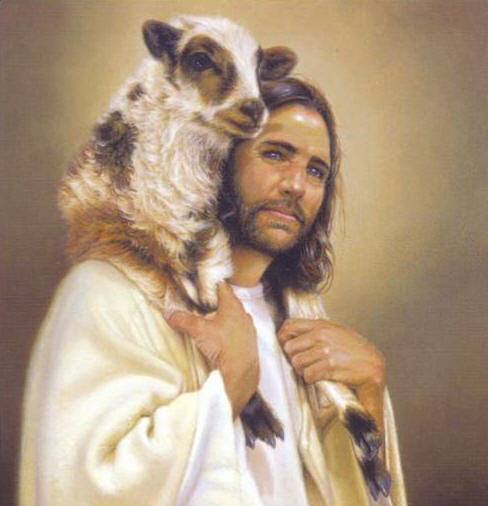
THE GOOD SHEPHERD


For years now I have been gathering Saviour's titles as I study the scriptures. So far I have collected 59 but I am certain there are more. I cannot rightly decide which one I love most but The Hope of Israel comes very close to being number 1. In his last conference talk, Elder Gong of the Twelve, pointed out that of all His divine titles, there is no more tender or telling than The Good Shepherd. Some of us city folk of the 21st century might find it difficult to relate to this title because  the pastoral life that the Saviour lived in is not within our frame of reference.  What we know of the Saviour's role as The Good Shepherd comes to us through the scriptures. The Saviour often referred to Himself as such because the people of His day understood what a shepherd stood for.

In April 1988, Elder John R. Lasater gave a wonderful description of a true shepherd:
"Some years ago, it was my privilege to visit the country of Morocco as part of an official United States Government delegation. As part of that visit, we were invited to travel some distance into the desert to visit some ruins. Five large black limousines moved across the beautiful Moroccan countryside at considerable speed. I was riding in the third limousine, which had lagged some distance behind the second. As we topped the brow of a hill, we noticed that the limousine in front of us had pulled off to the side of the road. As we drew nearer, I sensed that an accident had occurred and suggested to my driver that we stop. The scene before us remained with me for these many years. An old shepherd, in the long, flowing robes of the Saviour's day, was standing near the limousine in conversation with the driver. Nearby, I noted a small flock of sheep numbering not more than fifteen or twenty. An accident had occurred. The king's vehicle had struck and injured one of the sheep belonging to the old shepherd. The driver of the vehicle was explaining to him the law of the land. Because the king's vehicle had injured one of the sheep belonging to the old shepherd, he was now entitled to one hundred times its value at maturity. However, under the same law, the injured sheep must be slain and the meat divided among the people. My interpreter hastily added, "But the old shepherd will not accept the money. They never do." Startled I asked him why. And he added, "Because of the love he has for each of his sheep." It was then that I noticed the old shepherd reach down, lift the injured lamb in his arms, and place it in a large pouch on the front of his robe. He kept stroking its head, repeating the same word over and over again. When I asked the meaning of the word, I was infomred, "Oh, he is calling it by name. All of his sheep have a name, for he is their shepherd, and the good shepherds know each one of their sheep by name." It was as my driver predicted. The money was refused, and the old shepherd with his small flock of sheep, with the injured one tucked safely in the pouch of his robe, disappeared into the beautiful deserts of Morocco." (John R. Lasater, "Shepherds of Israel", Ensign, May 1988, p 74)


In the Saviour's discourse on The Good Shepherd He stated that a good shepherd was someone who loved his sheep, knew each of them by name and would do anything to protect them, even give his life for them (John 10:1-14). He would go to any lengths to recover them when they get lost. Who could not be touched by the Saviour's parable of a shepherd leaving the 99 in his care to find the one sheep that was lost (Matthew 18:11-14)? Which of the 99 would not feel safe in His care knowing that if THEY were lost He would also come looking for THEM? Such is the heart of a shepherd. It is a heart of love. When Jesus asked Simon Peter if he loved Him and Peter answered 'yes', Jesus' only reply was: "Feed my sheep" (John 21:15,16).

The closest I came to understanding the role of a shepherd was during my childhood in Croatia. Even though my family lived in the city, my school holidays always found me in our home village with my grandparents and other relatives where I came to understand the saying 'until the cows come home'. Each morning 'a shepherd' would come through the streets of the village sounding his horn and the villagers would open their gates and usher out their cows which would follow the shepherd who would lead them to pasture. At the closing of the day, the gates would be re-opened and the cows would each wander into their homes. It always amazed me that they knew where they lived. What amazed me more is that they would follow a man who was not their owner. Obviously, the cows knew one thing - this man  was going to feed them. So how do we as under-shepherds feed the injured sheep? What is the pasture we should lead them to? There is only one - the Saviour of the world. Had He not proclaimed himself to be the bread of life (John 6:33) and the fountain of living waters (Jeremiah 17:13, Rev 7:17)? He is the pasture, for do we not partake of his body and drink of his blood each Sunday at the sacramental table; the body that He has laid down in death that we might have life.


Have you ever felt lost? Dejected, misunderstood, diminished, uncertain or afraid?  Following my divorce I was hanging by a thread. For some reason neither my Bishop or my Relief Society President nor any member of my Ward reached out to me. I had one close friend who loved me into survival. I do not know why nobody in my Ward reached out to me. It is not my intention to criticise or judge anyone here. Maybe I was meant to experience the initial trial of my faith alone or maybe people just didn't know what to say or do.  I languished like this for months until I moved to another Ward and everything changed. I came under the care of a very loving Relief Society President who became my life long friend and a caring Bishop who kept close tabs on me. These two people were not just leaders, they were shepherds. Under their watchful eye I regained my trust in God and became stronger in the Church than I had ever been before. They not only carried me in the pocket of their robes but led me to pasture. Such is the fruit of a tireless shepherd. As expressed beautifully by a close friend of mine:

"Would the sheep have remained forever lost
Had the shepherd not searched for the sheep and carried it home?
Would the shepherd have stopped in his tracks and turned his back
On the one wandering aimlessly alone?
Or would he have continued to search
Through dark and mist, tiring with each step
Labouring onwards, heavy with grief
Until he found the wandering sheep and lifted it onto HIs shoulders
To carry it home???"

- Desley Innis
(condensed and revised)

He is our exampler. He is our Shepherd. He is the pasture. He is the staff of life. He is the sustanance of both body and mind. In Him is life, in Him is endurance, in Him is hope. As the Lamb of God has He not laid down His life in death that we might have life? In reference to His beloved sheep He has said:  "I am come that they might have life, and that they might have it more abundantly. I am the good shepherd: the good shepherd giveth his life for the sheep." (John 10:10-11)


Monday, 12 August 2019

TO BE FREE


For years I admired and at times envied someone in my close circle who was doing all the wrong things but seemed to have it all. I felt under-privileged and even victimised by my persistent and arduous journey on the strait and narrow. At times I even wondered if doing the right things was worth it. I arrived at my 60s with pretty much nothing; no husband, no home, no financial security, no material possessions. Now that I am here, however, I realise I have something far more superior to any of these things.  And that someone who seemed to have it all? Well, she has bondage. Over the years as I have watched this person be led 'by the neck with a flaxen cord'  (2 Nephi 26:22) my feelings of admiration and envy have turned to pity and compassion. Recently I spent some time on the phone with this person as she related through tears her entrapment in an emotionally abusive and spiritually degrading situation. After years of bad choices, her faith in God has all but been destroyed and belief in the basics of the Gospel been severely diminished. How does a flaxen cord become so strong around a person's neck that the adversary has the power to bind a person with it forever? (2 Nephi 26:22). The answer is, with one bad choice at a time and with each choice, a lack of repentance. And lack of repentance means only one thing, suffering. What once seemed like freedom to choose turns out not to be freedom at all.

In his latest conference talk, President Oaks said that 'we can be cleansed by the process of repentance' (Oaks, 'Cleansed by Repentance', CR April 2019). As I contemplated this I realised that this cleansing is not only beneficial in regards to final judgment and eternal life but that it is also meant to be advantageous to us here and now. True and sincere repentance leads to forgiveness and forgiveness leads to freedom. Freedom from the effects of sin such as: shame, guilt, lack of self-respect, low self-esteem, depression, emotional pain, sorrow, anxiety, weakened personal and spiritual power and all negative emotions generated by sin. As I contemplated further about the freeing power of forgiveness I also came to understand how much more freedom we can gain as we willingly forgive others. Setting aside the fact that forgiving others is a commandment (D&C 64:9,10), I am certain this commandment was put into place for the benefit of the victim and not the oppressor or perpetrator. Some people erroneously believe that forgiving someone their offences means that our forgiveness absolves them from their actions and that means that they are forgiven. In reality, we do not possess the power to forgive anyone's sins. That power rests with God. Forgiving another their trespass against us means acknowledging their human frailties and freeing ourselves from the effects of their actions such as: resentment, hatred, bitterness, judgment, pain and all inflicted suffering. This can be a tall order however, where a very serious offence has taken place. How do you forgive physical and mental abuse by a spouse, sexual abuse by a family member, betrayal of a loved one, even murder of someone close to you?


I can testify to you that there is no pain bigger than the Atonement. When it is beyond our mortal capability to forgive another there is still hope. I have been through an experience in my life too personal to recount where forgiveness was beyond me. It was in that moment of suffering that I was given to know that through my faith in Jesus Christ and the power of His Atonement I could be gifted a forgiving heart. As I petitioned the Lord over and over, this gift was granted. I cannot adequately describe all the positive consequences that ensued as a result of this gift in my life and the lives of those around me, especially my children. The freedom it afforded me decades ago lives with me still. That gift of a forgiving heart has enabled me to forgive over and over the foibles of others;  from my friends to Church leaders to my children to strangers. It has taught me to let go and do so with compassion. This in turn has increased my capacity to love. 

As I listened to my friend agonise over her situation I wondered why we choose pain in our lives when we can have so much better through obedience to God's commandments. Sin is never as good as it appears to be. To those not vigilant enough, appearances are easily misunderstood. But gloss can dim overnight and reveal its ugliness and the devil calls for collection of debt all too soon. Compare his clutches of deceit and hatred to the loving arms of the Saviour who vigilantly watches over us waiting for the slightest act of obedience so that He might bless us. I am certain our pain is His pain and with everlasting mercy and kindness He stands with open arms to receive us and give us freedom from the wounds inflicted by our thoughtlessness, ignorance and waywardness. For has He not said, '....though your sins be as scarlet, they shall be as white as snow....be faithful and diligent in keeping the commandments of God, and I will encircle thee in the arms of my love." (Isaiah 1:18; D&C 6:20)


Wednesday, 24 July 2019

TO SUFFER


I have a dear friend whose central attribute of character is compassion. She questions why some people have to suffer so much in this life while others don't? It positively wrecks her soul when she hears of someone's pain.  I have thought about her question long and hard and I offer here my understanding which admittedly comes from a finite and limited mortal view.

I believe fully and completely in the principle of free agency. Because of it we can never blame God for anything we experience. I believe we exercised the privilege of this agency even before we were born as spirits, while we were so called 'intelligences'  (Abraham 3:22).  It makes sense to me that back then  we chose to be born as spirits with a view to be embodied in flesh on our journey to godhood.  I believe that in the spirit world we advanced on different levels and that each of us mapped out a plan for our mortal experience which would enable us to work out our salvation. In other words, we each chose our life's difficulties. We wanted to advance ourselves and because of that there were certain qualities, characteristics and attributes we wanted to acquire and develop. Our lives were planned with  challenges that corresponded with the goals we had to give us the desired end. We also opted for difficult situations for the benefit of others who we wanted to help. I do not believe that we are here to be subjected to random and arbitrary experiences . To randomly have to suffer without any cause  would be supreme injustice. Since God is just this  theory of random suffering does not ring true to me. Hence my belief is that we chose our suffering. That's justice and justice can only exist where there is free agency. The idea that we chose afflictions such as abuse, neglect, physical pain, mental anguish, starvation, poverty and horrific earthly experiences is a bitter pill to swallow now that we are here and are experiencing it. Our understanding is finite and our eternal perspective difficult to maintain.

Two questions arise out of this theory of free choice. Firstly, did we really understand what suffering was having never experienced it prior to mortality? Many of us would argue that we did not. For instance, a woman does not know what child bearing is like until she is wheeled into the labour ward. The interesting point is that she chooses it again even after experiencing it once.  I would argue that we understood exactly and perfectly what suffering would be like and that this understanding was given to us by the power of God's spirit, He himself having experienced mortality and having experiential knowledge thereof. This truth is confirmed to me by the fact that a third of God's children backed out of the Plan because they understood exactly what mortality was going to be like and therefore opted for Satan's plan with the promise of 'free lunch' (D&C 29:36). The understanding must have been incredibly comprehensive and thus Satan's plan very appealing for those spirits to forsake the all consuming love of God the Father and his promise of eternal life with Him.

Secondly, if we understood it so well how could we possibly choose to suffer so cruely? Those who kept their second estate and were brave enough to embrace mortality with the full understanding of what that actually meant must have been brave enough to embrace it for only one reason: they had explicit faith in Jesus Christ and His power to save us from it. So dependable and honourable was Christ from the beginning that we knew with certainty that He would see the task to the end and save each and every one of us. I believe even those who were not to know Him in this life chose His plan because they knew that in the end the Atonement would bring them healing.


I see other reasons for suffering in mortality besides our desire for self-advancement such as a test of faith but all of these reasons pale in significance to the greatest reason of all. Jesus plainly demonstrated this principle when He healed people of their physical infirmities during this ministry. He didn't heal people  just out of His compassion. There was an important lesson to be learnt from it. It is most obvious in the story of a woman who suffered from 'an issue of blood' for 12 years. The Gospel of Mark records that she suffered many things at the hands of many physicians and none could heal her while she grew worse. Imagine hemorrhaging for twelve years with no end in sight. Out of desperation was born faith that Jesus could heal her and heal her He did merely by the touch of His garment. Both Matthew and Mark cite Christ saying to her that her faith had made her whole but Luke adds something more that the Saviour said to her: "Go in peace" (Luke 9:48) denoting spiritual healing as well as the physical one. What was He trying to teach the people He healed?  That the greatest suffering is not of the body but of the spirit and it is this suffering that we stand to be subjected to if we do not come unto Him. The Saviour expressly said if we do not repent of our sins and allow His Atonement to pay the price of sin we will have to suffer even as He (D&C 19:15-18). The suffering of this life would pale in significance compared to such suffering.

The greatest lesson of suffering is that it is meant to bring us to Christ, the fountain of our salvation. I hear people say, "God won't give you anything that you can't handle" but I believe quite the opposite is true. He will give us whatever it takes to bring us to Him for our eternal welfare is His primary concern. Whether we learn that suffering is meant to bring us to Him here and now or are taught this principle after this life, it matters not. By experiencing suffering here we learn what it actually is and most importantly, that we don't want it and that lesson is of eternal advantage. We live in a fallen world where Satan reigns supreme. We will experience suffering from physical bodies, mental illness, from sin and from actions of others.  It all comes for a purpose even if we don't understand what it is. What we need to know and have faith in is that the Saviour has atoned for it ALL. In Him there is freedom, in Him there is peace, in Him there is joy. May we strive to live so that one day we may find refuge and rest in the shadow of His protective arms where rests eternal life.


Sunday, 7 July 2019

BUT WHO ARE YOU?


The book of Acts records that "God wrought special miracles by the hands of Paul" (Acts 19:11). So powerful and effective was Paul in his ministry that handkerchiefs were brought from him to the sick and they were healed from diseases and the evil spirits departed from the ones so afflicted  (Acts 19:12). So well known were Paul's  works that a certain group of vagabond Jews attempted to cast out an evil spirit by his name. During the exorcism an unexpected happened. The evil spirit said to them: "Jesus I know, and Paul I know; but who are you?" (Acts 19:13-15) Undoubtedly this evil spirit was referring to  the priesthood authority by which devils could be cast out but when I read this story it made me feel that the evil spirit also  knew Jesus and Paul because of how mighty they were and what they did. I immediately wondered how I would feel if I was trying to dispel the adversary in some way and he said to me: "Who are you?" How would I feel if the adversary didn't know me; if he thought I was "in the bag" and didn't merit his attention; that I didn't need to be on his radar; that he didn't recognise me as a threat and a defender of the truth.  I am by nature a warrior. I like to think that I was in the front ranks with the best of them during the war in heaven.  And I like to think that I am one of adversary's  worthy opponents here in mortality. 

Reflective in Paul's letters is his unwavering commitment to Christ but we know it was not always so. Paul was a devout Jew, and a strict Pharisee no less (Acts 26:5) and he was intent on destroying the Christians (Acts 26:9-11). It's hard to believe that Christ would choose a man such as this to raise him up to such power that he could heal people and cast out devils merely by sending his handkerchiefs. Paul endured terrible hardships and paid an enormous price for his discipleship and thereby  became the greatest missionary of early Christendom. Out of these hardships was born an iron clad commitment to the very person whom he persecuted. When Ananias was given a vision in which he would heal the newly converted Paul from his blindness, he was hesitant to even meet the man who openly persecuted the believers but the Lord told him that Paul was a chosen vessel to bear His name before the Gentiles and then He added: "For I will show him how great things he must suffer for my name's sake" (Acts 9:10-16). And suffer Paul did. Repeatedly imprisoned, thrice beaten with rods, once stoned and left for dead, survived three shipwrecks, spent a night and a day in  waters' deep, dwelt in perils of robbers and of his own countrymen, lived amongst heathen, in hunger and thirst, in cold and nakedness (2 Corinthians 11:23-27). And this supercedes all....he was scourged by the Jews 5 times. One might wonder why Paul subjected himself to these scourgings? Many other times he escaped persecution by claiming his Roman citizenship which means the Jews couldn't touch him. So why these scourgings? According to Mosaic law, a wrong doer was to be lashed 40 times (Det 25:3) but no more than that for fear of death. Paul says he received 'forty stripes save one' (2 Cor 11:24) meaning he received 39 lashes. In their meticulous administration of the Mosaic law the Jews administered 39 lashes instead of 40 in fear of a miscount. Once the recipient was scourged he was viewed as being fully restored, having paid completely any debt incurred by his wrongdoing. The alternative to scourging meant excommunication from the synagogue. Why would Paul care about such excommunication? He was after all, a converted Christian so synagogues should not have meant so much to him, only they did.....because Paul's first point of contact in his missionary journeys was always the local synagogue. This is where the majority of his preaching took place. Paul was a missionary called to the Gentiles, and this mission he fulfilled admirably,  but in his veins ran the blood of Israel and I believe his heart rested there. Imagine going into a Jewish synagogue and telling the people you were preaching to that they had crucified their god. Now imagine doing this repeatedly knowing that you will be apprehended, imprisoned and scourged to the brink of death. But this Paul did without fear because of his commitment to Christ. Is it any wonder that the evil spirits knew him? 

And is there anyone greater than the adversary in his cause to destroy our pledged commitment to the source of our salvation? The scriptures tell us that Lucifer was "a liar from the beginning" (D&C 93:25). What did he lie about? He lied about his commitment to sustain God's plan for redemption of mankind. He had an ulterior motive, to forfeit his sustaining vote and present another plan which would give him God's glory (Moses 4:1-4; D&C 29:36). He is an upstart and a wannabe. His one goal is to steal, kill and destroy. He seeks to steal our spiritual identity, kill our faith in God and destroy our commitment to Christ. In his subtlety 'he will use his logic to confuse and his rationalisations to destroy. He will shade meanings, open doors an inch at a time, and lead from purest white through all the shades of gray to the darkest black' (Spencer W. Kimball, Faith Precedes the Miracle, p. 152). He will stop at nothing and he will lead even the very elect away from the truth (Matthew 24:24).  But when all is said and done and the earth is rolled together as a scroll he will become nothing and those that see him will say in amazement: "Is this the man that made the earth  tremble, that did shake kingdoms?" (Isaiah 14:16). He knows nothing of loyalty, integrity and commitment. But Paul did and when his time was up he was able to say:

 "I have fought a good fight, I have finished my course, I have kept the faith" 
(2 Timothy 4:7)