Showing posts with label #olivetree. Show all posts

Monday, 14 July 2025

THE OLIVE TREE


I cannot even begin to explain the deep affinity I feel with the House of Israel. Perhaps because my patriarchal blessing tells me that I am a true Israelite, ‘being of the seed of Abraham’.  I want to be a part of God’s chosen covenant people and I want the righteous Abraham as my father. I consider this my greatest earthly blessing. Being of the House of Israel reminds me of my spiritual identity and a responsibility I have as a link in the chain which is to bless the nations of the earth.

The world would have us be encumbered by political and social strife that would incite fear and unrest. It would have us be devoid of peace without a positive future. We the covenant people are an ensign of hope for a better world and this is why:

“And in that day…..all mine Israel shall be saved. And they that have been scattered shall be gathered. And all they who have mourned shall be comforted. And all they who have given their lives for my name shall be crowned. Therefore, let your hearts be comforted concerning Zion, for all flesh in in mine hands; BE STILL AND KNOW THAT I AM GOD.”   (D&C 101:12-16)

The Book of Jacob in the Book of Mormon contains a chapter outlining the whole history of the House of Israel and its divine destiny. It is called the Allegory of the Olive Tree by prophet Zenos. Jacob 5 is in my mind the greatest proof of Joseph’s prophetic calling. No man without the mantle of a prophet could possibly outline such an intricate history of a group of people spanning more than two thousand years: before the time of Christ (vs 3-14); the time of Christ (vs 15-28); the great apostasy (vs 29-49); restoration of the Gospel going to the world (vs 50-76); Second Coming (v 77).

The emblem of the House of Israel is the olive tree. The emblem includes two olive branches flanking a temple menorah which the prophet Zechariah saw in a vision (Zechariah 4). The olive branch is a long-standing symbol of peace, reconciliation and hope, with roots in ancient Greek and Roman cultures. This symbol has been carried throughout history and is still recognized today.

Have you ever wondered why the olive tree? The research on this subject is extensive but here is a summary: the olive tree is a symbol of longevity, prosperity, indestructibility and generosity (relative to the fact that it produces abundant fruit even when it is over a thousand years old. It is a living testament to resilience, generosity and ancient wisdom. The other day I saw a picture of an olive tree which was over 2,000 years old and I understood its significance that is relative to the House of Israel.

This, however, is what intrigues me the most, the spiritual symbol. The olive tree is a symbol of peace, wisdom, glory, power and purity. This is us, the House of Israel. This is what we stand for and this is the advantage of being of the House of Israel: through the Atonement of the Son of God, we become reconciled with the Father and that reconciliation brings with it peace through forgiveness of sins. This is what it means to be still and to know He is God.

Here is a deeper thought. Israel is to bless the nations of the earth with the blessings of the Abrahamic covenant. When we take the gospel message to the world and the world comes into the household of faith, it receives the olive branch of peace through the reconciliation the Gospel gives. It’s a beautiful symbolism……the one the world needs more than any other……

We are Israel, Thy chosen seed;

We bear Thy holy name

And proclaim Thy salvation

To the ends of the earth.

We are Thy servant in power and might,

We are Israel, children of light.


- CATHRYNE ALLEN 

(Art: Peace I Give by Greg Sargent)

Monday, 9 March 2020

THE APPLE OF HIS EYE


There was a prophet in Israel by the name of Zenos who lived between the time of Abraham and Isaiah and who was martyred for his testimony (Helaman 8:19,20) of whom the Bible does not speak. We know of this prophet because of the brass plates which were taken to the land of the Americas with Lehi and his colony in 600 B.C. Nephi used the prophecies of Zenos extensively in his ministry among his people because Zenos testified largely concerning this broken off branch of the tribe of Joseph 'who were a remnant of his seed', meaning Zenos was of the tribe of Joseph himself (3 Nephi 10:15,16).

So important did Nephi's brother Jacob consider the prophecies of Zenos that he painstakingly engraved Zenos' allegory of the olive tree onto the small plates of Nephi even though he reiterated he could only write 'a few words' because of the difficulty of engraving upon plates  (Jacob 4:1,2). Why is this allegory with its' complexities and intricacies which makes readers skip Jacob 5 so important? Firstly, it is the greatest allegory ever recorded; secondly it, in my opinion stamps the Book of Mormon with authenticity and truth for no mortal man, without the inspiration of God, could have written it. It not only proves that Zenos was a prophet  but that Joseph Smith was one too, a prophet who translated the Book of Mormon as opposed to having written it himself. Not only would the scope of this literary work have been beyond his level of education, Joseph, even though a farmer, could not have known anything about olive trees as they are not native to America. The first seedlings of the tree were brought to South America from Spain in 1560 and planted in Lima, capital of Peru. Zenos, on the other hand, was a Hebrew prophet well indoctrinated in the agricultural practices of his time and place.

In the allegory of the olive tree, there are two principal entities, the Master of the vineyard and the servant. It has been suggested by some that the Master represents the Father and the servant is the Saviour but I tend to side with those who recognise the Master, who is repeatedly  referred to as the Lord of the vineyard, to be the Saviour who employs servants to assist with His work. This is obvious to me because this Lord of the vineyard focuses mainly on just one tree, a tame olive tree that becomes corrupted by other threes and begins to rot.  So why the obsession with this one tree? Because this tree represents the House of Israel, a group of covenant people most favoured by the God of Israel above all the nations of the world. And the God of Israel is Jesus Christ, the great Jehovah himself who has proclaimed: "I am a father to Israel and Ephraim is my firstborn" (Jeremiah 31:9). The Old Testament highlights God's favouritism of Israel as a father would of a favourite son, whom He calls 'the apple of His eye' (Deut 32:10; Zechariah 2:8)

Whilst it is not my wish to overshadow the importance of the House of Israel's lengthy history contained within this allegory, which begs thorough study, and which spans from the time of the first scattering in 721 BC to the Millenium, it is my intention to focus on the Saviour and how he relates to us who are of this House. In the allegory of the olive tree, the Lord of the vineyard sets about  plucking, pruning, digging and grafting. He also grieves, preserves, labours, watches and tends to the vineyard constantly, but in particular one tree, the tame olive tree. The central theme of this allegory is the Saviour's enduring mercy, long-suffering, loving care and his most dedicated work towards His favoured people, the House of Israel. His frantic and desperate efforts can be seen through repetitious declarations of His protective love 'for he that toucheth you, toucheth the apple of his eye' (Zechariah 2:8): His desire to preserve the tame olive tree is mentioned in the parable 11 times; He expresses His desire to bring us to Him at least 15 times; He shows his grief over losing 'this tree' 8 times'; and 3 times He asks with anguish, weeping, 'what could I have done more?'

It is obvious the Lord has done everything He can so perhaps the question should be, 'what can we do more'? It is simply not enough to physically be of the House of Israel. One must be spiritually so to be the favoured 'apple of His eye'. Love is a two way street. He loves us because we are the believing, the repentant, the obedient. And if not, then we should be. We are the ones who have accepted the Holy One of Israel to be our God, until the harvest is gathered home. We are important. Not only to ensure our own salvation but to save the other trees in the vineyard. It is up to us to graft the good branches into the wild olive trees of this world. The harvest is fast approaching and we must prepare for the reaping. We must honour the privilege of being 'the apple of His eye'. After he recounts the allegory of the olive tree to his people, Jacob admonishes them to repent and continue on the strait and narrow path until they obtain eternal life. And then out of desperation he says "O be wise; what can I say more?" (Jacob 6:4,11,12). What indeed?


Wednesday, 9 March 2016

LOVE, MERCY AND THE OLIVE TREE


There was a prophet in Israel by the name of Zenos who was martyred for his testimony (Helaman 8:19) of whom the Bible does not speak. We know of this prophet because of the brass plates which were taken to the land of the Americas with Lehi and his colony in 600 B.C. Nephi used the prophecies of Zenos extensively in his ministry among his people because Zenos testified largely concerning this broken off branch of the tribe of Joseph 'who were a remnant of his seed', meaning Zenos was of the tribe of Joseph himself (3 Nephi 10:15,16). The significance of this prophet was expressed by Bruce R. McConkie: "I do not think I overstate the matter when I say that next to Isaiah himself - who is the prototype, pattern, and model for all the prophets - there was not a greater prophet in all Israel than Zenos. And our knowledge of his inspired writings is limited to the quotations and paraphrasing summaries found in the Book of Mormon".

So important did Nephi and his brother Jacob consider the prophecies of Zenos that Jacob painstakingly engraved Zenos' allegory of the olive tree onto the small plates of Nephi which Mormon included in the Book of Mormon. Why is this parable with its' complexities and intricacies which makes readers skip Jacob 5 so important? Because not only is it the greatest parable ever recorded, it, in and of itself stamps the Book of Mormon with authenticity and truth for no mortal man, without the inspiration of God, could have written it. It not only proves that Zenos was a prophet but it is clear proof that Joseph Smith was a prophet too and that he translated the Book of Mormon through the power given him of God. Once you study this parable you become convinced that Joseph Smith could never have written the Book of Mormon.


One can get totally lost in Israel's captivating history and divine destiny studying the allegory of the olive tree in Jacob chapter 5. However, if studied carefully one cannot miss the central theme of this parable which is the Saviour's enduring mercy, long-suffering and loving care of His covenant people. Whilst it is not my wish to overshadow the importance of Israel's history contained within this allegory, it is my intention to focus on the Saviour and how he relates to us individually within this parable. Firstly, it is important to understand why Zenos used the olive tree as a powerful symbol of God's love and relationship with the house of Israel. The olive tree is an evergreen, meaning its' leaves do not seasonally fade or fall. They are continually rejuvenated through scorching heat or winter cold. This tree, however, needs constant cultivation or it becomes wild and unruly and easily corrupted. It requires long and patient cultivation for it to bear fruit, usually eight to ten years. It is however a sturdy tree which produces new shoots from apparently dead roots. Its' gnarled trunk gives an impression of travail, endurance and ancient life. Because of the unique quality of this tree Elder Jeffrey R. Holland affirmed that "no symbol could serve more powerfully and profoundly of God's expansive, constant, redeeming love - including especially the love represented in the gift of his Only Begotten Son- than does the olive tree." (Elder Jeffrey R. Holland, Christ and the New Covenant, p 163-64)

In the allegory of the olive tree, the Saviour is represented as the Lord of the vineyard. Unlike the "householder, which planted a vineyard" and then "let it out to husbandmen, and went into a far country" (Matt 21:33), He labours in His vineyard Himself. He does not sit back and watch others do the plucking, pruning, digging and grafting. He also grieves, preserves, laboures, watches and tends to the vineyard constantly. His frantic efforts to ensure the divine destiny of the House of Israel, as represented by the olive trees in His vineyard, can be seen through repetitious declarations of His love and long-suffering: His desire to preserve the vineyard is mentioned in the parable 11 times; at least 15 times the Lord expresses His desire to bring the vineyard and its' harvest 'unto my own self'; 8 times He says 'it grieveth me to lose the trees of my vineyard'; and 3 times He asks with anguish, weeping, 'what could I have done more for my vineyard?' After he recounts the allegory of the olive tree to his people, Jacob exclaims: "....how merciful is our God unto us, for he remembereth the house of Israel, both roots and branches; and he stretches forth his hands unto them all the day long...O then, my beloved brethren, repent ye, and enter in at the strait gate, and continue in the way which is narrow, until ye shall obtain eternal life, O be wise; what can I say more?" (Jacob 6:4,11,12). What indeed?


We, like the olive tree, need constant cultivating so that we do not become wild and unruly and easily corrupted. To yield good fruit, a tree must have good roots. When the roots are weak, the branches grow faster than the strength of the roots can sustain them and the tree eventually becomes too weak to keep standing  and dies (Jacob 5:47-48). This is cleverly expressed in the following poem:

The tree
At the church next door to me 
Turned up its roots and died
They had tried 
To brace its leaning,
But it lowered
And lowered,
And then there it lay -
Leaves in grass
And matted root in air,
Like a loafer on a summer day.

"Look there",
Said the gardener,
"Short roots - all the growth went up -
Big branches - short roots".

"How come" I asked.
"Too much water.
This tree had it too good.
it never had to hunt for drink."

Especially in thirsty times,
My memory steps outside
And looks at the tree
At the church next door to me
That turned up its roots and died.

- Carol Lynn Pearson

Sometimes we think we need a life of ease, as the tree in this poem had, and that this kind of life will in the end magically produce bountiful fruit. But this is not the design of mortality. In His efforts to ready us for final judgment and make us fit for eternal life the Lord will use His gardening skills on each one of us individually. He will prune and dig about and nourish and often times such treatment will be uncomfortable as is illustrated by the following:

"On my way to visit the Jameses the other evening, I saw a wheat field that appeared to be greener and taller than the others. Thinking about it for a while, I concluded that occasionally some loving farmer drives over the field with his tractor and dumps manure all over it. I thought, 'My, it's just like life. Here we are minding our own business, growing our little hearts out. We're really quite green, somewhat productive and very sincere. When out of the blue, life deals us a dirty one, and we're up to our eyebrows in manure. We, of course, conclude that life as we have known it has just ended and will never be the same again. But one day, when the smell and the shock are gone, we find ourselves greener and more productive than we have been'. Unfortunately, no matter how often we go through these growing experiences, we are never able to appreciate the sound of the tractor or the smell of the manure." (Harold W. Wood)
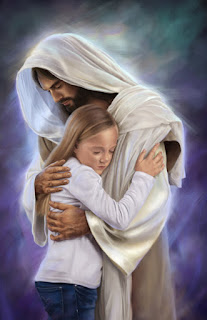

We can sometimes be like the tree that stood right next to a church and didn't go 'hunting' therein for what it needed to sustain and strengthen its roots. Some of us are not willing to work on our roots even though we want the fruit (eternal life): "It seems that some [Latter-day Saints] among us have this same problem; they want bountiful harvests - both spiritual and temporal - without developing the root system that will yield them. There are far too few who are willing to pay the price, in discipline and work, to cultivate hardy roots" (President Spencer W. Kimball, in CR Oct 1978, p 113 or Ensign, Nov. 1978, p 74-5). Grounding ourselves in the gospel of Jesus Christ by nourishing the seed of faith through the word of God is our part in our individual cultivation. This is our hunting ground. If we hunt here we can be assured of hardy roots which will enable us to endure the trials and afflictions of this life without abandoning the strait and narrow path which leads to eternal life. May of us feel that strengthening the roots is far too hard and we opt for the seeming ease of telestial life. This is however, not what God wants for us eternally and so He expends all his energy and effort to bring us back to Him over and over again. And anything less than eternal life is not what we wanted long ago when the morning stars sang together and all the sons of God shouted for joy. We were among that happy throng and our voices were heard singing praises to Him who has all the love, all the mercy, all the long-suffering and all the power to one day bring us home.