Showing posts with label #godofisrael. Show all posts

Tuesday, 29 September 2026

SPIRITUAL ALIGNMENT


There would have to be no greater sorrow for Jehovah, the God of Israel, than to see His people whom He had chosen turn to idolatry and this after He had delivered them from bondage, cared for them, watched over them, blessed them with a land of their own and given them the grandeur of Jerusalem. To replace the one and only true God who could do all that with gods of metal and wood was unconscionable.

“With great irony, Isaiah brought out the inconsistency of those who work wood and metal, use it for firewood and other mundane things, but fashion idols from the same material and then expect those idols to show forth great power and answer their prayers. Such idolatry precipitates in man “a deceived heart” that has turned him aside” (Isaiah 44:20), or in other words, that has such a negative effect as to cause him to lose his soul.” (Old Testament Student Manual 1 Kings – Malachi, 185)

Yet despite such ludicrous practice and departure from worship of the one true God, Jehovah showed utmost mercy to the undeserving people He called ‘his witnesses’:

“Fear not, O Jacob, my servant whom I have chosen….I will pour my spirit upon thy seed and my blessing upon thine offspring….Thus saith the Lord the King of Israel: I am the first, and I am the last; and beside me there is no God….Fear ye not, neither be afraid: have not I told thee from that time, and have declared it? Ye are even my witnesses. Is there a God beside me? Yea, there is no God; I know not any”  (Isaiah 44:2-8)

It makes you want to weep, does it not???? And then, even forgiveness:

“Remember O Jacob and Israel; for thou art my servant: I have formed thee; thou art my servant: O Israel, thou shalt not be forgotten of me. I have blotted out, as a thick cloud, thy transgressions; and, as a cloud, thy sins; return unto me; for I have redeemed thee.” (Isaiah 44: 21, 22)

And then redemption and spiritual re-alignment….in the name of Cyrus, the Great…. Who Isaiah prophesied of 140 years before his birth, and whose coming to release the Jews from Babylon after 70 years of bondage that was  prophesied by Jeremiah (Jeremiah 25:11,12; 29:10,14).

Cyrus, the King of Persia, conquered Babylon in 539 B.C., and inherited the exiled Jews. He was raised for such a purpose by Jehovah himself, who called him ‘my shepherd’ and ‘my anointed’ (Isaiah 44:28; 45:1-4).

The military conquests of Cyrus were nothing short of remarkable. Empires virtually fell into his hands and by the time he reached Babylon, he was considered a liberator and not a conqueror. The citizens of Babylon welcomed him with open arms because of his intended reforms that would make life better and easier for the common man. Babylon that was a fortress to be reckoned with was overthrown in one night as the city opened its gates to him without a battle and this is why:

“Cyrus was a born ruler of men. He inaugurated a new policy in the treatment of conquered peoples. Instead of tyrannizing over them and holding them in subjection by brute force, he treated his subjects with consideration and won them as his friends. He was particularly considerate of the religions of conquered peoples. The effect of this policy was to weld his subjects to him in a loyalty which made his reign an era of peace.” (Elmer W.K. Mould, Essentials of Bible History, pp 348-49)

Numerous commentators have denied that Isaiah named Cyrus as the liberator of the Jews so many years before he appeared. They have argued that his name was added to Isaiah’s prophecy after his conquest of Babylon and the help he gave to the Jewish nation. Josephus, the Jewish historian, recognized Isaiah’s prophecy to be valid by quoting letters from Cyrus confirming the prophet’s predictions (see Josephus, Antiquities, XI, 1,2).

Cyrus not only had respect for the people he governed but he had respect for God whom he acknowledged as the fountain of his success declaring, HE IS THE GOD (Ezra 1:2,3). Rather sobering isn’t it, for a non-Israelite to acknowledge the God of Israel as the God of heaven and earth.  

The God of Israel worked with this man to ensure he fulfilled his purpose and this was it….not to free the captive Israel for the sake of freedom but to send them back to Jerusalem to build His temple (Isaiah 44:28).  Jehovah was calling His people to return to Him….it is in the temple that they would once again raise their right hand to the covenant they had forsaken (Isaiah 44:20). It is in the temple they would find their God again and forsake their idolatry. It is in the temple they would be re-aligned spiritually with the God they had forsaken. It is in the temple they would receive a second chance.

Today latter-day temples dot the earth. There are 214 dedicated operational temples and a total of 383 including announced temples, temples in planning and under construction. We, the House of Israel, are a favoured people and blessed above all the nations of the earth. It is in the temple we are re-aligned with our covenants, convictions and our God to give us strength to forsake modern day idolatry of materialism, technology, prestige, power, entertainment, career, status, or “whatever thing a man sets his heart and his trust in most is his god…” (President Spencer W. Kimball, “The False Gods We Worship”, Ensign June 1976).

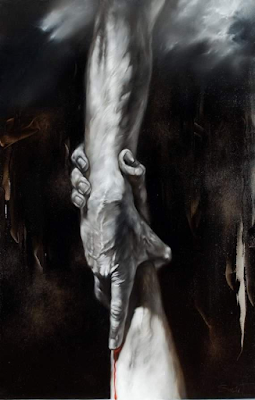
O Israel, I saw your sins

that you tried in vain to hide,

And the years you lived in futile pride.

I bore your life with crimson drops

And sought forgiveness on your behalf;

To pay the price of justice

And mend your broken heart.


I wait for you to come

Into the shadow of my wings;

I have paid the price: come unto Me,

Your God and Your King.


- CATHRYNE ALLEN 

Tuesday, 23 June 2026

KINGS OF ISRAEL


How easy it would have been for the Saviour to wash his hands of the children of Israel when they rejected Him and asked for a king to rule and preside over them. How easy it would have been to turn his back on them and to walk away, but the Saviour who is full of 'grace, equity and truth', did not forsake the children of the covenant and sought to still be their king through the best men He could find, that His watchful eye might be over them 'with a stretched out arm; for his mercy endureth forever' (Alma 13:9; Psalm 136:12). 

Because under the kingship of Solomon, they disregarded the power and might of the God who delivered them, and put their trust in the arm of the flesh instead, Israel faltered and stumbled in its prosperity and spiritual welfare. Worst of all, they lost unity as a nation. Following the death of Solomon, under the leadership of his very unwise son Rehoboam, who sought to increase the burdens of his people rather than decrease the oppression with which his extravagant father afflicted the people, the house of Israel became divided, never to be the same again.

Rehoboam refused to heed the counsel of his father’s wise old counselors, 'to serve the people and be their servant, then they will be thy servants forever' (1 Kings 12:6,7). Rather than serve, he sought to elevate himself even further causing the Ten Tribes of Israel to break their alliance with the House of David and appointed Jeroboam as their king. And thus began a new nation referred to as the Northern Kingdom consisting of 10 tribes while the tribes of Judah and Benjamin remained under the reign of the House of David, a house which was preserved by the hand of the Lord to ensure the prophesied lineage of the Messiah.

Jeroboam, an Ephraimite, had been a military leader in the army of Israel under King Solomon. He was an administrator over the territorial districts of the tribes of Ephraim and Manasseh, two of the most powerful tribes in Israel. Ahijah, a prophet of that day, revealed to Jeroboam that he would become the ruler of 10 tribes which would be 'rent' from the house of David. He demonstrated this by rending Jeroboam's robe into 12 pieces and giving him 10, saying: "...thus saith the Lord, the God of Israel, Behold I will rend the kingdom out of the hand of Solomon, and will give ten tribes to thee" (1 Kings 11:31).

When this prophecy was made known to Solomon, he sought to kill Jeroboam who fled into Egypt and lived there in exile until Rehoboam ascended the throne and the 10 tribes who were dissatisfied with Rehoboam's 'attitude' brought him back and anointed him king. And thus began a history of darkness for the Northern Kingdom of Israel as Jeroboam established a state religion of idolatrous worship. (1 Kings 12:25-33).

And here is an insight into Jeroboam’s insecurity and floundering faith in God. He feared that he would lose the kingdom to Rehoboam if his subjects travelled to the temple in Jerusalem and decided to defect. Instead of securing his position by endearing the people to him, he foolishly used religion to serve his political purposes’ (see Adam Clarke, Commentary, 2:437).

The question begs to be asked, why would his subjects want to go back to Rehoboam and his oppression which they rejected? You cannot help but wonder if Jeroboam at all possessed a logical mind. To keep the 10 tribes away from Jerusalem, he made 2 calves of gold, installed them in cities of Bethel and Dan and told the people: "It is too much for you to go up to Jerusalem: behold thy gods, O Israel, which brought thee up out of the land of Egypt" (1 Kings 12:28).

It blows one’s mind…in one fell swoop, he replaced Jehovah as Israel’s God in the minds of the people and he rationalised it by using the same wording as Aaron back in the wilderness suggesting this form of worship was nothing new and was used by their fathers in the desert (Exodus 32:4). And how did that work out for them???

And so the Northern Kingdom was led into idolatry by their very first king from which they never repented and which contributed to their downfall. Twenty monarchs ruled the Northern Kingdom from its beginning until its destruction by the Assyrians in 724 B.C. and all of them were characterized as evil or wicked by scriptural records (Old Testament Student Manual 1 Kings-Malachi, p. 33).

Of the twenty rulers who reigned over the Southern Kingdom, from the death of Solomon to the fall of Jerusalem and the Jews' captivity at the hands of the Babylonians in 605 B.C., twelve are characterized in the scriptural records as evil or wicked. Only four advanced their nation economically and religiously.

In response to Israel’s wish to have kings, the words of Jehovah to Samuel echo loud and clear: “Hearken unto the voice of the people…for they have not rejected thee but they have rejected me, that I should not reign over them” (1 Samuel 8:7).


- CATHRYNE ALLEN 


Sunday, 31 May 2026

A SYMBOL OF REDEMPTION


This is a story of a convert who became a symbol of redemption in Israel. This convert was a woman and her name was Ruth.

It is said by oral tradition that women in ancient Israel lived with a hope that the Messiah would come through their line (Clarke, Bible Commentary, 2:207). This is the privilege that was given to Ruth from Moab even though she had no blood of Israel running through her veins.  She was a convert to the Lord, God of Israel ‘under whose wings she had come to trust’ (Ruth 2:12).

When her Israelite husband died and left her with no children, Ruth became one of the lowliest of the earth, devoid of security and livelihood. Ruth’s mother-in-law Naomi also became destitute losing her husband and both of her sons. When Naomi encouraged her daughters-in-law to return to their kin and their ‘gods’, they wept. Orpah left, but Ruth remained, with these words on her tongue: “….whither thou goest, I will go; and whither thou lodgest, I will lodge; thy people shall be my people, and thy God my God.” (Ruth 1:16).

Right from the start, Ruth showed characteristics of a true Israelite by covenant (Romans 9:4; Galatians 3:29) and she chose to remain so. She returned to Judea with Naomi, to Bethlehem no less (Ruth 1:19), and she consented to a ‘levirate’ marriage with Naomi’s next of kin, as was the custom in Israel. Through a levirate marriage, the woman was provided with children and restored to security and society. Here is where things become interesting. The Hebrew word for a man who would step up to this responsibility was GO’EL. The King James Version of the Bible translates it as simply ‘kinsman’ but the proper and literal meaning of GO’EL is ‘redeemer’ (Rasmussen, “Introduction to the Old Testament”, 1:157; see also Old Testament Student Manual Genesis – Samuel 2, p 263)

This is how Ruth, a lowly woman of Moab became the symbol of Christ’s redemption: Her GO’EL was Boaz, an Israelite kinsman of Naomi. Boaz became Ruth’s redeemer and restorer of all she had lost. Boaz and Ruth had a son whose name was Obed, who became the father of Jesse, who was the father of King David, who was a progenitor of Mary, who was the mother of Christ……

Consider for a moment how Christ redeems us from our fallen state and restores us to the presence of the Father, and grants us eternal posterity through His power of exaltation. The Saviour affirms His role as the GO’EL when He refers to himself as the bridegroom and us, Israel, as the bride (Matthew 25:1-13; D&C 33:17; 65:3; 88:92; 133:10). He is the greatest GO’EL of all….. the Redeemer, the Restorer, the Hope of Israel, the Rock of our Salvation.

The winds of tribulation 

Like feathers lift to the sky.

They find You there

ever waiting to answer our pleas;

To restore that which is lost,

To renew that which is broken,

I stand amazed at Your love, 

Your care:

Your everlasting token.


- CATHRYNE ALLEN 

(Art: Ruth In the Field of Boaz by Alexandre Cabanel 1868)


Friday, 24 April 2026

TO REMEMBER HIM


I love symbolism in the Old Testament. Reading about the ritualistic administration of the priesthood in the wilderness of the Israelites’ journey toward the promised land convinces me how essential that was to keep them focused on the God who led them because every minute detail was highly symbolic of Him. Consider just a few such symbols:

-          EPHOD: sacred garment akin to an apron that was worn by the high priest had gold settings on each shoulder where onyx stones engraved with the names of 12 tribes of Israel were placed. These stones fastened the ephod on the priest’s shoulders symbolizing that he as a representative of the Lord, carried Israel on his shoulders (see Exodus 28:12);

-          THE BREASTPLATE: made of fabric and attached to the ephod with golden chains and fasteners, it served as a pocket in which were placed precious stones inscribed with the names of each of the tribes of Israel. “Thus, the high priest bore ‘the names of the children of Israel in the breastplate of judgment upon his heart….for a memorial before the Lord continually’ (ibid v 29).

-          THE GOLDEN DIADEM AND THE MITRE: The mitre (or hat) was made of fine linen and each priest wore one. The high priest wore a golden band on the front of his mitre on the forehead. Engraved on the band were the words “Holiness to the Lord” (ibid v 36-38)

-          THE ALTAR OF INCENSE: “Hot coals were placed on the altar and each morning and evening the high priest would burn incense. This ritual seems to signify that one can approach the presence of God only through prayer, for scriptures elsewhere indicate that incense is a symbol of prayer” (see Revelation 5:8; 8:3-4; Psalm 141:2; The Old Testament Student Manual Book 1 p 153)

We also have a place designated which symbolically points to the foundation of our salvation. It also reminds us that holiness belongs to the Lord and that He leads us to OUR promised land. The more we can enter its doors the more symbolism of the power of His salvation will become imbedded in our minds and hearts.

Consider this privilege that the rest of the world has no access to. Our temples are beacons of hope, knowledge and endowment of His grace for His spiritually begotten children, the ‘apple of His eye’ (Deut 32:9,10), the rubies in His diadem (Exodus 28:17-21; Malachi 3:17; D&C 60:4; 101:3)….His people Israel.

How great our God of Israel

Who carries us on His shoulders

And in His godly heart;

We are the rubies in His diadem

We are Israel, children of light.


- CATHRYNE ALLEN 

(Art: Holy One of Israel by LDS Art)

Friday, 13 March 2026

WITH JOY


I was reading the prophecies of Joseph in the Joseph Smith Translation yesterday and was overcome with emotion. I understood for the first time exactly why Joseph was blessed with the double portion of Jacob’s inheritance. This man was exceptional.

Chapter 50 of the JST begins with Joseph approaching death and saying to his brethren "... I go down to my grave with joy" (JST Genesis 50:24). Ever the optimist, he saw his life in balance. In “The Testament of the Patriarchs” he says this in his own words:  "My brethren hated me...they wanted to kill me.....into a cistern they lowered me....they sold me into slavery.....I was taken into captivity....I was overtaken by hunger....I was alone....I was in weakness...I was in prison.....I was in bonds....assaulted by bitter words of the Egyptians...a slave" (The Old Testament Pseudepigraha, p 819).

But then this: "....the Lord loved me....the God of my fathers preserved me...the Most High raised me up....the Lord of all set me free....the strength of His hand came to my aid....the Lord himself fed me generously....God came to help me.....the Lord showed His concern for me...the Saviour acted graciously in my behalf......He rescued me and He exalted me." (The OT Pseudepigraha, p 819)

I cried at the end of chapter 50 when I read he requested that his bones be carried out of Egypt: “So Joseph died when he was an hundred and ten years old and they embalmed him and they put him in a coffin in Egypt; and he was kept from burial by the children of Israel, that he might be carried up and laid in the sepulchre with his father….” (JST 50:37,38)

Joseph’s greatest joy before he died centered on the promises he received from the Lord regarding his posterity through his sons Ephraim and Manasseh….namely, a deliverance from bondage and ‘a righteous branch that shall be carried off into a far country’ (JST 50:24,25):

“I suppose Jacob saw this land as well as Moses, and he designated it a….. very distant land. He said this land was over and above, what his progenitors gave to him and he would give it to Joseph…..The precious things of heaven were to be given to Joseph on this land. Blessed of the Lord be his land for the precious things of heaven, more precious than the fullness of earth…..more precious than the gold and silver of the earth. The precious things of heaven revealed to the people of Joseph on the great land given to them unto the utmost bounds of the everlasting hills.” (Orson Pratt, in “Journal of Discourses”, 18:167-68; see also Genesis 49:26)

And so Lehi of the tribe of Manasseh (Alma 10:3) and Ishmael of the tribe of Ephraim (see Erastus Snow, in “Journal of Discourses”, 23:184-85), arrived in the most precious land ‘unto the utmost bounds of the everlasting hills’ in 600 B.C. to fulfil the promise made to Joseph about his posterity.

You who stand on the hallowed ground of America and claim it as your home….know what a privilege it is to be born and bred there. Your land belongs to Joseph, your patriarch and the prototype of Him who ultimately owns everything…..our God of Israel, who so freely gives, who guards the land of everlasting hills and all His promises faithfully fulfills…..


- CATHRYNE ALLEN 

(Art: Focus on Joy by Michael Malm)


Thursday, 12 March 2026

A GOD OF ORDER


Did you know that there is no extra-biblical evidence that Joseph of Egypt existed? Here is why:

“Many scholars speculate that Joseph came to power in Egypt while the nation was under the domination of the Hyksos people. The ancient historian Manetho called the Hyksos the shepherd-kings and told how their conquest and dominion were bitterly hated by the Egyptians.

“The Hyksos were Semitic peoples from the lands north and east of Egypt. Since Jacob and his family were also Semitic, it is easy to understand how Joseph would be viewed with favour by the Hyksos and also how, when the Hyksos were finally overthrown and driven out of Egypt, the Israelites would suddenly fall from favour with the native Egyptians.

“Many people have wondered how Joseph could be vice-regent for so many years without having his name in any of the records or monuments of Egypt. If the theory of Hyksos domination is correct, then Joseph’s name would have been purged from records and monuments along with those of the other Hyksos rulers.” (Old Testament Student Manual Genesis – 2 Samual, p 103)

This historical theory offers two explanations. The first is how the Tribes of Israel fell into bondage in Egypt: “But when the time of the promise drew nigh, which God had sworn to Abraham, the people grew and multiplied in Egypt. Till another king arose, which knew not Joseph” (Acts 7:17-19; Exodus 1:8). This new Egyptian king enslaved all of Israel for 430 years, which the Lord told Abraham would happen (Genesis 15:13; Exodus 12:40)

The second question it answers has to do with Joseph’s wife Asenath. The Old Testament tells us that Pharaoh gave Joseph to wife ‘Asenath the daughter of Potipherah, priest of On’ (Genesis 41:45). On was the popular name for Heliopolis with large houses which were the habitation of priests, philosophers, and those that studied astronomy. The history of this place is fascinating but too lengthy to engage in here.

Jewish tradition and legends claim that Potiphera and his daughter Asenath were in fact Semitic, and either Hebrew or of a similar Asiatic-Semitic people known as the Shepherd Kings. Knowing that the Pharaoh of the time was himself Semitic would make sense that he would not give an Egyptian wife to Joseph.

It is also important to note that the children of Joseph and Asenath were given Semitic names of Manasseh and Ephraim, rather than Egyptian names (Genesis 41:51,52). One text from Hellenistic Egypt (10 B.C.E.) tells a fascinating story of Joseph and Asenath (Joseph and Asenath – TheTorah.com)

Joseph’s two sons are the greatest proof that their mother was not Egyptian. If she was, it would mean that her offspring could not hold the priesthood as Egyptians were descendants of Cain through Ham and his wife Egyptus, herself a descendant of Cain (see Guide to Scriptures). Ephraim and Manasseh became the inheritors of the Covenant and the leading tribes of the House of Israel. More on that later.

This is what the stories of the Old Testament reveal to me….a perfect God, a God of order. Because of Him the Plan of Salvation runs like clock-work. The God of Israel has prepared every needful thing to ensure its success. His work and His glory to bring about the immortality and eternal life of man is flawless. There are no stumbling blocks he has not foreseen. There is no ‘ooops, I didn’t see that coming’ in His Plan. All eventualities were before His eyes when He put into place all the key people that will uphold it. And there is no contingency plan because it is not needed. The perfection of our God astounds me. He has us in the palm of His hand.

- CATHRYNE ALLEN 

(Art: Creator by Greg Olsen)

Tuesday, 17 February 2026

THE NATURE OF OUR GOD


“There is no inconsistency in the nature of God. He is always perfectly merciful and loving, but He is also perfectly just and will not “look upon sin with the least degree of allowance” (D&C 1:31). As he said to Joseph Smith: “God doth not walk in crooked paths, neither doth he turn to the right hand nor to the left,….his paths are straight, and his course is one eternal round” (D&C 3:2).

“In the Old Testament is the same perfectly consistent God found in all scripture. In the Old Testament great richness is added to the understanding of God and how He deals with His children, blessing them according to their obedience and receptivity, or punishing them for rebellion and wickedness.

“If one would get to know Christ better, one must study the Old Testament, for in His role as Jehovah He permeates the whole record. Jesus Christ is the God of the Old Testament just as He is the God of the earth today. Keeping this important fact constantly in mind is one of the keys to understanding both the Old Testament and the nature of God.”

-          Old Testament Student Manual Book 1, p 48


The mighty power of His creation,

The tenderness that never parts,

The perfect balance of His glory,

The God of heaven in our hearts.


- CATHRYNE ALLEN 

(Art: Jesus of Nazareth by Greg Olsen)

Wednesday, 18 June 2025

THE GOD OF THE COVENANT


This painting brought tears to my eyes when I saw it. The Saviour’s apparent power in it is breathtaking. The scene depicts the parting of the Red Sea with Moses on one side and the Saviour on the other. It is titled “I was there” by Danny Hahlbohm.

Besides the Saviour’s power, I see something else in this picture. I see the strength of will of a God who will move heaven and earth for His covenant people Israel. This is a God who has throughout history led them in mercy through the valley of shadow of death and has preserved them to be a favoured people.

Who are these favoured people? They are the Twelve Tribes of Israel, their posterity, and the adopted believing Gentiles who have accepted Christ through baptism. They are God’s people, a ‘peculiar people’ (Exodus 19:5), meaning ‘valued treasure’, ‘made or selected by God’. (Russell M. Nelson, “Children of the Covenant”, Ensign May 1995, 34)

And this is why they are peculiar:  “…….the house of Israel is composed of spirits from pre-existence who there developed a talent for spirituality, and who are therefore entitled to the blessings of heaven in this life on a preferential basis” (McConkie, “Mortal Messiah 3, p 11).”

Not only are these people favoured but they are also important. The House of Israel is the guardian of the Abrahamic covenant. This is the covenant between Jehovah and Abraham through which the House of Israel carries its priesthood blessings to the inhabitants of the world. This is the covenant that the Saviour has foresworn He will never, ever break or forget. It will stand forever (Deuternonomy 4:31; Leviticus 26:44,46; Isaiah 49:15,16; 2 Kings 13:23).

And this is the power of commitment and this is the strength of His love for His chosen people:

·        Thou art my chosen servant, O Israel, in whom I will be glorified (Isaiah 49:3; Abraham 2:11)

·        I will write my law into your hearts and I will be your God and you shall be my people and your sins I will remember no more (Hebrews 8:10, 12)

·        I will take you to me for a people and I will be to you a God (Exodus 6:7; Jeremiah 10:4)

·        I have redeemed thee, thou art mine, I will be with thee, I am the holy one of Israel, I will sacrifice others for thee (Isaiah 43:1-7)

·        Thou art the everlasting bride of Christ (2 Corinthians 11:2; Revelation 19:7-8; 21:2,9)

·        I have chosen thee to be a special people unto me, above all people that are upon the face of the earth (Deuteronomy 7:6)

·        O Israel thou art ‘the apple of His eye’: Deuteronomy 32:9,10; Zechariah 2:8; Psalm 17:8

In today’s day of ‘inclusion’, it would appear unthinkable that God would love and consider His children on preferential basis. However, because of their righteousness, collectively and not individually, and as descendants of righteous Abraham, The House of Israel was ‘chosen’ to be favoured of God. After all, He attests to the fact that there has to be a reward for being good: “….he that is righteous is favored of God” (1 Nephi 17:35).

Thy love for Thy people is beyond compare,

Thy mercy affixed forever more.

Thy power delivers us and

Thy loving kindness gathers us;

We are restored by Thy merciful might,

We are Israel, children of light.


- CATHRYNE ALLEN 

(Art: I Was There by Danny Hahlbohm)

Saturday, 30 December 2023

A RIGHTEOUS BRANCH


The ongoing difficulties of the Jewish nation which we are even now witnessing brings to mind the reason a certain Israelite family escaped the destruction of Jerusalem in 597 B.C. when the diaspora began. Lehi explained to his son Joseph the promise that the Lord made to his progenitor, Joseph of Egypt, that He would, in their day, ‘raise up a righteous branch unto the house of Israel’ (2 Nephi 3:5). And so the promised land they were led to across the waters in 600 B.C. meant a new beginning. How utterly tragic then that just over a thousand years later, a sole survivor of that very ‘righteous branch’ wandered the land of America with a heart wrenching explanation: "Behold.....I am alone. My father hath been slain in battle, and all my kinsfolk, and I have no friends nor whither to go...therefore I will write and hide up the records in the earth; and whither I go it mattereth not." (Mormon 8:4,5).

But the Lord was not finished with the House of Israel and so He gave another promise to Joseph of Egypt, that He would raise up ‘a choice seer’ in the latter days who ‘will be like unto Moses’ and who will bring to light the words of them who were destroyed and who will speak ‘out of the ground’ (2 Nephi 3:7; 26:16,17). Enter Joseph Smith and the Book of Mormon.

We all know that the Book of Mormon is the important second witness of Jesus Christ but it also speaks of something else equally important. Another purpose of the Book of Mormon is to bring to our remembrance the covenant which Jehovah has made with the House of Israel (2 Nephi 3:7, 12). This says two things to me: 1. the Lord will never give up on us and; 2. He will never break His covenant with us, even though we break our covenants with Him (Deuteronomy 4:31). This is the promise He has made to the House of Israel that will stand forever.

If you study the Book of Mormon closely, two things will become very obvious to you: 1. the merciful nature of the God we worship and 2. He always, always fulfils His promises. Mormon ensured that every prophecy and promise in the Book of Mormon was tied to its fulfillment and he testified of this with such phrases as 'all this was done that the word of the Lord might be fulfilled' (Mosiah 21:4) and 'God is powerful to the fulfilling of all his words' (Alma 37:16). This was his technique and his tool through which he testified of Christ. This strategy proves in a unique way that the Book of Mormon is an authentic record written by Mormon himself for it would have been impossible for anyone else to chronicle such numerous promises and their fulfillments let alone an uneducated man like Joseph Smith. Mormon, on the other hand, knew the history of his people well because of many records that were in his keeping for many years.

One last thought: Christ is the vine and we are the branches (John 15:5). If we will be the righteous branch of the House of Israel, we need to abide in the vine for without Him we can be nothing (v 4,5). How wonderful is the God of Israel!!! How exquisite the bond He has with His people! I have often thought His tolerance and mercy towards us is excessive but one day a thought came to me that He could have never subjected himself to such an unjust death if He was any other way. This is who He is….Christ the Lord, the Hope of Israel, the Rock of Our Salvation, the lover of our souls……


- CATHRYNE ALLEN 

(Art: Coming to Save You by Laura Wilson)

Monday, 18 July 2022

BABYLON THE GREAT


I was so eager to once again start studying the return of the Jews from Babylon to Jerusalem 70 years after their captivity began, as predicted by Jeremiah in his book, 25:11,12; 29:10. I got as far as the first chapter of Ezra before I was overcome with emotion. 


Behind the fulfilment of this prophecy was a Persian king that Jehovah prepared who conquered Babylonians by the name of Cyrus. It is suggested by historians that when Cyrus conquered Babylon that he found Daniel there in his governmental capacity,  and that Daniel  pointed out to him the prophecy of Isaiah that was given 140 years before the fall of Jerusalem, that the Lord would raise up a mighty king who would free the Jewish captives in Babylon and allow them to return to Jerusalem to rebuild the temple and the holy city. Isaiah even named Cyrus by name.....210 years before he even appeared in Babylon. Astonishing isn't it? It certainly was to Cyrus because he sent out the proclamation amongst the Jews in Babylon that ‘the Lord God of heaven….had charged [him] to build him a house at Jerusalem’ (Ezra 1:2) and asked who among all of God’s people wanted to return. He actually offered freedom to anyone who wanted it.


Now this is the most astonishing bit. Approximately 50,000 people chose to return to Jerusalem while MOST chose not to return having been absorbed into the Babylonian way of life. It tells you where their heart was, does it not? Scripturally, Babylon is a symbol of worldly wickedness. The opulence and extravagance and decadence of this ancient city at the peak of its grandeur is hard to describe. A historian, Will Durant, wrote that ‘even Alexander the Great who was not above dying of drinking, was shocked by the morals of Babylon’ (Our Oriental Heritage, The Story of Civilization, vol 1, p 244). Enrichment G in the Old Testament Student Manual will give you an overview of this city that will amaze you. 


As I read this first chapter of Ezra, I couldn’t help but think how easy it is to become caught in the world’s web of wickedness. It reminded me of Alma who said: “Come ye out from the wicked, be ye separate, and touch not their unclean things” (Alma 5:57). It made me reflect on how much of the world is in me and to what extent am I entangled in its’ web. If I was in Babylon at the time of Cyrus, I hope that I would have been one of the returned eager to re-build His temple that I might worship Him, the one and only true and living God, the God of Israel, the God of my heart.  


I lift, I lift,

Above the reach of the world below;

To Thee in praise I sing,

My God that I adore. 


 - CATHRYNE ALLEN


(Art: Guiding Them Home by Yongsung Kim)


Sunday, 11 April 2021

THE MISERY OF ISRAEL


Are you struggling with feelings of unworthiness, inadequacy, effects of abuse or struggle with unrelenting pull of weakness or sin? Do not despair, because for you, who are of the House of Israel and who love Him and want Him to be your God (1 Nephi 17:40), the Saviour’s grace and mercy is endless and ever possible. 


After the children of Israel settled into Canaan, they entered into a cycle of apostasy and repentance. When they served other gods, they fell into servitude to the heathen nations around them. Over and over they came to Jehovah to rescue them from their captivities and oppression and not to the altars of the heathen gods they worshipped. It says this for them, despite their state of weakness in apostasy, they believed that Jehovah was the true God and that only He had this power of deliverance. The astounding patience, tolerance and never ending mercy of the God of Israel was repeated over and over even though He knew the people would forsake Him and return to their sin after He delivered them. He did this because ‘his soul was grieved for the misery of Israel’….(Judges 10:16)


We are told The Atonement was performed for each person individually and not for God’s children collectively. I myself cannot fully comprehend that but I understand one thing. The Saviour is grieved for our misery and the healing effects of the Atonement are efficacious individually. These effects of the Atonement are already in your life, because they were put into place 2,000 years ago on the hill of Calvary. All that remains is for you to foster faith that it can heal you, empower you, and lift you out of our misery. Believe it, pray for it, and see it. He will come to those who believe He is the one true and living God who can sustain, empower and deliver. You have nothing to fear from the debilitating and crushing effects of mortality. You are meant for greater things. You are meant to be lifted and exalted. You are special. You are loved. You are counted on. You are the House of Israel. Be comforted and believe. 


- Cathryne Allen


Friday, 18 July 2014

A KING TO FOLLOW


"He riseth from supper, and laid aside his garments; and took a towel, and girded himself.
"After that he poureth water into a basin, and began to wash the disciples feet...
"So after he had washed their feet, and had taken his garments, and was set down again, he said unto them, Know ye what I have done to you?
"Ye call me Master and Lord: and ye say well; for so I am.
"If I then, your Lord and Master, have washed your feet; ye also ought to wash one another's feet.
"For I have given you and example, that ye should do as I have done to you." (John 13:4-15)
"And whosoever of you will be the chiefest, shall be the servant of all." (Mark 10:44)

How easy it would have been for the Saviour to wash his hands of the children of Israel when they rejected Him and asked for a king to rule and preside over them. How easy it would have been to turn his back on them and to walk away, but Jesus who is full of 'grace, equity and truth' (Alma 13:9), did not forsake the children of the covenant and sought to still be their king through the best men He could find, that His watchful eye might be over them 'with a stretched out arm; for his mercy endureth forever' (Psalm 136:12). 


Because they disregarded the power and might of the God who delivered them, and put their trust in the arm of the flesh, Israel faltered and stumbled in its prosperity and spiritual welfare. Worst of all, they lost unity as a nation. Following the death of Solomon, under the leadership of his very unwise son Rehoboam, who sought to increase the burdens of his people rather than decrease the oppression which his extravagant father afflicted Israel with, the house of Israel became divided, never to be the same again. Rehoboam refused to heed the counsel of wise old men who were counselors to his father, 'to serve the people and be their servant, then they will be thy servants for ever' (1 Kings 12:6,7). Rather than serve, he sought to elevate himself even further and because of this 10 tribes of Israel broke their alliance with the House of David and appointed Jeroboam as their king. And thus begins a new nation referred to as the Northern Kingdom consisting of 10 tribes while the tribes of Judah and Benjamin remained under the reign of House of David, a house which was preserved by the hand of the Lord to ensure the prophesied lineage of the Messiah.

Jeroboam, an Ephraimite, had been a military leader in the army of Israel under King Solomon. He was made an administrator over all the house of Joseph, that is, over the territorial districts of the tribes of Ephraim and Manasseh, two of the most powerful tribes in Israel. Ahijah, a prophet of that day, revealed to Jeroboam that he would become the ruler of 10 tribes which would be 'rent' from the house of David. He demonstrated this by rending Jeroboam's robe into 12 pieces and giving him 10, saying: "...thus saith the Lord, the God of Israel, Behold I will rend the kingdom out of the hand of Solomon, and will give ten tribes to thee" (1 Kings 11:31). When this prophecy was made known to Solomon, he sought to kill Jeroboam who fled into Egypt and lived there in exile until Rehoboam ascended the throne and the 10 tribes who were dissatisfied with Rehoboam's 'attitude' brought him back and anointed him king. And thus began a history of darkness for the Northern Kingdom of Israel as Jeroboam established a state religion of idolatrous worship. (1 Kings 12:25-33). I imagine he was a man of great insecurity and floundering faith in God because he feared that he would lose the kingdom to Rehoboam if his subjects traveled to the temple in Jerusalem and decided to defect. Instead of securing his position by endearing the people to him, he used religion as a state engine to serve his political purposes. The question begs to be asked, why would his subjects want to go back to Rehoboam and his oppression which they rejected? You cannot help but wonder if Jeroboam at all possessed a logical mind. To keep the 10 tribes away from Jerusalem, he made 2 calves of gold, installed them in cities of Bethel and Dan and told the people: "It is too much for you to go up to Jerusalem: behold they gods, O Israel, which brought thee up out of the land of Egypt" (1 Kings 12:28). He reasoned 'this is no new religion, but this was the form of worship which our fathers used in the desert, with Aaron himself leading the way' (Old Testament Student Manual 1 Kings-Malachi, p. 44). And so the Northern Kingdom (now known as Israel) was led into idolatry by their very first king from which they never repented and which contributed to their downfall. Twenty monarchs ruled the Northern Kingdom from its beginning until its destruction by the Assyrians and all of them were characterized as evil or wicked by scriptural records (Old Testament Student Manual 1 Kings-Malachi, p. 33).


Of the twenty rulers who reigned over the Southern Kingdom (now known as Judah) which consisted of the tribes of Judah and Benjamin, from the death of Solomon to the fall of Jerusalem and the Jews' captivity and exile at the hands of the Babylonians, twelve are characterized in the scriptural record as evil or wicked. Only four advanced their nation economically and religiously. One of these righteous kings stands as a perfect example of a true leader and a servant of all. His story is one of unparalleled inspiration. This king's name was Jehoshaphat. The scriptures record that he "sought to the Lord God of his father, and walked in his commandments and not after the doings of Israel. Therefore the Lord established the kingdom in his hand; and all Judah brought to Jehoshaphat presents; and he had riches and honour in abundance" (2 Chronicles 17:3-5). Jehoshaphat was presented with a big problem during his reign which he handled with immense wisdom. Instead of pushing his own agenda, the scriptures record that he 'feared and set himself to seek the Lord, and proclaimed a fast throughout all Judah' (2 Chronicles 20:3,4). Upon hearing that the armies of Moab and Ammon and the inhabitants of mount Seir were coming against him, Jehoshaphat first declared a fast and then gathered his people and offered an incredible prayer acknowledging before the God of Israel that they knew not what to do 'but our eyes are upon thee' (2 Chronicles 20:12). In other words, 'we cannot solve this problem but we know that you can'. And here is where it starts to get weird and wonderful. In answer to that prayer, the Spirit of the Lord came upon a totally unknown man in the crowd who prophesied that Judah need not fear and that the Lord God of Israel will fight that battle for them, that they should do nothing when they confront the armies and that they should 'fear not, nor be dismayed but stand still and see the salvation of the Lord' (2 Chronicles 20:17).  Instead of questioning the sanity of this man, both Jehoshaphat and the whole congregation of Judah fell on their faces and worshiped and praised God accepting this as an answer to their problem. The following morning they rose early and went into wilderness as if to fight but when they got there, instead of sharpening their swords, the king assembled a choir and instructed them to sing and praise God. At that, the Lord stepped in and 'set ambushments against the children of Ammon, Moab and mount Seir' (2 Chronicles 20:22). How exactly that happened, the scriptures do not tell, but they do tell us that these armies turned on each other and slaughtered every man there so that there was nobody to engage in battle with Judah. Instead of slaughter, Judah collected the spoils of the attacking armies for 3 days, more than they could carry; riches and precious jewels (2 Chronicles 20:25). It makes you wonder why they would carry their precious jewels with them into battle, but that they did and the Kingdom of Judah was blessed for trusting in the God of Israel to bail them out. On the fourth day they assembled themselves and gave thanks to God and returned to Jerusalem with 'psalteries and harps and trumpets unto the house of the Lord' (2 Chronicles 20:26-28).


The above example of leadership teaches us some important things we can apply in our lives:

  1. When called to lead, we should emulate Christ and seek to save souls rather than seek for power and personal gain.
  2. At all times we should be striving to bring those in our care to God ensuring that we will not be responsible for leading anyone astray.
  3. We should always have 'our eyes upon God' and seek His counsel in all things.
  4. Accept an answer to any dilemma we are faced with, no matter how weird it may seem, for God's ways are not our ways. The Spirit will testify to us if that answer is of Him.
  5. Act on the instructions the Lord gives us and believe in them, no matter how strange.
  6. Always, always be grateful and express that gratitude to God for His guidance.
When Jesus washed the disciples' feet, Peter was horrified and would not allow Him to wash his. The Saviour said to him: "If I wash thee not, thou hast no part with me". Peter, coming to understand, immediately replied: "...Lord, not my feet only, but also my hands and my head" (John 13:8,9). I think what the Saviour was saying to Peter was this: "Peter, if you do not let me serve you, you can't be mine because I was sent for this purpose" and Peter, loving the Lord, replied: "I am yours". I am astounded that a God who created worlds without number could lower himself in such humility to wash the feet of those so much less than Him. Does He not love us with un-surpassing love? He gathers us like a protective father gathers his children, with everlasting mercy, to serve us through His power to save, waiting and always waiting for us to come to Him and be gathered home.