Showing posts with label #judah. Show all posts

Monday, 27 July 2026

THE COMFORT OF BONDAGE


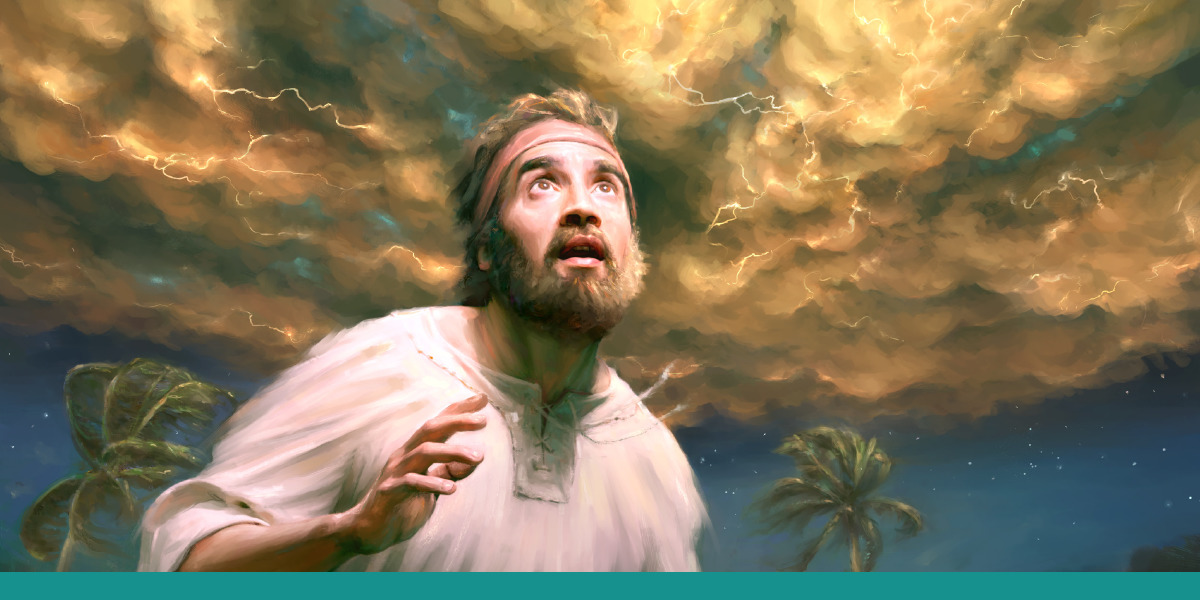
It always amazes me how the Saviour never washes His hands of Israel no matter how unfaithful they have been. Even when they fall into captivity, He plans and puts into place the process of rescue well before it is supposed to take place. He is a God of order and success.  The return of the Jews from Babylon to Jerusalem 70 years after their captivity began, as predicted by Jeremiah in his book (25:11,12; 29:10) is the prime example of this.

Behind the fulfilment of this prophecy was a Persian king that Jehovah prepared who conquered Babylonians by the name of Cyrus. It is suggested by historians that when Cyrus conquered Babylon that he found Daniel there in his governmental capacity, and that Daniel pointed out to him the prophecy of Isaiah that was given 140 years before the fall of Jerusalem (Isaiah 44:28, 45). Adding seventy years after the fall, makes 210 years of prophecy before Cyrus even appeared in Babylon. Astonishing, isn’t it?

The prophecy states that the Lord would raise up a mighty king who would free the Jewish captives in Babylon and allow them to return to Jerusalem to rebuild the temple and the holy city. Cyrus was so impressed with this prophecy about himself that he sent out the proclamation amongst the Jews in Babylon that ‘the Lord God of heaven had charged [him] to build him a house at Jerusalem’ (Ezra 1:2) and asked who among all of God’s people wanted to return. He actually offered freedom to anyone who wanted it.

Now this is the most astonishing bit. Approximately 50,000 people chose to return to Jerusalem while MOST chose not to return having been absorbed into the Babylonian way of life and the comfort of bondage. And this is why. In 605 BC King Nebuchadnezzar of the Neo-Babylonian Empire (now Iraq) was the beginning of Babylon’s greatness and glory. Using slaves from various areas of the empire, he inaugurated a massive building program to make Babylon the greatest city in the world. Opulence, greatness and glory was the object.

The grandeur of Babylon was incredibly impressive but with such opulence and wealth also came moral decay, wickedness and iniquity. Will Durant, a secular historian wrote that “even Alexander [the Great], who was not above dying of drinking was shocked by the morals of Babylon (Our Oriental Heritage, p 244).

Babylon became the antithesis of godliness. The very name of this city stood as the symbol for worldliness, spiritual wickedness and Satan’s kingdom. Scripturally it is known as: “the great whore” and “the mother of harlots and abominations (Rev 17:1; 5; D& C 133:14; 1:16; 1 Nephi 13:5-9; Babylonia and the Conquest of Judah, Old Testament Student Manual p 244).

There is one thing that stands out to me regarding Israel who fell into bondage with Babylon. God himself was in charge of this catastrophe promising Israel that He would bring a nation against them  because of their sins and rejection of Him as their God (Jeremiah 25:7-9). So this is what stands out…..He did not give them into bondage to just any nation but the worst there was, Babylon, a nation so spiritually corroded that it stands out as an obvious product of Israel’s idol worship.

In other words, if they wanted to worship false idols and gods, this is what they got…..spiritual decay and spiritual bondage. This is a classical example of cause and effect. You want other gods? You get what other gods can give you!

The name “Babylon” is today synonymous with ‘the world’. In Section 133 of the Doctrine and Covenants, the saints are commanded to ‘come out of Babylon’ in preparation for the Second Coming (v 5,7). So powerful is its grip that ancient Israelites did not want to leave it.  I wonder how many of us will heed the call this time…..


- CATHRYNE ALLEN 


Sunday, 15 March 2026

THE LION


I used to be sad that Christ came through the lineage of Judah. After all, Judah didn’t seem exemplary enough as a man, not like Joseph. He forfeited the birthright through immorality (see Genesis 38).

I understood Nephi’s explanation of the Saviour’s lineage in saying that ‘there is none other nation on earth that would crucify their God’ (2 Nephi 10:3) but this too left me with a negative impression of Judah. Whereas the Jews had indeed become a stiff-necked people by the time that Jesus came on the scene, it is important to see His death in a proper perspective.

Jesus gave up His life willingly. He attested to this when He said: “….I lay down my life that I might take it again. No man taketh it from me but I lay it down myself” (John 10:17,18). The Jews of His day might have pointed the finger and facilitated His death but in actuality, we are the ones that sent Him to the cross. He died to atone for our sins and not for any drummed- up charge that Jews could put Him to death for. No one else had the power to put Him on that cross, not the Jews and not the Romans (see Matthew 26:51-53).

Yesterday I read something about Judah that redeemed him in my eyes. I was reading the “Jewish Antiquities” by Josephus, a Jewish historian, which offers a more comprehensive outline of Joseph’s forgiveness of his brothers and I saw in him the foreshadowing of the Lion of Judah.

When Benjamin was brought before Joseph for the punishment of stealing the golden cup which was concealed in his sack, all the brothers were beside themselves but none more so than Judah. The Bible records that he offered himself to stay in Egypt as a slave to Joseph (Genesis 44:32-34) but his lengthy plea for Benjamin’s life recorded by Josephus brought me to tears. Judah ended his pleading with offer of his life for Benjamin’s:

“If, therefore, you resolve to slay him, I desire you will slay me in his stead, and send him back to his father…..”  (“Jewish Antiquities”, The New Complete Works of Josephus, p 91).

I saw in Judah the protection he offered for his brother to the point of death. I saw: “I will die instead of him, I will die so Benjamin can live”. Does this remind you of someone? I saw the foreshadowing of the redemptive power of Christ in the ancestor the Saviour came from.

There is something else I saw. Judah was determined to prevent his father’s sorrow and pain (see vs 22 and 34). This too reminded me of Christ’s biggest motivation for His sacrifice….to save us for the sake of the Father He loved and would spare the agony of His loss. The Saviour was groomed to save His siblings from the beginning.

When Jacob gave Judah his blessing, he promised him a kingly posterity until “Shiloh” come (Genesis 49:10). Shiloh is Christ ‘unto whom shall the gathering of the people be’ (v10).

Why a lion to represent the Saviour as the head of the House of Israel? Because a lion symbolizes His role as a powerful, royal, and victorious Messiah. A lion is the king of the jungle…..The Lion of Judah connects Jesus to the lineage of King David, representing his authority and protection of his people.

The Lion of Judah…..the King of Kings and Lord of Lords.


He, in whose hand is the scepter of kings

Who spanned the heavens above

And laid the foundations of the earth below

Upon whose surface He once achingly trod

Before whom we now bow and call,

The Holy One of God.


- CATHRYNE ALLEN 

(Art: In God's Care by Greg Collins)

Tuesday, 8 January 2019

IN HIS PROTECTIVE ARMS

Related image


The lessons I am learning from ancient Israel continue to enthral me. My latest admiration is for the prophet Ezekiel who was a contemporary of Jeremiah and Daniel. Whereas Jeremiah was a prophet sent to Judah's kings and leaders soon to be conquered and Daniel, a prophet sent to preach to the conquerors, Ezekiel was called of God to be "a watchman unto the house of Israel" (Ezekiel 33:7). Ezekiel was of priestly lineage and was carried away to Babylon during the first siege of Jerusalem in 601 BC. As a prophet called to preach to the exiles and captives, the Lord laid upon him an immense burden of calling to repentance what He constantly referred to "a rebellious house" and an "impudent and hardhearted people" (Ezekiel 2:4-7; 3:6-7). The house of Judah had become so wicked that the Lord asked Jeremiah,  "do you not see what they are doing in the streets of Jerusalem? The children are gathering wood, the fathers are kindling fire and the women make cakes for offerings to other gods. Don't pray for them or try to make intercession for them for I will not hear you." (Jeremiah 7:16-18). Considering the Saviour's immensely merciful character, it would have taken a lot for Him to say this. This is a good indication that Judah had reached the point of no return as far as repentance was concerned and they were ripe for destruction. As a result Jerusalem was sacked by the Chaldeans three times before Christ and by the Romans in 70 A.D. 


Nebuchadnezzar, the king of Chaldeans (Babylon), had hoped to subdue the kingdom of Judah twice and requested they pay him homage but the kings of Judah would not submit and instead sought political alliance with Egypt, something that Jeremiah warned them not to do. By the third siege Nebuchadnezzar had had enough. He built a wall around Jerusalem so no one could escape and no supplies could be brought in. The siege lasted 18 months. The starvation of the people was so severe they resorted to cannibalism. By the time Nebuchadnezzar had finished, Jerusalem was levelled to rubble. Ezekiel was shown in visions all the perversions of the Jews and the winding up scenes of the total destruction of Jerusalem. So horrendous were his visions that they made him weep. Following his visions the Lord instructed him to teach the people in exile of what was happening in Jerusalem through the most intricate object lessons. No internet for him to make things easier..... The first eleven chapters of Ezekiel speak of these object lessons and the horrors that befell Jerusalem. In these eleven chapters Jehovah says “ye shall know that I am the Lord” 17 times. It makes for heart wrenching reading....

Why did the Lord bother to let those in exile, who had been saved because they were less wicked, know what was happening in Jerusalem? The answer is obvious: to teach them to repent. The most fascinating lesson that lies within the chapters of Ezekiel is that the Lord did not turn His back on the house of Judah in captivity and left them to suffer the consequences of their sins. He ensured their exile would bring them to the point of repentance. He proved through Ezekiel that His mercy will always step in to save His chosen people and that His constant focus is to "bring to pass the immortality and eternal life of man" (Moses 1:39). So effective was His teaching that the Jewish people never again returned to idolatry. It was in exile that Judah remembered their God and became over zealous for His laws. It was a great turning point in Israel's religious life. Their repentance was complete, the lesson learnt.

The lesson from this period of history is clear: it is best not to sin for as sure as we do, we will suffer. However, there will be a way back, if we do not reach the point of no return, the Lord in His mercy will turn our suffering into a learning curve to assist us to repent and return to the embrace of His protective arms.  He will not forsake His chosen people. He will always do His part to bring us back. The rest will be up to us. He is our God and we are His people.

Image result for prophet ezekiel and visions


I have a list of ancient prophets I admire which keeps getting longer the more I study the scriptures. With each prophet I recognise the burdens of their calling. These I admire the most:

Abraham for his utter devotion to God;
Joseph for his powerful leadership and success;
Jeremiah for his suffering and persistent ministry despite it all;
Lehi for being a dreamer;
John the Beloved for being the Beloved;
and now Ezekiel for being a watchman to the house of Israel.....

The burdens they carried,
the hardships they endured,
I am in awe.....


Thursday, 30 October 2014

AN IRON PILLAR, THE LOVING JEREMIAH


"Hear ye, and give ear; be not proud: for the Lord hath spoken. Give glory to the Lord your God, before he cause darkness, and before your feet stumble upon the dark mountains, and while ye look for light, he turn it into the shadow of death, and make it gross darkness. But if ye will not hear it, my soul shall weep in secret places for your pride; and mine eye shall weep sore, and run down with tears, because the Lord's flock is carried away captive". (Jeremiah 13:15-17)

The Scattering

Seeped in inquity, the Northern Kingdom of Israel fell in 721 B.C. and was taken captive by Assyrians. One hundred years later the remaining Kingdom of Judah totally abandoning the God of Israel faced extinction at the hands of Babylonians. So total was their rejection of Jehovah that they turned to animal worship "turning a large room in the temple into a chapel for its' services... the sun worship also finding a footing in its' court...in the very holiest spot of the sanctuary, about twenty-five men, presumably representatives of the high priest...stood with their back to the temple-the open sign of apostasy-and worshipped the rising sun, their faces turned to the east...they even offered their children in sacrifice to god Molech (Jeremiah 32:35) (Old Testament Student Manual, 1 Kings-Malachi, p 261). The moral corruption of Judah was astounding and qualified them for utter destruction: "Instead of doing righteous works, the people swore falsely, showed no repentance or compassion, they turned to the houses of prostitution, they coveted their neighbour's wife, had a 'revolting and rebellious heart', laid snares for other men and grew fat with illegal gains (Jeremiah 5:1-31). When the Lord was ready to deal with Sodom and Gomorrah, he promised deliverance of these cities if 10 righteous souls could be found there. For Judah he made the promise that it would be spared if ANY could be found who lived justly or sought the truth (Jeremiah 5:1) but no such person could be found. Judah was filled with corrupt prophets and priests and people seeped in sin who 'loved to have it so' (Jeremiah 5:31). The real national tragedy was Judah's unwillingness to 'give ear' and repent. Over and over they rejected the sound political counsel and a call to repentance until they came to the point of no return.

Jeremiah, like Mormon, was called to cry repentance among a people for whom there was no hope. A people whose hearts had grown so hard they had no inclination or willingness to repent and like in Mormon's day 'the day of grace was passed with them, both temporally and spiritually' (Mormon 2:15). Nevertheless, Jeremiah, ordained to his calling long before he was born (Jeremiah 1:4,5) did not cease striving to save his people begging them in vain, for 40 years, to turn back to God. During that time Jeremiah was in a state of continuous suffering as he was accused of political treason, put in stocks, thrown in prison, persecuted, hunted by men of his home town who sought to kill him and so angered the elders of the Jews because his prophecies came true that they cast him into a dungeon what is often called 'a pit prison'. "The only way in and out of this dungeon was through a hole in the top, through which he was lowered with cords. Since there was no drainage, the bottom was a sea of mud into which Jeremiah sank" (Ted Gibbons, OT Lesson 41).

So dejected and full of despair was Jeremiah that he cried out: "O Lord, thou knowest: remember me, and visit me, and revenge me of my persecutors; take me not away in thy longsuffering: know that for thy sake I have suffered rebuke" (Jeremiah 15:15). Even though he was rejected and no one would pay any heed to his words, he could not desist from his calling which burned within him like a fire: "I am in derision daily, every one mocketh me. For since I spake, I cried out, I cried violence and spoil; because the word of the Lord was made a reproach unto me, and a derision, daily. Then I said, I will not make mention of him, nor speak any more in his name. But his word was in mine heart as a burning fire shut up in my bones, and I was weary with forbearing and I could not stay" (Jeremiah 20:7-9).  Despite the undeserved treatment he received at their hands, he sorrowed greatly for his people:  "Oh that my head were waters, and mine eyes a fountain of tears, that I might weep day and night for the slain of the daughter of my people!" (Jeremiah 9:1)


Jeremiah was acceptable to the Lord in every way because he did not shrink back from his preaching. I imagine the Lord speaking to him like He spoke to Helaman's son Nephi regarding his service: "Blessed art thou, Nephi, for those things which thou hast done; for I have beheld how thou hast with unwearyingness declared the word, which I have given unto thee, unto this people. And thou has not feared them, and hast not sought thine own life but has sought my will and to keep my commandments" (Helaman 10:4). His was indeed, like many other prophets of old, a labour of love, not just for his people but also for Him who issued the call. When Jeremiah was called to serve, the Lord assured him he was equal to the task because He knew him before he was born (Jeremiah 1:5). "The phrase 'I knew thee' means more than a casual acquaintance. The Hebrew word yada, which is translated knew, connotes a very personal, intimate relationship. Indeed, Jeremiah's premortal appointment consisted of being foreordained, sanctified and sent forth" (Old Testament Student Manual, p 235). Jeremiah was clearly loved and beloved by the Saviour before he was even born. Out of this loving relationship was born Jeremiah's dedication and commitment to serve Him at all cost.

The tragic dispersion of the House of Israel is also a message of love. The siege of Jerusalem was savage and lasted 18 months. During that time 'the people of Jerusalem were starved to the point of cannibalism (Lamentations 4:8-10). As the final defenses broke down and the Babylonians became victorious, King Zedekiah and his army fled toward the Jordan River but were captured. He was forced to watch as his family was murdered, had his eyes taken out  and was taken captive to Babylon. The city was burned, Solomon's temple was destroyed, and the kingdom of Judah came to an end....the Babylonians took the remnant of the people to Babylon except for some who were left behind under Babylonian rule....to harvest the crops ' (Old Testament Student Manual p. 261). How is this a message of love? The dispersion of the House of Israel stands as a monument of God's infinite mercy towards His children and his undying love for even the vilest sinner who He longs to see return to Him. Even though the Kingdom of Judah got what it deserved, they are not forever abandoned for the Lord made them this promise:

"For thus saith the Lord, That after seventy years be accomplished at Babylon I will visit you, and perform my good word toward you, in causing you to return to this place. 

"For I know the thoughts that I think toward you, saith the Lord, thoughts of peace, and not of evil, to give you an expected end.

"Then shall ye call upon me, and ye shall go and pray unto me, and I will hearken unto you.

"And ye shall seek me, and find me, when ye shall search for me with all your heart"

(Jeremiah 29:11-13)


Friday, 18 July 2014

A KING TO FOLLOW


"He riseth from supper, and laid aside his garments; and took a towel, and girded himself.
"After that he poureth water into a basin, and began to wash the disciples feet...
"So after he had washed their feet, and had taken his garments, and was set down again, he said unto them, Know ye what I have done to you?
"Ye call me Master and Lord: and ye say well; for so I am.
"If I then, your Lord and Master, have washed your feet; ye also ought to wash one another's feet.
"For I have given you and example, that ye should do as I have done to you." (John 13:4-15)
"And whosoever of you will be the chiefest, shall be the servant of all." (Mark 10:44)

How easy it would have been for the Saviour to wash his hands of the children of Israel when they rejected Him and asked for a king to rule and preside over them. How easy it would have been to turn his back on them and to walk away, but Jesus who is full of 'grace, equity and truth' (Alma 13:9), did not forsake the children of the covenant and sought to still be their king through the best men He could find, that His watchful eye might be over them 'with a stretched out arm; for his mercy endureth forever' (Psalm 136:12). 


Because they disregarded the power and might of the God who delivered them, and put their trust in the arm of the flesh, Israel faltered and stumbled in its prosperity and spiritual welfare. Worst of all, they lost unity as a nation. Following the death of Solomon, under the leadership of his very unwise son Rehoboam, who sought to increase the burdens of his people rather than decrease the oppression which his extravagant father afflicted Israel with, the house of Israel became divided, never to be the same again. Rehoboam refused to heed the counsel of wise old men who were counselors to his father, 'to serve the people and be their servant, then they will be thy servants for ever' (1 Kings 12:6,7). Rather than serve, he sought to elevate himself even further and because of this 10 tribes of Israel broke their alliance with the House of David and appointed Jeroboam as their king. And thus begins a new nation referred to as the Northern Kingdom consisting of 10 tribes while the tribes of Judah and Benjamin remained under the reign of House of David, a house which was preserved by the hand of the Lord to ensure the prophesied lineage of the Messiah.

Jeroboam, an Ephraimite, had been a military leader in the army of Israel under King Solomon. He was made an administrator over all the house of Joseph, that is, over the territorial districts of the tribes of Ephraim and Manasseh, two of the most powerful tribes in Israel. Ahijah, a prophet of that day, revealed to Jeroboam that he would become the ruler of 10 tribes which would be 'rent' from the house of David. He demonstrated this by rending Jeroboam's robe into 12 pieces and giving him 10, saying: "...thus saith the Lord, the God of Israel, Behold I will rend the kingdom out of the hand of Solomon, and will give ten tribes to thee" (1 Kings 11:31). When this prophecy was made known to Solomon, he sought to kill Jeroboam who fled into Egypt and lived there in exile until Rehoboam ascended the throne and the 10 tribes who were dissatisfied with Rehoboam's 'attitude' brought him back and anointed him king. And thus began a history of darkness for the Northern Kingdom of Israel as Jeroboam established a state religion of idolatrous worship. (1 Kings 12:25-33). I imagine he was a man of great insecurity and floundering faith in God because he feared that he would lose the kingdom to Rehoboam if his subjects traveled to the temple in Jerusalem and decided to defect. Instead of securing his position by endearing the people to him, he used religion as a state engine to serve his political purposes. The question begs to be asked, why would his subjects want to go back to Rehoboam and his oppression which they rejected? You cannot help but wonder if Jeroboam at all possessed a logical mind. To keep the 10 tribes away from Jerusalem, he made 2 calves of gold, installed them in cities of Bethel and Dan and told the people: "It is too much for you to go up to Jerusalem: behold they gods, O Israel, which brought thee up out of the land of Egypt" (1 Kings 12:28). He reasoned 'this is no new religion, but this was the form of worship which our fathers used in the desert, with Aaron himself leading the way' (Old Testament Student Manual 1 Kings-Malachi, p. 44). And so the Northern Kingdom (now known as Israel) was led into idolatry by their very first king from which they never repented and which contributed to their downfall. Twenty monarchs ruled the Northern Kingdom from its beginning until its destruction by the Assyrians and all of them were characterized as evil or wicked by scriptural records (Old Testament Student Manual 1 Kings-Malachi, p. 33).


Of the twenty rulers who reigned over the Southern Kingdom (now known as Judah) which consisted of the tribes of Judah and Benjamin, from the death of Solomon to the fall of Jerusalem and the Jews' captivity and exile at the hands of the Babylonians, twelve are characterized in the scriptural record as evil or wicked. Only four advanced their nation economically and religiously. One of these righteous kings stands as a perfect example of a true leader and a servant of all. His story is one of unparalleled inspiration. This king's name was Jehoshaphat. The scriptures record that he "sought to the Lord God of his father, and walked in his commandments and not after the doings of Israel. Therefore the Lord established the kingdom in his hand; and all Judah brought to Jehoshaphat presents; and he had riches and honour in abundance" (2 Chronicles 17:3-5). Jehoshaphat was presented with a big problem during his reign which he handled with immense wisdom. Instead of pushing his own agenda, the scriptures record that he 'feared and set himself to seek the Lord, and proclaimed a fast throughout all Judah' (2 Chronicles 20:3,4). Upon hearing that the armies of Moab and Ammon and the inhabitants of mount Seir were coming against him, Jehoshaphat first declared a fast and then gathered his people and offered an incredible prayer acknowledging before the God of Israel that they knew not what to do 'but our eyes are upon thee' (2 Chronicles 20:12). In other words, 'we cannot solve this problem but we know that you can'. And here is where it starts to get weird and wonderful. In answer to that prayer, the Spirit of the Lord came upon a totally unknown man in the crowd who prophesied that Judah need not fear and that the Lord God of Israel will fight that battle for them, that they should do nothing when they confront the armies and that they should 'fear not, nor be dismayed but stand still and see the salvation of the Lord' (2 Chronicles 20:17).  Instead of questioning the sanity of this man, both Jehoshaphat and the whole congregation of Judah fell on their faces and worshiped and praised God accepting this as an answer to their problem. The following morning they rose early and went into wilderness as if to fight but when they got there, instead of sharpening their swords, the king assembled a choir and instructed them to sing and praise God. At that, the Lord stepped in and 'set ambushments against the children of Ammon, Moab and mount Seir' (2 Chronicles 20:22). How exactly that happened, the scriptures do not tell, but they do tell us that these armies turned on each other and slaughtered every man there so that there was nobody to engage in battle with Judah. Instead of slaughter, Judah collected the spoils of the attacking armies for 3 days, more than they could carry; riches and precious jewels (2 Chronicles 20:25). It makes you wonder why they would carry their precious jewels with them into battle, but that they did and the Kingdom of Judah was blessed for trusting in the God of Israel to bail them out. On the fourth day they assembled themselves and gave thanks to God and returned to Jerusalem with 'psalteries and harps and trumpets unto the house of the Lord' (2 Chronicles 20:26-28).


The above example of leadership teaches us some important things we can apply in our lives:

  1. When called to lead, we should emulate Christ and seek to save souls rather than seek for power and personal gain.
  2. At all times we should be striving to bring those in our care to God ensuring that we will not be responsible for leading anyone astray.
  3. We should always have 'our eyes upon God' and seek His counsel in all things.
  4. Accept an answer to any dilemma we are faced with, no matter how weird it may seem, for God's ways are not our ways. The Spirit will testify to us if that answer is of Him.
  5. Act on the instructions the Lord gives us and believe in them, no matter how strange.
  6. Always, always be grateful and express that gratitude to God for His guidance.
When Jesus washed the disciples' feet, Peter was horrified and would not allow Him to wash his. The Saviour said to him: "If I wash thee not, thou hast no part with me". Peter, coming to understand, immediately replied: "...Lord, not my feet only, but also my hands and my head" (John 13:8,9). I think what the Saviour was saying to Peter was this: "Peter, if you do not let me serve you, you can't be mine because I was sent for this purpose" and Peter, loving the Lord, replied: "I am yours". I am astounded that a God who created worlds without number could lower himself in such humility to wash the feet of those so much less than Him. Does He not love us with un-surpassing love? He gathers us like a protective father gathers his children, with everlasting mercy, to serve us through His power to save, waiting and always waiting for us to come to Him and be gathered home.