Showing posts with label #jeremiah. Show all posts

Thursday, 22 September 2022

WHEN THE TRUTH BURNS IN YOUR HEART


I love words. I love words like some people love numbers. It’s an unusual love, I know. It’s unusual when the Dictionary is one of your pals….


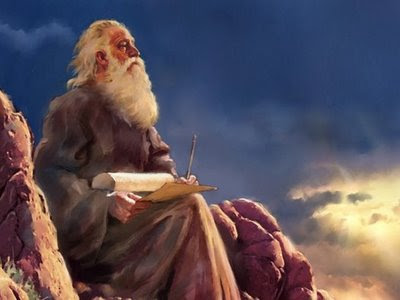
As I started my study of Jeremiah this year it was immediately confirmed to me why he is one of the two prophets of my heart. Being called to preach, as a youth, to a people whose ‘day of grace was past with them’, much like Mormon in his day (Mormon 2:15), Jeremiah was understandably relucant. The Lord not only assured him by telling him of his greatness and his foreordination before he was even born (Jeremiah 1:5), He touched his mouth with his hand and told him he has put His ‘words’ in his mouth to ‘root out, and to pull down, and to destroy, and to throw down, to build, and to plant’ (v10). Imagine the power of every word that would come out of Jeremiah’s mouth from then on…...but you wouldn’t imagine this: Jeremiah did not cease striving to save his people begging them in vain, for 40 years, to turn back to God and avert the Babylonian captivity. During that time Jeremiah was in a state of continuous suffering as he was accused of political treason, put in stocks, thrown in prison, persecuted, hunted by men of his home town who sought to kill him and so angered the elders of the Jews because his prophecies came true that they cast him into a dungeon called 'a pit prison', being lowered into it with cords through a hole in the top, where Jeremiah sank in the mire (Jeremiah 38:6).  At the height of his persecutions and suffering Jeremiah was tempted to cease preaching but he could not restrain himself because ‘His WORD was in mine heart as a burning fire shut up in my bones, and I was weary with forbearing, and I could not stay’ (Jeremiah 20:9). Jeremiah’s mission makes for captivating reading. 


May we, when the truth burns within us, speak and be heard in this world where men call ‘good evil and evil good’ (Isaiah 5:20; 2 Nephi 15:20). May we have the courage and more importantly, ask the God of Heaven to put His words in our mouth that we may be the force for good and be vessels in His hands of saving souls from destruction that is imminent.


I will spread the word

Your gift of salvation to honour

And satisfy man’s hidden hunger;

I will help them know

Your arms are their shelter,

Your heart is their home,

Their only hope

For protection from the storm.

- CATHRYNE ALLEN

(Art: Jeremiah Lamenting the Destruction of Judah by Rembrandt) 

Tuesday, 24 August 2021

A CALL TO PREPARE


I have loved Jeremiah for more years than I can remember and have written about him many times. I guess you can say he is the prophet of my heart. Jeremiah lived amongst the people that were ripe for destruction, much like Mormon. And he witnessed that destruction as the kingdom of Judah was devoured before his eyes by Babylon, in 587 B.C. Jeremiah was persecuted to such an extent that he wished he wasn't born (Jeremiah 20:14-18). The wickedness around him was indescribable but people prospered and there was peace, until Jehovah saw fit to send Babylon....


What caught my eye this morning as I was studying is this: Jeremiah became so oppressed by wickedness around him that he complained to the Lord and asked how much longer will he allow this wickedness to persist and the unrighteous to prosper (Jeremiah 12:1-4). Many of us have asked the same question because the present day world seems unbearable to us. And here is where the similarity between Jeremiah's world and ours lies....the Lord replied to Jeremiah's impatience by asking him if he can't bear it whilst there was relative peace, how will he ever survive when things get worse (Jeremiah 12:1-4)? Like Jeremiah's world, our world will get worse....until He comes.

it is now time to become people of valour so that we can endure whatever more is to come....and more will come as the prophecies attest that the world will get more wicked. Now more than ever we need to strengthen our faith in God to be able to endure the oppression, the persecution, the lack of freedoms. We all know what we have to do. 


In answer to Jeremiah's lament about the situation of his day, the Lord has clearly shown how long-suffering He is in the midst of human corruption. It would seem He allows us to get to the utmost worst until the day of reckoning to give as many as possible the chance to repent and turn to Him. I am in awe of His unfathomable mercy; His never ending tolerance and patience; and His self-restraint amidst His immeasurable power. 


There is none like Thee

My Saviour and my King

With power and glory in His wings;

There is none like Thee

Showing mercy and kindness

To sinners like me;

Who can compare

And who can equal Thee

In Thy unfailing care of me;

Let me worship Thee

With my lips and my heart

And let me be steadfast

From Thy favour never to part.


- Cathryne Allen

(Art by Yongsung Kim)

Thursday, 22 July 2021

GREAT ARE THE WORDS OF ISAIAH


How much You must love
Those who serve Thee to the end
Who speak the words of truth
And proclaim Thy holy name;
These are Thy prophets
Your everlasting friends
The strong, the noble
The devoted who hear and obey;
These are Thine angels who herald
Thy gospel and Thy name;
To the ends of the earth they speak
And their words forever remain

Who can ever discount the tenacity of Jeremiah who could not refrain from testifying despite his sufferings; the loneliness of John the Beloved who penned the greatest revelation whilst exiled on Patmos; the sorrowing for their people of Alma and Mormon; the sacrifices of the living prophets who serve in the Church full time and carry the responsibility of the world wide membership? These are the greats....and I admire them all but nothing renders my heart with tenderness and the Spirit like the world of Isaiah. Imagine being a writer. Now imagine being so good at it that the Saviour himself says 'great are your words' and that everyone should study them.
Not only was Isaiah a statesman, an amazing orator and an even greater poetic writer, he was a prophet of God who received inspiration and revelation for the things he wroter and testified of. Whether in his interaction with the kings of Judah he was the advisor to, or his prophecies, the spirit of revelation comes through. This morning I studied chapter 42 and was overcome with the understanding that came to me about the character of the Saviour; his power and humility intertwined in such a glorious personality that has until now been beyond my comprehension. It reduced me to tears. I could not only understand Him this morning but I could SEE Him through my heart. I testify of His glory and His greatness. And I thank Isaiah for being one of the greats.....
  • Cathryne Allen

Tuesday, 4 November 2014

THE DAY OF THE HUNTER


The prophet Jeremiah preached to the Kingdom of Judah for 40 years attempting to avert the impending captivity that eventually left Judah's land desolate. So seeped in sin and idolatry, Judah, like Ephraim and the 10 tribes, lost sight of the God they once promised to worship and serve. It would seem they needed the experience of captivity to discover them that this is indeed the god they wanted and not the dumb idols of heathen nations that they came to bow down to. The 10 tribes came to their senses quickly and were led by the hand of Jehovah into obscurity until such time that He would bring them back. Judah on the other hand became a very zealous nation for its God whilst in captivity to Babylon. They realised as their homes were left desolate that the prophets were right all along and that they needed to abandon image worship and return to the one true and living God. So zealous were they in their devotion to Jehovah's law that they became slaves to the numerous rules of conduct that went beyond the law itself. Out of this zeal different religious factions were born such as Pharisses and Sadducees which ensured strict observance to the overwhelming number of laws and rules that were invented. Up until the Babylonian captivity, scriptures were only read on special occasions and on the sabbath. Once Judah was taken into captivity this changed and scriptures began to be taught to the general public on regular basis by another factious group called scribes. Over time the Jews in Babylon began to adopt the language and culture of the Chaldeans forgetting the Hebrew language. This necessitated the assistance of scribes who read and interpreted the scriptures to them. "Through the years, each religious group - scribes, Pharisses, Sadducees and others referred to the written word, quoted it, enlarged upon it, interpreted it, and in other ways continued to add to what their fathers had established. The commentaries, explanations, interpretations, and inferences became known as oral tradition. In time, these traditions, written and oral, took on so much importance that they often overshadowed the law and became a stumbling block for the Jews" (Old Testament Student Manual, 1 Kings - Malachi, p. 262). This is the condition in which the Saviour found them when He made His appearance as the awaited and promised Messiah.


"....A voice was heard in Ramah, lamentation, and bitter weeping; Rachel weeping for her children refused to be comforted for her children, because they were not." (Jeremiah 31:15)

Rachel, the beloved wife of Jacob, the mother of Israel, is here depicted lamenting over the loss of her children which she longed for and which were given an inheritance in the household of God; once a chosen people, now lost in captivity (Old Testament Student Manual, p. 255). And they would be lost forever if not for one thing: the everlasting love of a God who never forsakes and abandons and never breaks the covenants which He has made; a god of mercy, a god of love, a god who fulfills his promises. As the Jews entered exile, the Saviour made a promise that He would bring them home to Jerusalem after 70 years of captivity (Jeremiah 29:10). True to His word, 70 years later to the day, King Cyrus of Persia, raised by the Lord for this purpose, ended the Babylonian rule and released Jews from their captivity giving them a charge to return to Jerusalem and rebuild the temple. And herein lies another testament of Jesus' endless love - after the time of Christ Judah endured another exile that would last for centuries but once again the Saviour of all mankind does everything in His power to reclaim that which is lost.


"Behold, the days come, saith the Lord that I will make a new covenant with the House of Israel, and with the house of Judah....this shall be the covenant that I will make with the house of Israel...I will put my law in their inward parts, and write it in their hearts; and will be their God and they shall be my people.....for I will forgive their iniquity and I will remember their sin no more." (Jeremiah 31:31-34)

Preceding the Saviour's second coming, a latter-day gathering of the scattered Israel will take place in three phases: the gathering of Israel to the land of Zion, the American hemisphere; the return of the Ten Tribes from the countries of the north; and the reestablishment of the Jews in Palestine as God's chosen people (Old Testament Student Manual, p. 254). The Lord will accomplish this work through the restoration of His Church. Israel will be gathered and return to the land of their fathers 'with weeping' (Jeremiah 31:9) 'because they will realise that the sufferings they have endured throughout the centuries came about because they rejected the Lord Jesus Christ, who shall lead them in the last days' (Old Testament Student Manual, p. 255). The Saviour, with everlasting love and willingness to always forgive will lead them as they come out of obscurity to once again possess their blessings: "I will cause them to walk by the rivers of waters in a straight way, wherein they shall not stumble; for I am a father to Israel and Ephraim is my firstborn" (Jeremiah 31:9)


 "Therefore, behold, the days come, saith the Lord, that it shall no more be said, The Lord liveth, that brought up the children of Israel out of the land of Egypt; But, the Lord liveth, that brought up the children of Israel from the land of the north, and from all the lands whither he had driven them; and I will bring them again into their land that I gave unto their fathers. Behold, I will send for many fishers, saith the Lord, and they shall fish them; and after will I send for many hunters, and they shall hunt them from every mountain, and from every hill, and out of the holes of the rocks." (Jeremiah 16:14-16)

In Jeremiah's day, most fishing was done with nets and so was in Peter's but Peter was no ordinary fisherman, he was called to be a fisher of men. Peter fished with his nets and brought in 3,000 converts on the day of Pentecost. In like manner the early converts of the Church used nets to fish and bring in multitudes of converts: Wilford Woodruff converted more than 2,000 people in eastern states of America and British Isles; The Twelve under the direction of Brigham Young converted over 6,000 people in Britain between 1839 and 1841 and Parley P. Pratt who repeatedly baptised in excess of 100 people wherever he stopped to preach. But after the fishers, the Lord promised that He would send many hunters. Hunting, unlike fishing with nets, is more precise work. It is not usual practice to hunt a heard but individual animals, 'from every mountain, and from every hill, and out of the holes of the rocks' (Jeremiah 16:14-16).... Is not the day of the hunter here as we seek for the honest in heart who want to become the pure in heart? Are not our missionaries searching with precision individuals who desire to know the Lord? Are we not labouring endlessly seeking out our ancestors and those who have gone before us to bless them with saving ordinances necessary for salvation? We are hunting in His name by day and by night so that not one is overlooked who seeks to know Him and come unto Him for He will go to any length and any depth and any measure to find that which is lost.


Thursday, 30 October 2014

AN IRON PILLAR, THE LOVING JEREMIAH


"Hear ye, and give ear; be not proud: for the Lord hath spoken. Give glory to the Lord your God, before he cause darkness, and before your feet stumble upon the dark mountains, and while ye look for light, he turn it into the shadow of death, and make it gross darkness. But if ye will not hear it, my soul shall weep in secret places for your pride; and mine eye shall weep sore, and run down with tears, because the Lord's flock is carried away captive". (Jeremiah 13:15-17)

The Scattering

Seeped in inquity, the Northern Kingdom of Israel fell in 721 B.C. and was taken captive by Assyrians. One hundred years later the remaining Kingdom of Judah totally abandoning the God of Israel faced extinction at the hands of Babylonians. So total was their rejection of Jehovah that they turned to animal worship "turning a large room in the temple into a chapel for its' services... the sun worship also finding a footing in its' court...in the very holiest spot of the sanctuary, about twenty-five men, presumably representatives of the high priest...stood with their back to the temple-the open sign of apostasy-and worshipped the rising sun, their faces turned to the east...they even offered their children in sacrifice to god Molech (Jeremiah 32:35) (Old Testament Student Manual, 1 Kings-Malachi, p 261). The moral corruption of Judah was astounding and qualified them for utter destruction: "Instead of doing righteous works, the people swore falsely, showed no repentance or compassion, they turned to the houses of prostitution, they coveted their neighbour's wife, had a 'revolting and rebellious heart', laid snares for other men and grew fat with illegal gains (Jeremiah 5:1-31). When the Lord was ready to deal with Sodom and Gomorrah, he promised deliverance of these cities if 10 righteous souls could be found there. For Judah he made the promise that it would be spared if ANY could be found who lived justly or sought the truth (Jeremiah 5:1) but no such person could be found. Judah was filled with corrupt prophets and priests and people seeped in sin who 'loved to have it so' (Jeremiah 5:31). The real national tragedy was Judah's unwillingness to 'give ear' and repent. Over and over they rejected the sound political counsel and a call to repentance until they came to the point of no return.

Jeremiah, like Mormon, was called to cry repentance among a people for whom there was no hope. A people whose hearts had grown so hard they had no inclination or willingness to repent and like in Mormon's day 'the day of grace was passed with them, both temporally and spiritually' (Mormon 2:15). Nevertheless, Jeremiah, ordained to his calling long before he was born (Jeremiah 1:4,5) did not cease striving to save his people begging them in vain, for 40 years, to turn back to God. During that time Jeremiah was in a state of continuous suffering as he was accused of political treason, put in stocks, thrown in prison, persecuted, hunted by men of his home town who sought to kill him and so angered the elders of the Jews because his prophecies came true that they cast him into a dungeon what is often called 'a pit prison'. "The only way in and out of this dungeon was through a hole in the top, through which he was lowered with cords. Since there was no drainage, the bottom was a sea of mud into which Jeremiah sank" (Ted Gibbons, OT Lesson 41).

So dejected and full of despair was Jeremiah that he cried out: "O Lord, thou knowest: remember me, and visit me, and revenge me of my persecutors; take me not away in thy longsuffering: know that for thy sake I have suffered rebuke" (Jeremiah 15:15). Even though he was rejected and no one would pay any heed to his words, he could not desist from his calling which burned within him like a fire: "I am in derision daily, every one mocketh me. For since I spake, I cried out, I cried violence and spoil; because the word of the Lord was made a reproach unto me, and a derision, daily. Then I said, I will not make mention of him, nor speak any more in his name. But his word was in mine heart as a burning fire shut up in my bones, and I was weary with forbearing and I could not stay" (Jeremiah 20:7-9).  Despite the undeserved treatment he received at their hands, he sorrowed greatly for his people:  "Oh that my head were waters, and mine eyes a fountain of tears, that I might weep day and night for the slain of the daughter of my people!" (Jeremiah 9:1)


Jeremiah was acceptable to the Lord in every way because he did not shrink back from his preaching. I imagine the Lord speaking to him like He spoke to Helaman's son Nephi regarding his service: "Blessed art thou, Nephi, for those things which thou hast done; for I have beheld how thou hast with unwearyingness declared the word, which I have given unto thee, unto this people. And thou has not feared them, and hast not sought thine own life but has sought my will and to keep my commandments" (Helaman 10:4). His was indeed, like many other prophets of old, a labour of love, not just for his people but also for Him who issued the call. When Jeremiah was called to serve, the Lord assured him he was equal to the task because He knew him before he was born (Jeremiah 1:5). "The phrase 'I knew thee' means more than a casual acquaintance. The Hebrew word yada, which is translated knew, connotes a very personal, intimate relationship. Indeed, Jeremiah's premortal appointment consisted of being foreordained, sanctified and sent forth" (Old Testament Student Manual, p 235). Jeremiah was clearly loved and beloved by the Saviour before he was even born. Out of this loving relationship was born Jeremiah's dedication and commitment to serve Him at all cost.

The tragic dispersion of the House of Israel is also a message of love. The siege of Jerusalem was savage and lasted 18 months. During that time 'the people of Jerusalem were starved to the point of cannibalism (Lamentations 4:8-10). As the final defenses broke down and the Babylonians became victorious, King Zedekiah and his army fled toward the Jordan River but were captured. He was forced to watch as his family was murdered, had his eyes taken out  and was taken captive to Babylon. The city was burned, Solomon's temple was destroyed, and the kingdom of Judah came to an end....the Babylonians took the remnant of the people to Babylon except for some who were left behind under Babylonian rule....to harvest the crops ' (Old Testament Student Manual p. 261). How is this a message of love? The dispersion of the House of Israel stands as a monument of God's infinite mercy towards His children and his undying love for even the vilest sinner who He longs to see return to Him. Even though the Kingdom of Judah got what it deserved, they are not forever abandoned for the Lord made them this promise:

"For thus saith the Lord, That after seventy years be accomplished at Babylon I will visit you, and perform my good word toward you, in causing you to return to this place. 

"For I know the thoughts that I think toward you, saith the Lord, thoughts of peace, and not of evil, to give you an expected end.

"Then shall ye call upon me, and ye shall go and pray unto me, and I will hearken unto you.

"And ye shall seek me, and find me, when ye shall search for me with all your heart"

(Jeremiah 29:11-13)